Forbidden City Map & Layout: Central Axis Walking Route
The palace is built on one idea: a straight line running north to south, with everything of importance sitting on it or arranged around it. Here is how that line actually works, gate by gate, and a walking route that follows it.
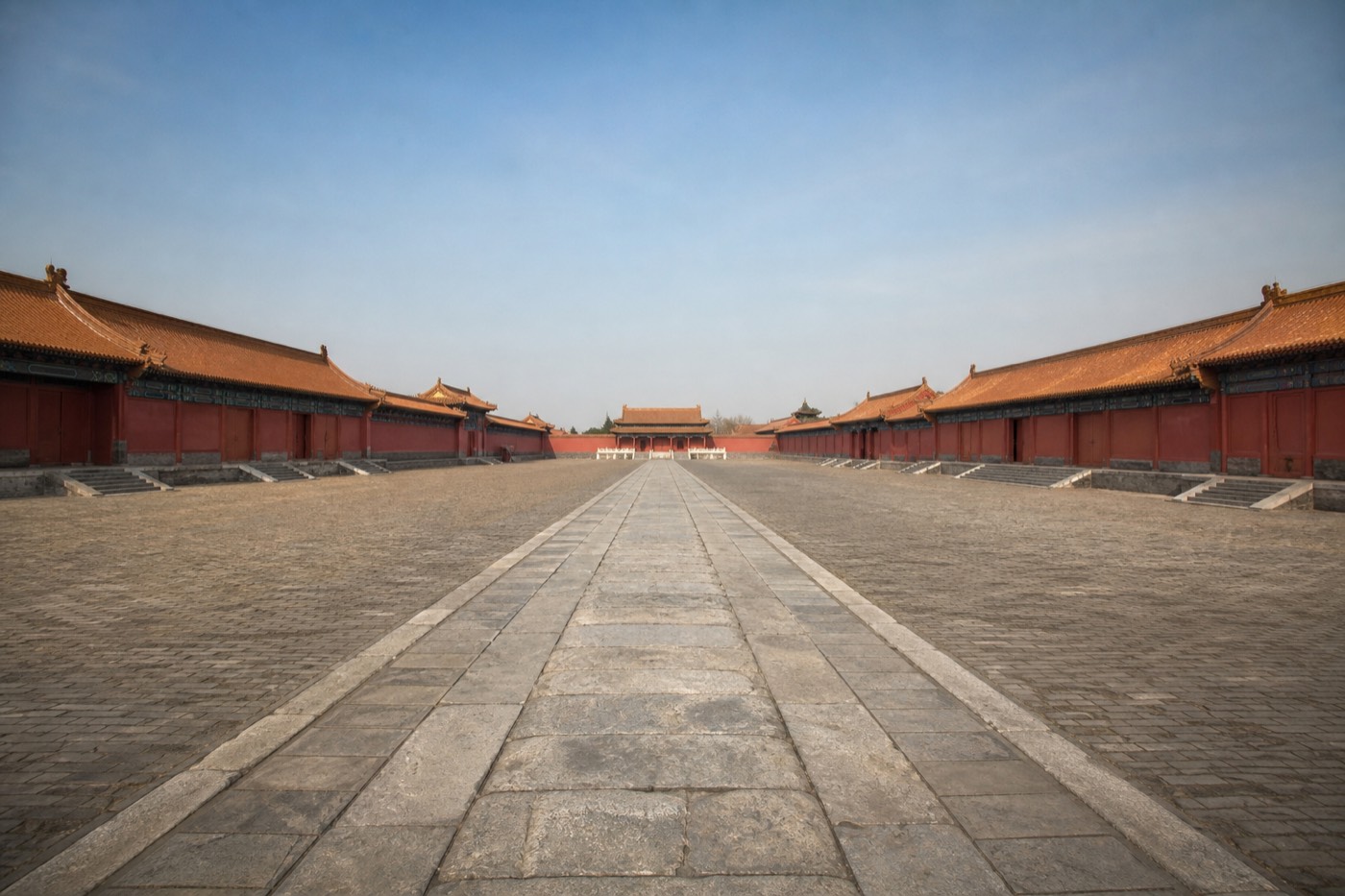
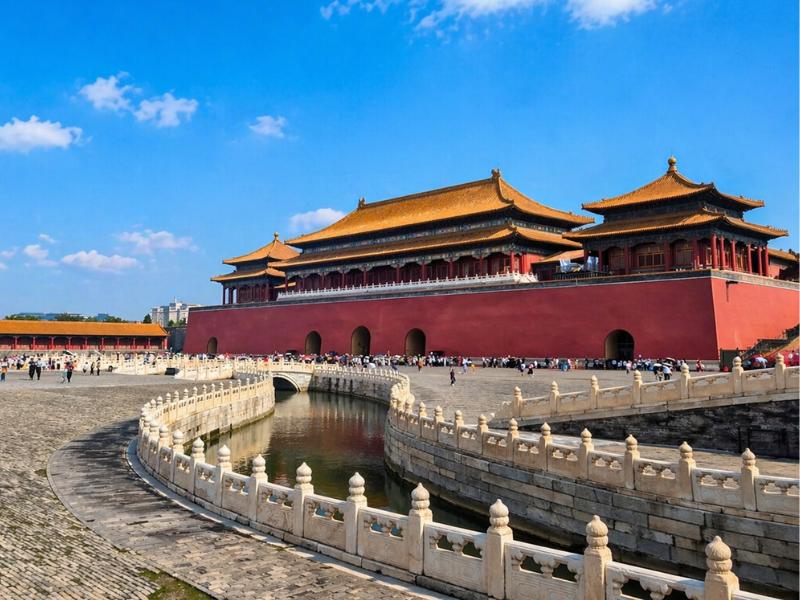
Stand at the Meridian Gate and look north, and you can see most of the logic of the entire palace in a single glance: gate, courtyard, hall, gate, courtyard, hall, all the way to a garden at the far end. What time of day you do that walk changes the experience too, covered in our guide to the best time of day to visit. Nothing about that line is accidental.
If you plan to see this in person, two-hour palace walk is a starting point. Compare its actual route with the time you have.
Booking choice: Choose TG18: English-guided Forbidden City walk and entry ticket. Meet at Meridian Gate; finish at the north gate. No square visit or hotel transfer. Explore Two-Hour Palace Walk
The central axis, gate to gate: five stops from south to north
Sequence and building names are drawn from the Forbidden City's documented layout; the figures are planning allowances, not a surveyor's measurements.
What's the basic layout of the Forbidden City?
The Forbidden City is arranged along a single north-south central axis: a southern entrance at the Meridian Gate, the ceremonial Outer Court with its three great halls including the Hall of Supreme Harmony, the residential Inner Court behind it, and the Imperial Garden at the north end before the exit at the Gate of Divine Might. A moat and an enclosing wall with watchtowers at the corners ring the whole complex. Photography and dress-code rules apply along the entire route; see our guide to Forbidden City rules, dress code and photo restrictions before you go.
That axis is not just a design flourish. In imperial China, the throne was meant to sit at the center of the world, facing south, with the cosmos arranged symmetrically around it, and the Forbidden City was built to embody that idea in stone and timber. Everything that mattered, the biggest halls, the emperor's own quarters, the main gates, sits directly on the line. Everything secondary, service buildings, workshops, storage, lesser residences, is pushed to the sides. Once you know that rule, the palace stops feeling like a maze and starts reading as a very deliberate piece of architecture with a beginning, a middle and an end.
The whole enclosed complex covers roughly 72 hectares and contains more than 800 surviving buildings, which is one reason first-time visitors find the scale disorienting. Anyone still confirming that independent visitors are actually allowed to walk this route themselves can check our guide on whether you can actually visit the Forbidden City first. The axis is what keeps it navigable: as you walk south to north, following the straight line through the center keeps you oriented, and almost everything worth seeing on a first visit sits on or just off that line.
What is the central axis, and why does the whole palace align to it?
The axis runs directly through the Meridian Gate in the south and the Gate of Divine Might in the north, and it is not unique to the palace. It is part of a much longer line that continues through Beijing itself, from the old outer city gates in the south up through Tiananmen Square, the Forbidden City, and Jingshan Park behind it, all the way to the Drum and Bell Towers to the north. UNESCO recognized this wider urban line in its own right in 2024, inscribing the Beijing Central Axis as a separate World Heritage listing, distinct from the Forbidden City's own 1987 inscription. The palace is the single largest and most intact structure sitting on that line, which is part of why the axis concept is worth understanding before you set foot inside: you are walking through the architectural spine of the old imperial capital, not just one building among many.
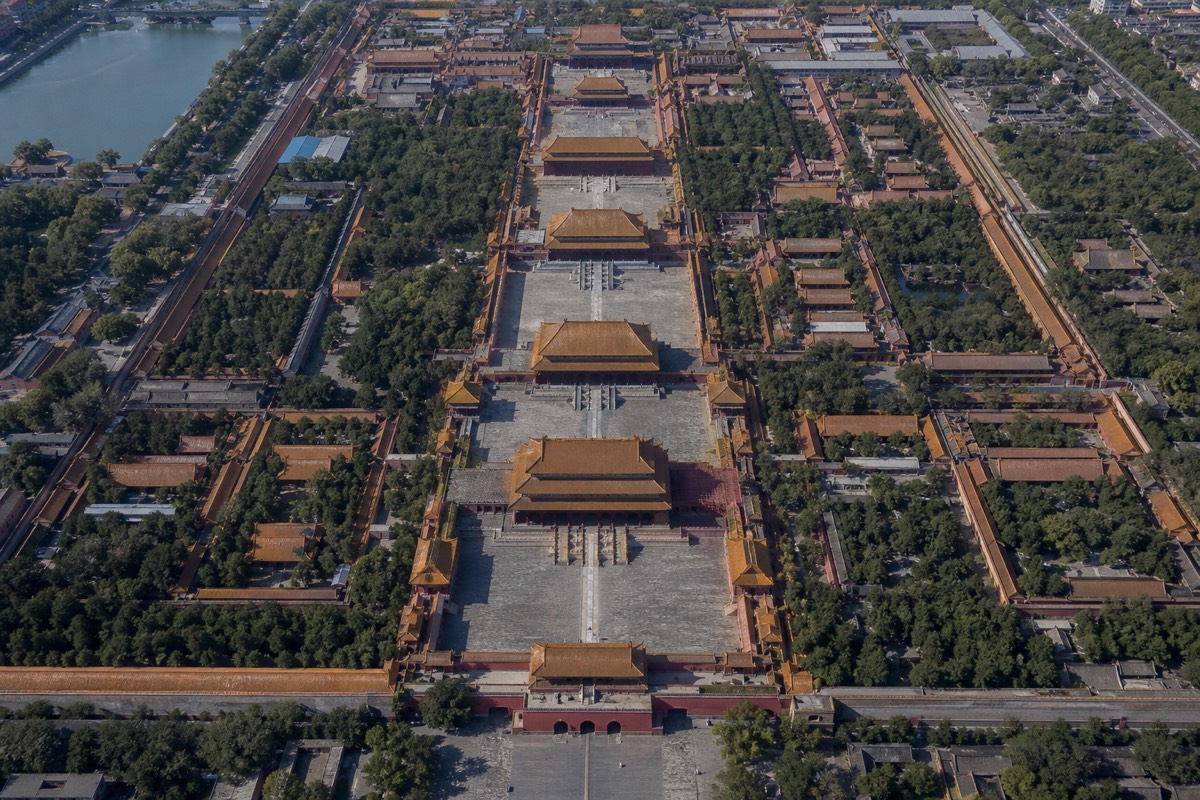
Practically, the axis means the palace divides cleanly into two halves. The southern half, the Outer Court, was built for ceremony and government: audiences, coronations, state occasions, the machinery of running an empire. The northern half, the Inner Court, was the emperor's actual home, along with the empress, consorts, and the household that ran their daily lives. A visitor who understands that split understands why the buildings look and feel so different from one end of the axis to the other. The Outer Court is monumental and built to impress a crowd from a distance; the Inner Court is built at a more human scale, meant for people actually living there.
What's inside the Outer Court, and what is the Hall of Supreme Harmony?
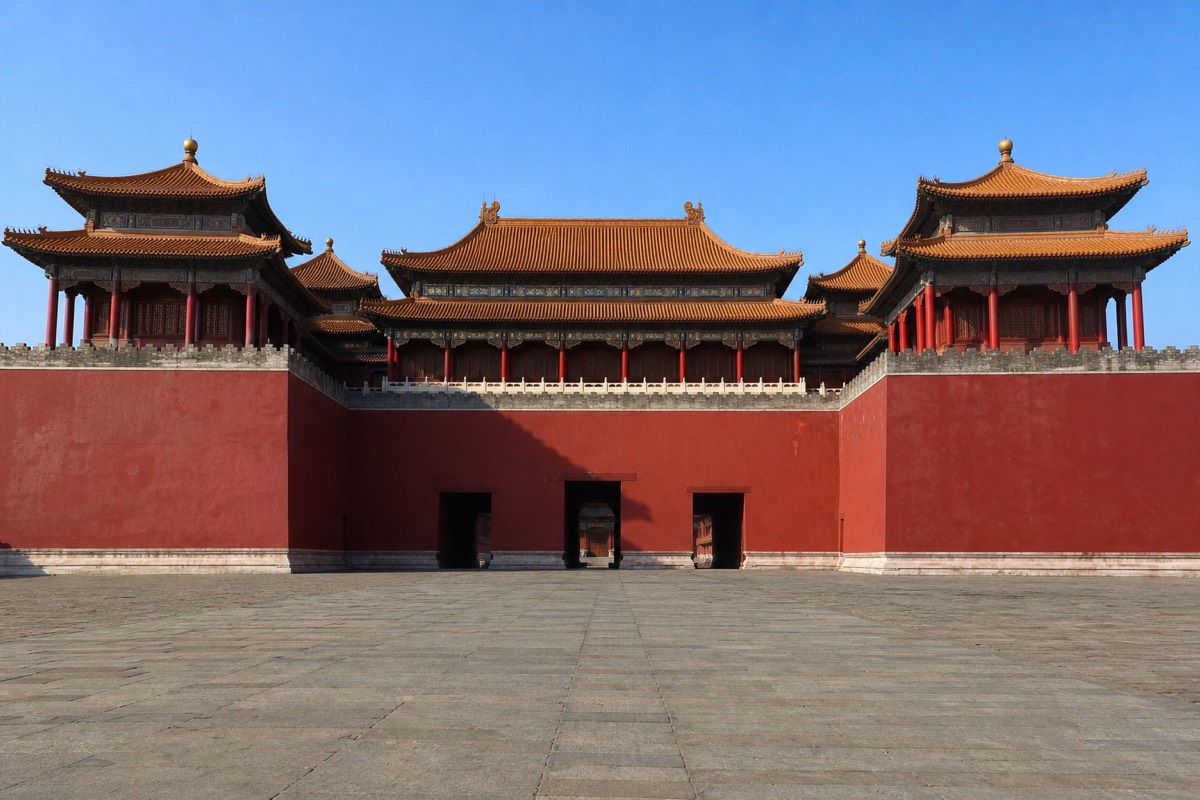
Entering from the south, the first structure on the axis is the Meridian Gate (Wumen), the palace's main southern gate. It rises to roughly 38 meters at its central roof ridge and is built in a distinctive concave shape with five separate gate-towers, known as the "Five Phoenix" layout, wrapping around the entrance like open arms. This was the gate through which the emperor issued proclamations and reviewed troops, and it remains the formal starting point for almost every visit today.
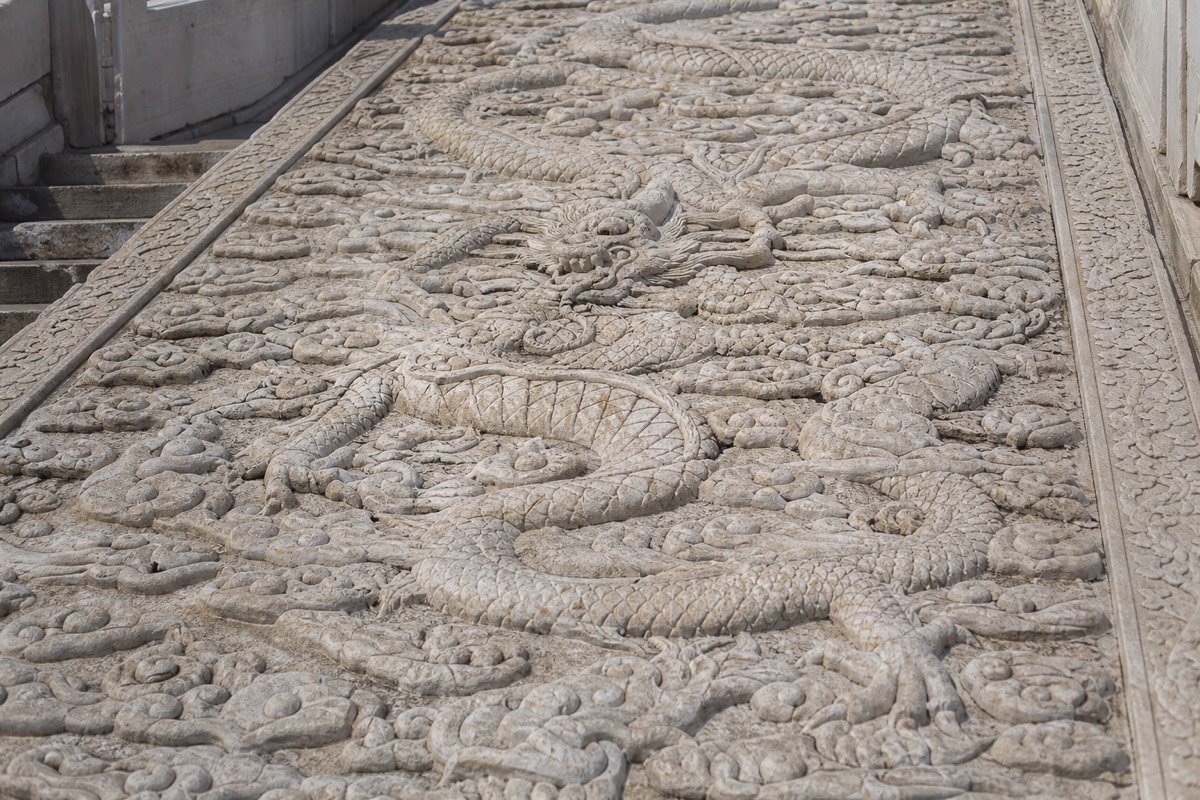
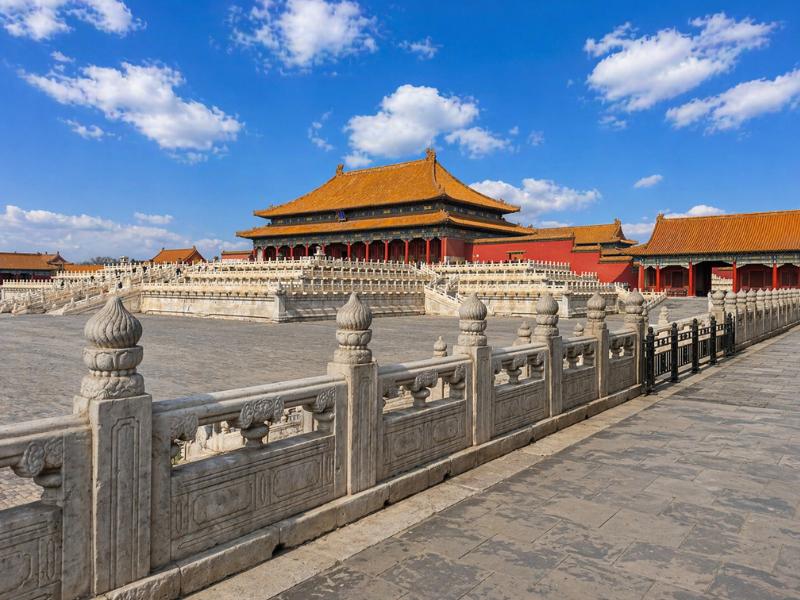
Past the Meridian Gate, a large courtyard opens onto the Outer Court's three great halls, arranged one behind the other on the axis: the Hall of Supreme Harmony, the Hall of Central Harmony, and the Hall of Preserving Harmony. The first of these, the Hall of Supreme Harmony (Taihedian), is the largest single building in the entire complex, with a footprint of roughly 64 by 37 meters. Inside, the dragon throne sits on a platform about 2 meters high, ringed by six gold-lacquered dragon pillars. This was the hall used for the empire's most important ceremonies, coronations and the emperor's wedding among them, and it is built and positioned to be seen from as far back as the Meridian Gate, which is exactly the effect its architects intended.
The two halls behind it are smaller and more specialized. The Hall of Central Harmony served as a rest and preparation space for the emperor immediately before major ceremonies. The Hall of Preserving Harmony hosted banquets and, in later Qing practice, the final stage of the imperial examinations, the competitive tests that decided entry into the civil service. Together, the three halls form the ceremonial heart of the whole complex, and they mark the end of the Outer Court.
| Zone | Main function | Key structures |
|---|---|---|
| Outer Court (south half) | Ceremony, government, state occasions | Meridian Gate, Hall of Supreme Harmony, Hall of Central Harmony, Hall of Preserving Harmony |
| Inner Court (north half) | Imperial residence, daily household life | Palace of Heavenly Purity, Hall of Union, Palace of Earthly Tranquility, side residence courtyards |
| North end | Leisure, private garden | Imperial Garden, Gate of Divine Might |
| Northeast, off-axis | Later imperial retirement quarters, now a museum gallery | Palace of Tranquil Longevity complex, home to the Treasure Gallery |
What's inside the Inner Court?
Cross the threshold behind the Hall of Preserving Harmony and the character of the palace changes noticeably. This is the Inner Court, the residential half of the complex, where the emperor and his household actually lived rather than merely governed. The buildings here are still grand by any ordinary standard, but they sit closer together and at a smaller scale than the three great halls behind you, because they were designed for daily life rather than for a crowd of court officials watching from a distance.
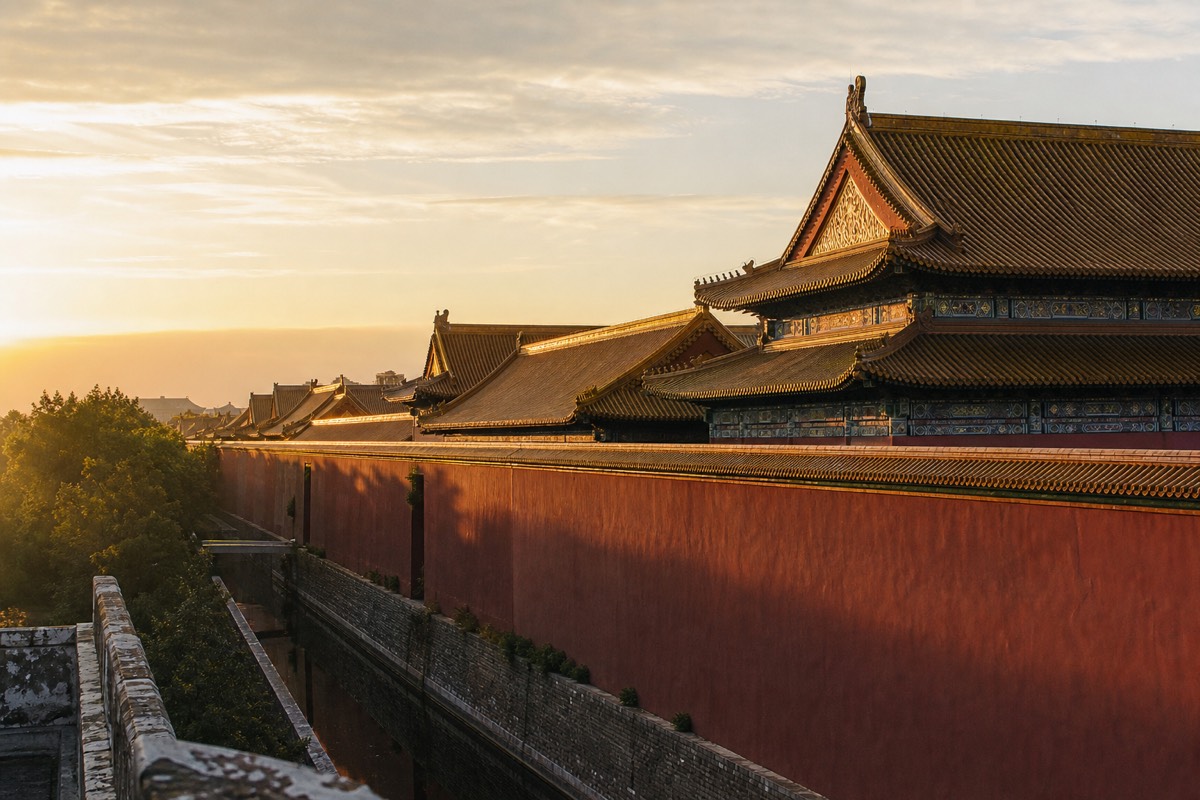
Three structures continue directly on the axis: the Palace of Heavenly Purity, historically the emperor's own residence and later a hall used for smaller audiences and state receptions; the Hall of Union, a compact connecting structure between the two flanking palaces; and the Palace of Earthly Tranquility, historically the empress's residence. Fanning out to either side of this central spine are numerous smaller courtyards, once home to consorts, princes and the wider imperial household, along with the working spaces that supported them. Many of these side courtyards are open to visitors today and hold some of the palace's furniture and decorative-arts collections, which makes wandering a little off the direct axis worthwhile if time allows.
This is also the part of the palace most tied to two of its best-known modern stories. Puyi, China's last emperor, continued living in the Inner Court's private quarters for more than a decade after his 1912 abdication, under the "Articles of Favorable Treatment" that let the deposed imperial family remain inside the palace walls, until the 1924 Beijing Coup ended that arrangement and forced his expulsion. And it was largely inside these Inner Court halls and courtyards that Bernardo Bertolucci's 1987 film "The Last Emperor" shot on location, the only Western feature film ever given permission to film inside the real Forbidden City.
What's at the north end: the Imperial Garden and the Gate of Divine Might?
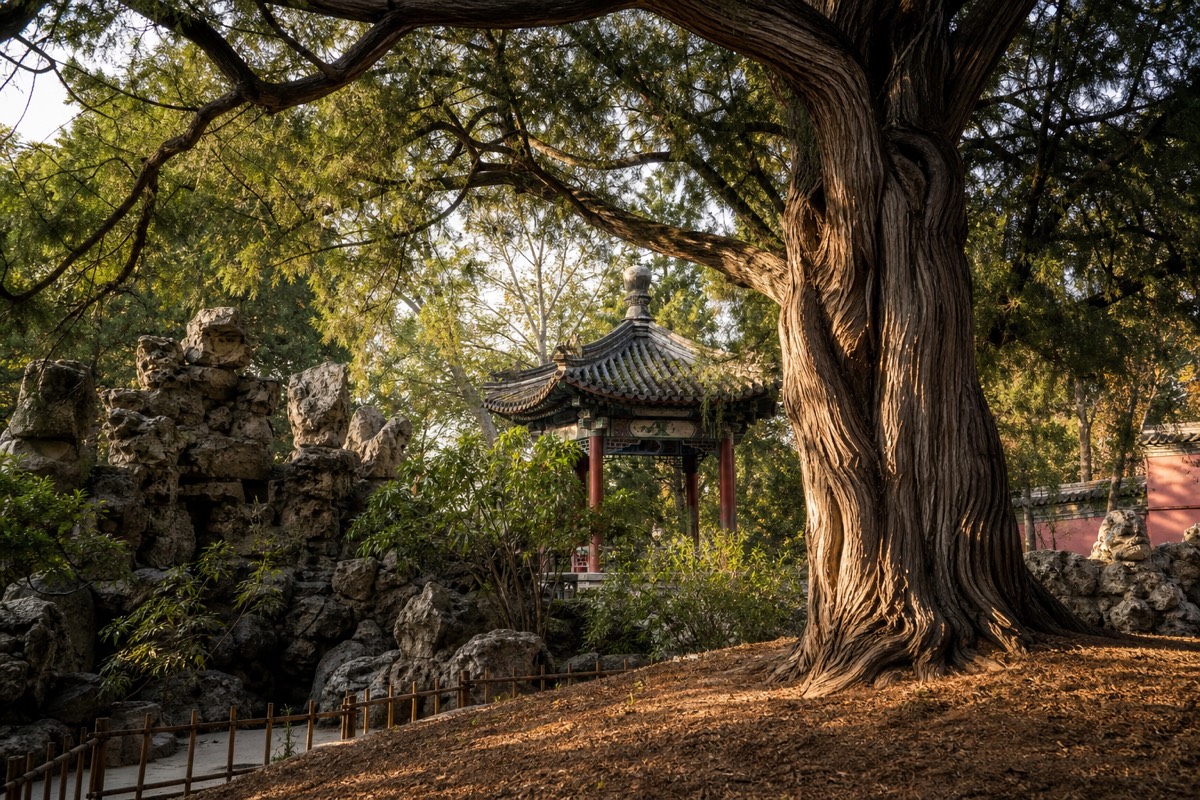
The axis ends, or begins, depending on which direction you are walking, at the Imperial Garden (Yuhuayuan), a compact formal garden tucked just behind the Inner Court's residential halls. It is a deliberate change of pace after the scale of everything before it: rockeries, old cypress trees, small pavilions and covered walkways replace the broad ceremonial courtyards of the south. This was a private leisure space for the imperial family, and it is one of the few parts of the route where the palace feels intimate rather than monumental.
Immediately past the garden sits the Gate of Divine Might (Shenwumen), the Forbidden City's northern gate and the mirror image of the Meridian Gate at the southern end of the axis. Most modern visits either end here, exiting north toward Jingshan Park, or begin here for visitors who choose to walk the route in reverse. Either direction covers the same ground; the choice mostly comes down to logistics, discussed below.
Quick orientation: south to north, the order is Meridian Gate, Outer Court (three great halls), Inner Court (imperial residences), Imperial Garden, Gate of Divine Might. The Treasure Gallery sits off this line, to the northeast.
Where does the moat fit, and what are the corner watchtowers?
The entire rectangular complex is enclosed by a tall wall and ringed on the outside by a wide moat, historically both a defensive barrier and a visual statement of the palace's separateness from the rest of the city. A watchtower rises at each of the four corners of the enclosing wall, distinctive multi-eaved structures that are among the most photographed exterior features of the whole site, especially from across the moat itself. None of the four corner towers sit on the main visitor route through the interior; they are best seen and photographed from outside the walls, along the moat path that circles the perimeter, which is a worthwhile short detour before or after the main visit if you have the time.
The moat and wall together are part of why the Forbidden City reads, even today, as a city within a city, separate and self-contained. That sense of enclosure is central to the "forbidden" half of its name: historically, entry past this wall and moat was barred to ordinary subjects, and only the imperial family, consorts, eunuchs and the highest officials were permitted inside.
| Feature | What it is | Where to see it |
|---|---|---|
| Moat | Water-filled defensive channel ringing the outer wall | Walk the outside perimeter path, not on the interior route |
| Corner watchtowers | Multi-eaved towers at each of the four corners of the wall | Best photographed from across the moat, outside the walls |
| Enclosing wall | Continuous wall separating the palace from the rest of Beijing | Visible along the whole perimeter |
Where's the Treasure Gallery, and is it on the main route?
The Treasure Gallery is not on the central axis at all. It sits inside the Palace of Tranquil Longevity complex, in the northeastern part of the Forbidden City, a section originally built as a retirement residence for a retired emperor and now used to display roughly 400 Qing-dynasty relics. Seeing it requires a separate add-on ticket, priced independently from the main admission, and a short walk east off the main axis once you are inside the Inner Court area. The nearby Clock Gallery, with its collection of imperial timepieces, works the same way: a separate small add-on ticket and its own detour from the main route.
Because both galleries sit off the direct path, they are easy to miss on a rushed visit, and just as easy to build in in a longer one. Anyone reading a closer look at the Meridian Gate and Treasure Gallery before the trip will have an easier time deciding whether the detour is worth the extra ticket and the extra walking.
What's a good walking route through the Forbidden City, south to north?
Most visits follow the axis south to north, entering at the Meridian Gate and exiting at the Gate of Divine Might, largely because that is the direction the ticketing and security flow are set up for and because it follows the palace's own ceremonial logic, moving from public and formal toward private and residential. The route below breaks that walk into seven practical stops, in order, with a planning allowance for each rather than a fixed schedule, since how long anyone actually spends depends entirely on how much they stop to look.
| Stop | Landmark | What you'll see | Planning allowance |
|---|---|---|---|
| 1 | Meridian Gate | Main southern entrance, five-tower "Five Phoenix" layout | 10-15 min, including security and ticket checks |
| 2 | Outer Court courtyard | Wide ceremonial plaza leading to the three great halls | 5-10 min |
| 3 | Hall of Supreme Harmony | Largest single building in the complex, dragon throne | 15-20 min, this is usually the busiest single stop |
| 4 | Hall of Central Harmony & Hall of Preserving Harmony | Smaller ceremonial and preparation halls | 10-15 min combined |
| 5 | Inner Court residences | Palace of Heavenly Purity, Hall of Union, Palace of Earthly Tranquility, side courtyards | 25-40 min, more if exploring side courtyards |
| 6 | Imperial Garden | Rockeries, old cypress trees, pavilions | 15-20 min |
| 7 | Gate of Divine Might | Northern exit gate, onward to Jingshan Park | 5 min to pass through |
Add 20 to 40 minutes on top of that table for the Treasure Gallery detour if the add-on ticket is bought, and expect real queueing time at the Hall of Supreme Harmony's viewing platform during peak season, since it is the single most photographed spot inside the palace. A guided visit, such as the small-group guided tour with tickets included, follows broadly this same south-to-north sequence but adds context at each stop rather than leaving visitors to work out what they are looking at from a map alone.
Should you start at the south gate or the north gate?
Start at the Meridian Gate in the south: it is the museum entrance. The northern Gate of Divine Prowess is exit-only, so you cannot reverse the visit from Jingshan Park. Tiananmen Square lies south of Meridian Gate. Exit through the north or east gate when you finish.
| Entrance | Meridian Gate, south |
|---|---|
| Exits | Gate of Divine Prowess, north; East Prosperity Gate, east |
| Route | Enter south, walk the ceremonial axis toward the Imperial Garden |
How does the Forbidden City's scale compare to other palaces?
Room counts are not a reliable single measure of palace size. Istana Nurul Iman is commonly cited with 1,788 rooms, fewer than the Forbidden City’s reported 9,371 across its complex; its large residential floor area is a different comparison. Related reading: Britannica overview of the Forbidden City
| Site | Comparison point |
|---|---|
| Forbidden City | ~72 hectares, 800+ surviving buildings, larger by footprint than the Versailles château itself |
| Palace of Versailles | Château footprint smaller than the Forbidden City; surrounding park is far larger overall |
| Vatican Apostolic Palace | Considerably smaller total footprint |
| Istana Nurul Iman (Brunei) | 1,788 rooms in a modern residence; floor area and room counts measure different things |
How long should you budget to walk the axis?
As a planning allowance rather than a fixed rule, walking the direct axis route from the Meridian Gate to the Gate of Divine Might without lingering takes a good hour at a brisk but unhurried pace. Almost nobody actually does that, though, because the Hall of Supreme Harmony alone tends to hold people for fifteen minutes or more, and the Inner Court's side courtyards reward slower exploration. A realistic total for a first, unrushed visit along the axis, without the Treasure Gallery, runs closer to two to three hours, and that is before factoring in queueing at busier times of year. Anyone deciding how much time to set aside for the whole visit, including the parts off this guide's route, will find a fuller breakdown in the guide on how long you actually need at the Forbidden City, and a look at which time of year keeps the crowds and the queueing down in the guide to the best time to visit for weather, crowds and hours.
Whichever route and pace you choose, the axis itself does the hard work of orientation. It is impossible to get seriously lost walking it, because every major building either sits on the line or announces itself just off it, and the whole design was built, deliberately, to be read from one end to the other. Visitors who want that reading done for them, with the history and the architecture explained stop by stop, will get more out of a guided walk such as the private walking tour with flexible route options than out of a paper map alone, since a live guide can adjust pace and detours on the day in a way no fixed itinerary can.
What shouldn't you skip if you're short on time?
Not every stop on the axis carries equal weight, and a rushed visit is better served by knowing which three or four are genuinely worth protecting than by trying to see everything at a jog. The Meridian Gate and the Hall of Supreme Harmony are the two structures almost nobody skips, since they anchor both ends of the Outer Court experience and are the two most photographed points on the entire route. After that, priorities depend on interest: history-minded visitors tend to linger longest in the Inner Court residences, where Puyi actually lived out his final years inside the palace, while anyone short on time and not particularly drawn to architecture in depth can move through the Hall of Central Harmony and Hall of Preserving Harmony relatively quickly, since both are smaller variations on themes already established by the first great hall.
| Stop | Worth protecting if rushed? | Why |
|---|---|---|
| Meridian Gate | Yes | The palace's defining entrance; sets the scale for everything that follows |
| Hall of Supreme Harmony | Yes | Largest single building in the complex, the dragon throne itself |
| Hall of Central Harmony / Hall of Preserving Harmony | Optional if very short on time | Smaller ceremonial halls, easy to view briefly in passing |
| Inner Court residences | Yes, if the history interests you | Where the imperial family actually lived, including Puyi's final years inside the palace |
| Imperial Garden | Yes, if pace allows | The one genuinely different, unhurried stretch of the route |
| Treasure Gallery | Optional detour | Off-axis, separate ticket, best for a longer visit |