Inside the Forbidden City: Meridian Gate, Treasure Gallery & Hall of Supreme Harmony
Three stops carry most of the weight on a first walk through the Forbidden City: the gate you enter through, the hall at its heart, and a side complex most visitors nearly miss. Here is what each one actually is and why it matters.
Most people who walk through the Forbidden City remember three things afterward: a huge red gate they queued under, a golden throne room they saw from behind a rope, and, if they went looking, a quiet gallery of glittering objects tucked in a corner they almost skipped. Those three are not random. They are the gate, the hall and the gallery that anchor the whole visit, and knowing what each one is before you go changes how you read the place once you are standing in it.
If you want the galleries as well as the main halls, allow time for a six-hour private visit. The gallery option is a different booking from a short palace walk.
Booking choice: Choose option 4 (TG11): a six-hour private English tour of Tiananmen Square and the Forbidden City, including the Treasure and Clock galleries. The itinerary also offers Jingshan instead of museums, so select the galleries explicitly. Explore Private Palace And Galleries Walk
The Meridian Gate is the roughly 38m-tall southern entrance built in a five-tower "Five Phoenix" layout, the Hall of Supreme Harmony is the largest single building in the complex at about 64m by 37m with the throne raised on a 2m platform, and the Treasure Gallery is a separate, ticketed collection of around 400 Qing-dynasty relics inside the Palace of Tranquil Longevity in the northeastern part of the site. Everything below unpacks those three in order, with the practical details, a couple of the spaces between them, and what it actually costs and takes to see all three properly.
Three landmarks, three scales: height, footprint and relics on display
Figures are the Palace Museum's own published dimensions and its 2012 room survey; the Treasure Gallery add-on price is the current published figure and should be checked live before booking.
What is the Meridian Gate, and why does everyone walk through it?
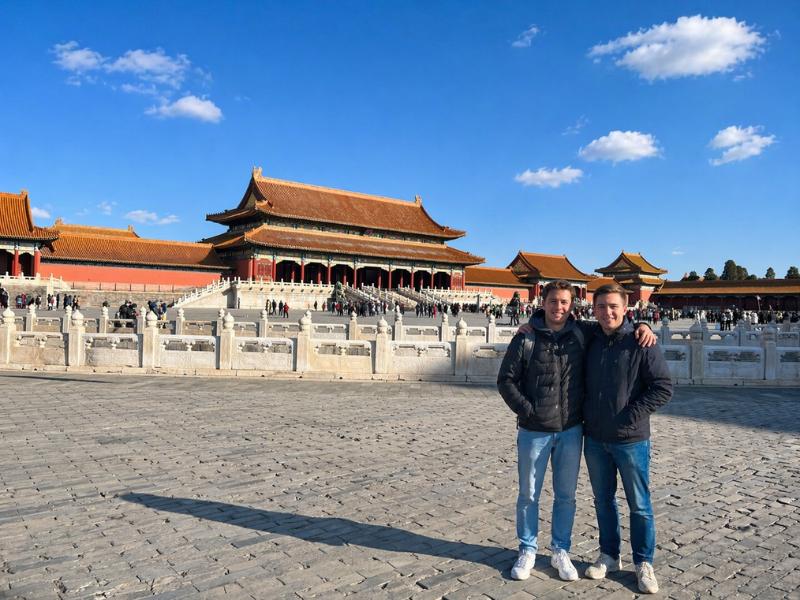
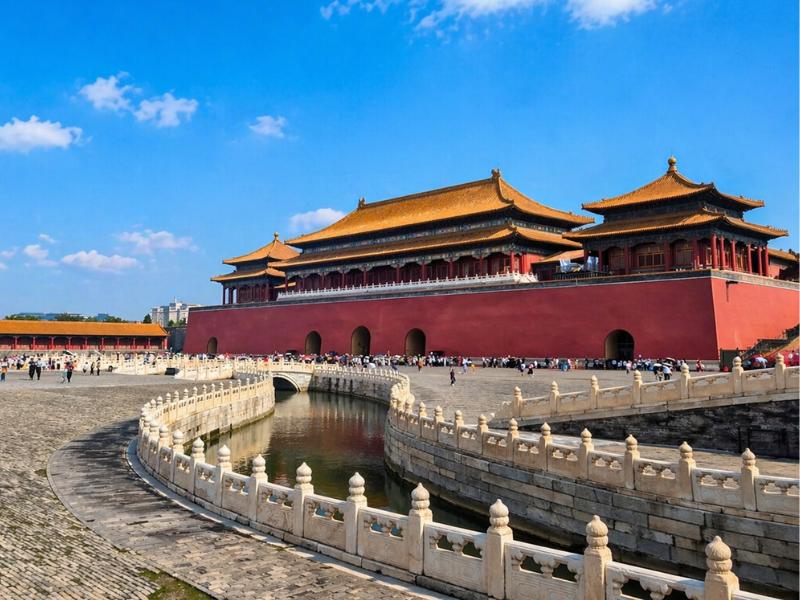
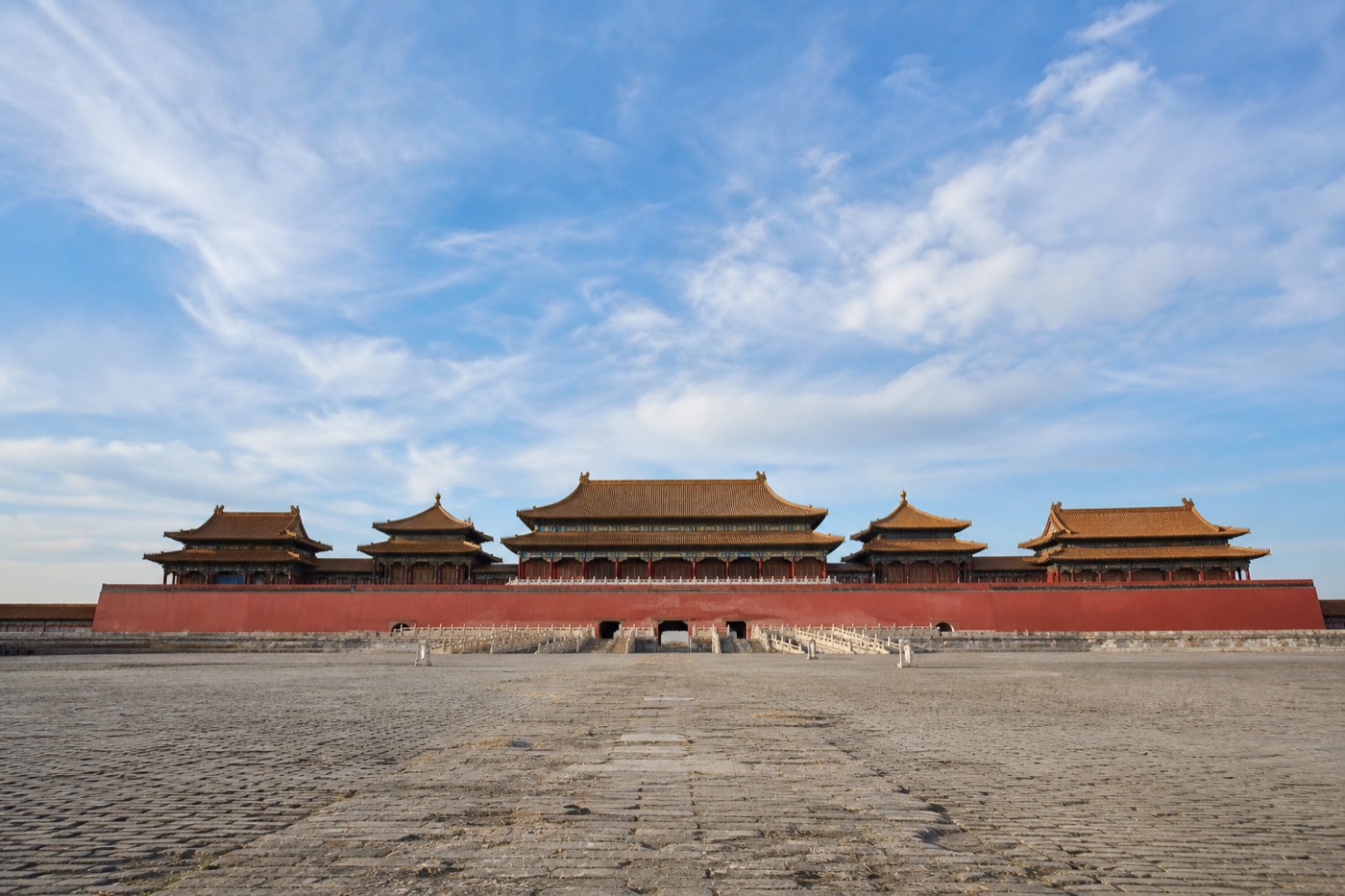
The Meridian Gate, Wumen in Chinese, is the main southern gate of the Forbidden City and the only entrance the great majority of visitors ever use. It rises to about 38m at the roof ridge, tall enough that it dwarfs the crowd funneling beneath it, and it is built as five separate gate-towers arranged in a concave, wing-like layout known as the "Five Phoenix" formation: a tall central pavilion flanked by two lower towers on each side, curving forward like arms reaching toward the plaza. From the open ground in front, the effect is deliberate. Nothing about the approach to the Forbidden City feels casual, and the gate is the first proof of that, long before you reach any hall inside.
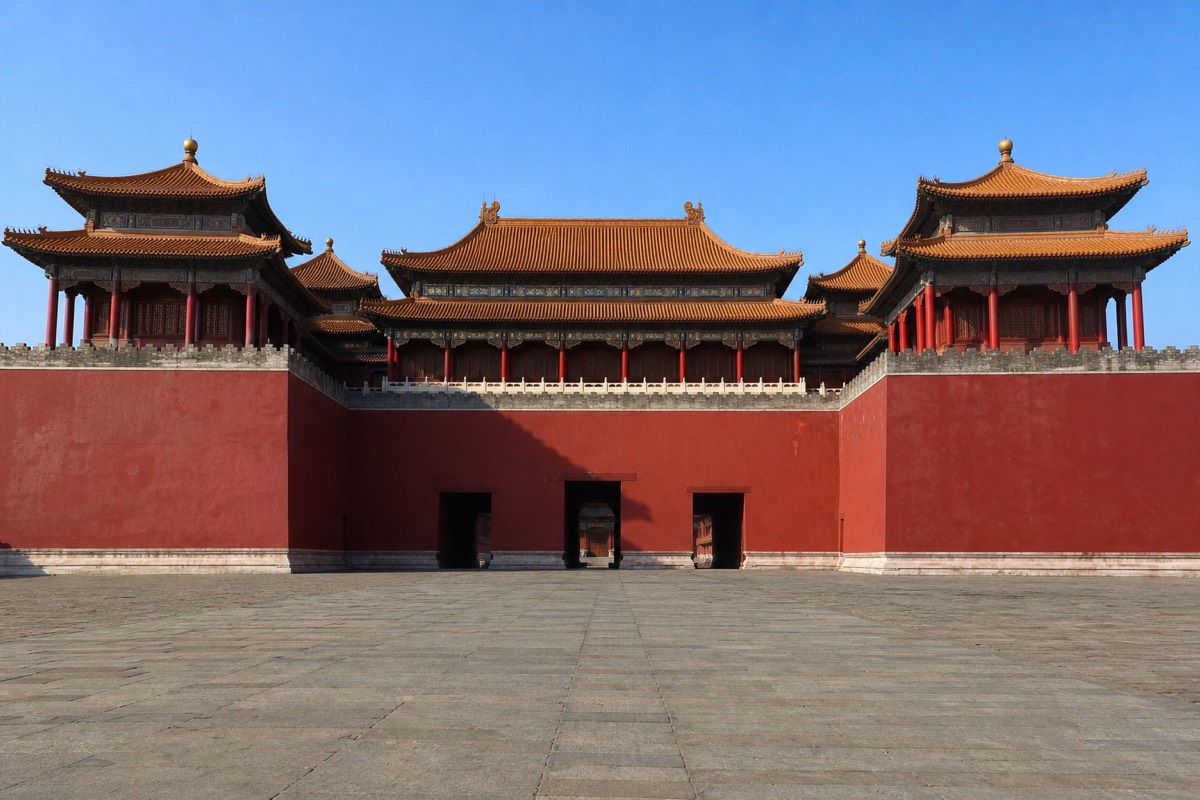
Today the Meridian Gate is where every visitor's ticket is checked against the real-name e-ticket system, so it functions as both the symbolic and the literal threshold of the site. The stretch of ground just outside it and the plaza just inside are where the morning crowd concentrates most heavily, simply because everyone funnels through the same five openings before spreading out. Arriving close to opening time, and having your ticket and passport ready before you reach the front of the queue, makes the first twenty minutes noticeably smoother.
| Feature | Detail |
|---|---|
| Chinese name | Wumen |
| Position | Main southern entrance, start of the central axis |
| Height | Approximately 38m at the roof ridge |
| Layout | Five towers in a concave "Five Phoenix" formation |
| Function today | Main visitor entrance and real-name ticket checkpoint |
| Busiest window | The first hour after opening |
What happens once you're through the gate?
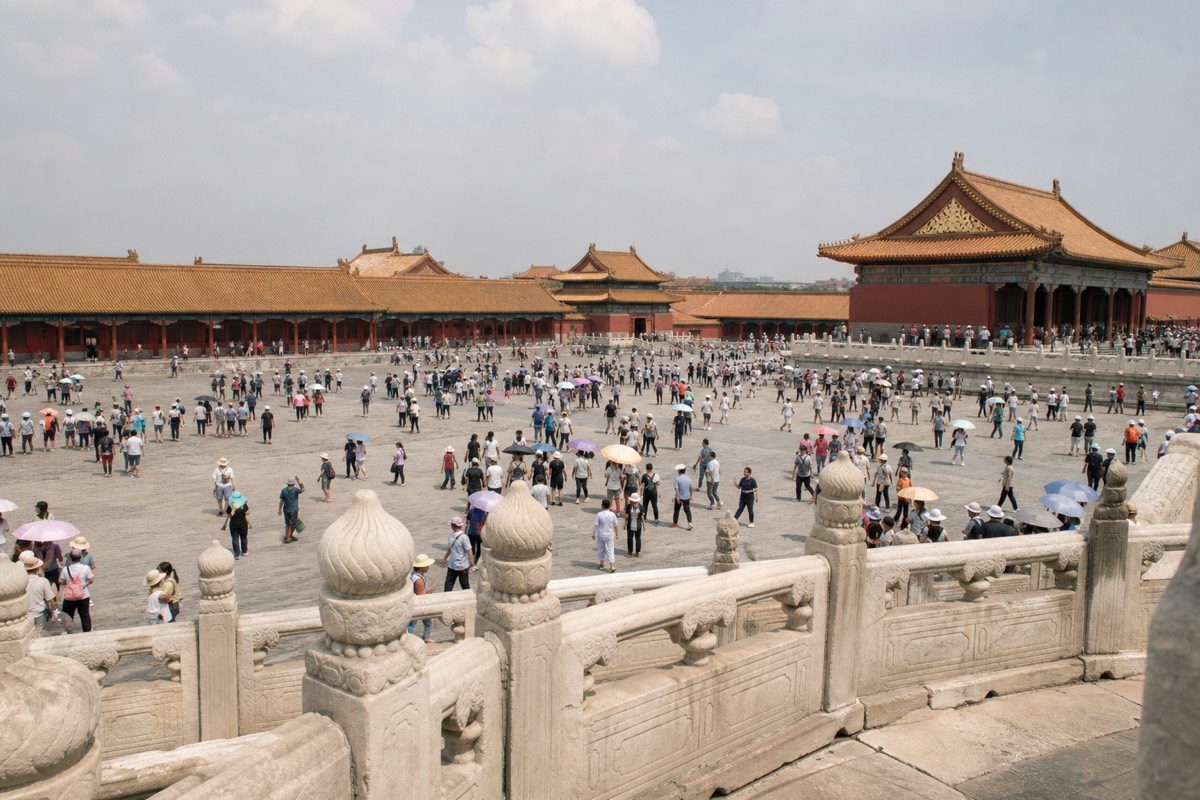
Past the Meridian Gate, the axis crosses the Inner Golden Water River, a narrow ceremonial waterway that curls in a gentle arc in front of the next gate, before reaching the Gate of Supreme Harmony. Beyond that gate opens the largest courtyard in the complex, a paved plaza wide enough that the crowd visibly thins out as it spreads across it, with the raised platform of the Hall of Supreme Harmony rising at the far end. This is the point where the scale of the Forbidden City first becomes obvious in a way photographs rarely capture: it is simply a lot of open stone under a lot of open sky, with the halls set back and raised up rather than crowding in close.
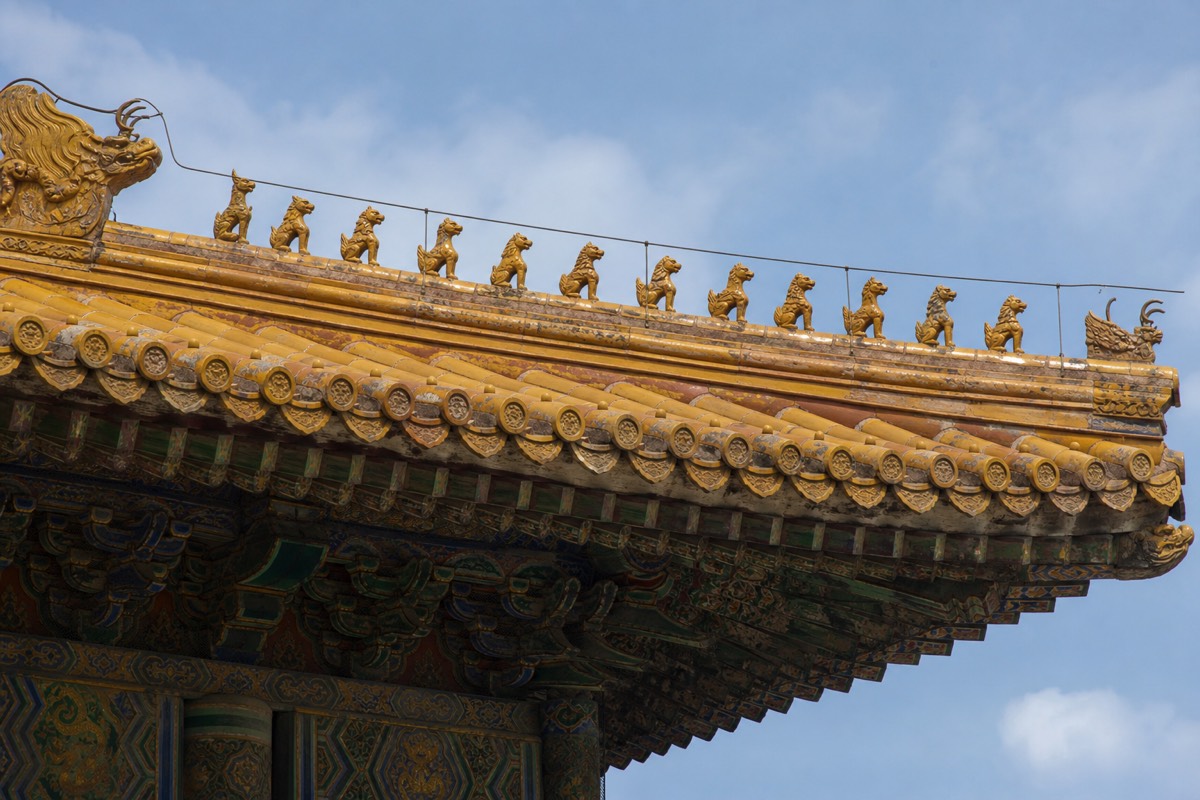
From here the central axis keeps running north in a straight line, hall after hall, gate after gate, all the way to the far end of the site. It is worth having a rough sense of the order before you arrive, since it is easy to walk past a side turning without realizing what you missed.
| Stop, in order | What it is |
|---|---|
| Meridian Gate | Main southern entrance and ticket checkpoint |
| Gate of Supreme Harmony | Threshold into the great outer-court courtyard |
| Hall of Supreme Harmony | Largest building, throne hall, centerpiece of the outer court |
| Hall of Central Harmony | Smaller hall continuing the outer-court sequence |
| Hall of Preserving Harmony | Third hall closing the outer-court run |
| Palace of Heavenly Purity | First major hall of the inner court |
| Palace of Earthly Tranquility | Continues the inner-court sequence |
| Imperial Garden | Landscaped space near the northern exit |
What is the Hall of Supreme Harmony, and why is it the centerpiece?
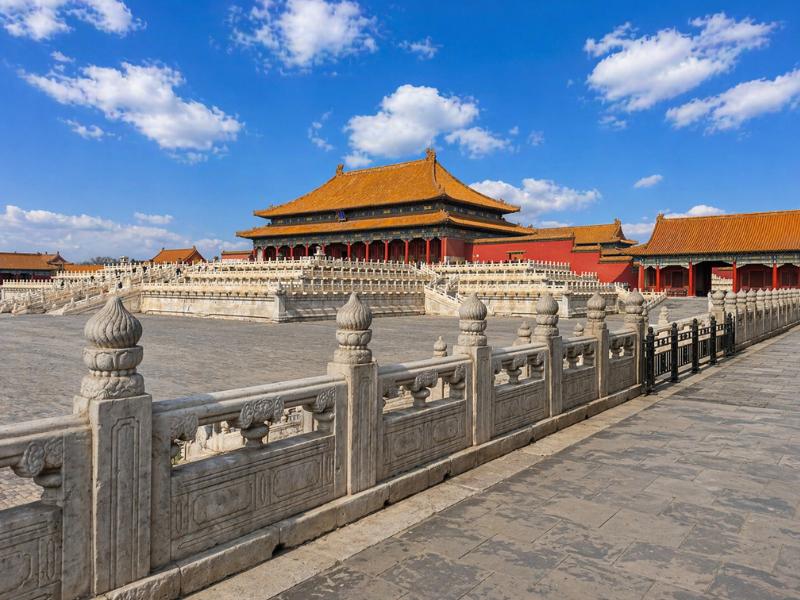
The Hall of Supreme Harmony, Taihedian, is the largest single building in the Forbidden City, with a footprint of roughly 64m by 37m, and it holds the throne itself, raised on a platform about 2m high and ringed by six gold-lacquered dragon pillars. If the Forbidden City has one building people picture when they hear the name, this is it.
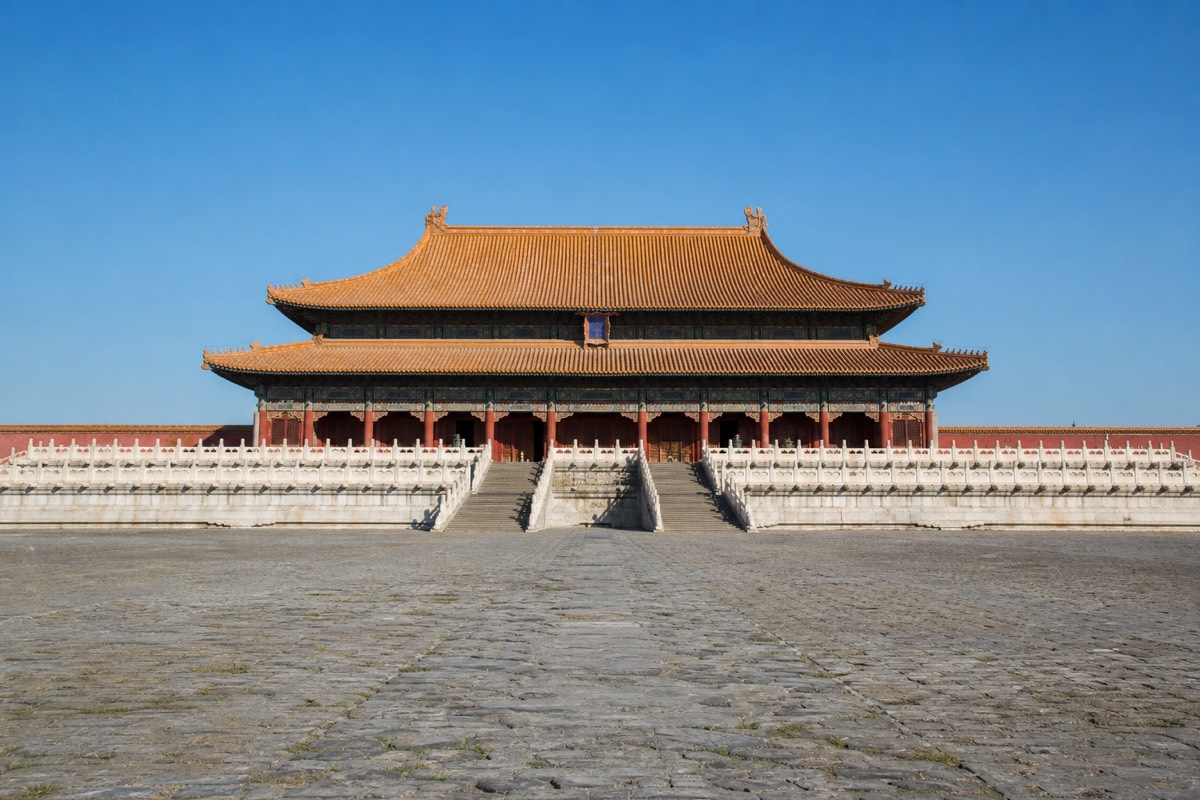
The hall sits at the top of a three-tiered white marble platform at the head of the great courtyard beyond the Gate of Supreme Harmony, raised deliberately above everything around it so that anyone crossing the plaza approaches the throne from below and at a distance. The scale alone tells you what the building was for: nothing else on the central axis matches its footprint, and the six dragon pillars ringing the throne draw the eye straight to the platform at the room's center. Dragon imagery throughout Chinese imperial architecture is tied closely to the throne and the emperor's authority, which is part of why the motif shows up so heavily in exactly this room and nowhere near as densely elsewhere on the site.
Two more halls continue the line directly behind it along the central axis: the Hall of Central Harmony and the Hall of Preserving Harmony, both smaller than the Hall of Supreme Harmony but built as part of the same continuous run of outer-court buildings. Together the three form the ceremonial spine of the outer court, the public-facing half of the complex, before the axis crosses into the inner court where the emperor's household lived.
| Feature | Detail |
|---|---|
| Chinese name | Taihedian |
| Status | Largest single building in the Forbidden City |
| Footprint | Approximately 64m x 37m |
| Throne platform | About 2m high |
| Surrounding pillars | Six gold-lacquered dragon pillars |
| Position | Center of the outer court, head of the main courtyard |
Most visitors view the Hall of Supreme Harmony's interior from behind a rope line at the doorway rather than walking inside, so the clearest photo is usually a straight-on shot taken from partway up the courtyard steps, looking directly through the open doors toward the throne.
What is the Treasure Gallery, and is it worth the extra ticket?
The Treasure Gallery sits inside the Palace of Tranquil Longevity, Ningshou Gong, in the northeastern part of the Forbidden City, requires a separate ticket priced around 10 RMB on top of general admission, and displays roughly 400 Qing-dynasty relics. It is one of the more skippable stops on a rushed visit and one of the more rewarding ones for anyone with an extra half hour to spare.
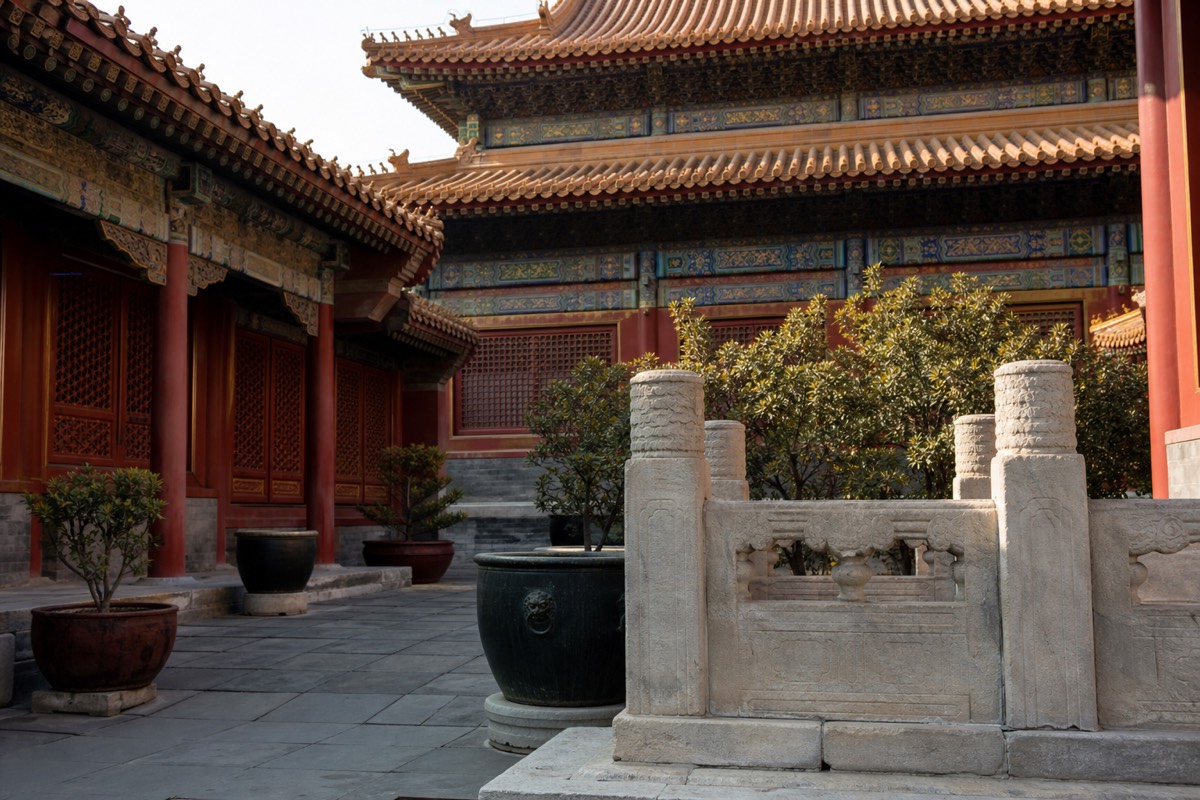
The Palace of Tranquil Longevity complex sits off to one side of the main north-south run, which is exactly why it gets missed. A visitor following the crowd straight down the center of the site can walk the entire length of the Forbidden City without ever turning toward it. Inside, the collection runs to Qing-dynasty court objects and decorative pieces, the kind of close, detailed craftsmanship that the sweeping courtyards and gate towers further south don't really show. Because it draws a fraction of the foot traffic the central axis does, it is also one of the few pockets of the site where it is possible to look at something for more than a few seconds without being jostled by the next group moving through.
Whether it earns the extra ticket comes down to time. A four-hour small-group visit built around the main axis may not leave room for the detour; a longer or private walking tour usually does. Photography and dress-code rules apply just as strictly inside the Treasure Gallery as anywhere else on site; our guide to what's allowed and what's off-limits covers the details. The Palace Museum's own official site carries the current admission details for both the general ticket and the gallery add-on, which is worth a quick check before you go since prices and any seasonal changes are set there directly, at the Palace Museum's official English site.
| Feature | Detail |
|---|---|
| Location | Palace of Tranquil Longevity (Ningshou Gong), northeastern part of the site |
| Ticket | Separate add-on, around 10 RMB, check the live listing |
| Collection | Approximately 400 Qing-dynasty relics |
| Crowd level | Noticeably lighter than the central axis |
| Best for | Visitors with extra time beyond the main axis walk |
How much do the landmarks cost to see, and what are the hours?
General admission runs on a two-tier seasonal price: around 60 RMB for an adult ticket in peak season, April 1 through October 31, and around 40 RMB in the off-season, November 1 through March 31. The Treasure Gallery and the separate Clock Gallery are each a further add-on of around 10 RMB. None of this is sold at a walk-up window: every ticket is e-ticket only, tied to a single passport or ID under a real-name reservation system, and official tickets release at 20:00 Beijing time, seven days ahead of the visit date, through the Palace Museum's own site or WeChat mini-program.
Opening hours shift with the same seasonal split. From April 1 to October 31 the site is open 8:30am to 5:00pm, with last admission at 4:00pm. From November 1 to March 31 it runs 8:30am to 4:30pm, with last admission at 3:30pm. The Forbidden City is closed on Mondays, with an exception for statutory holidays, a rule worth building any Beijing itinerary around.
| Item | Price / timing |
|---|---|
| Adult admission, peak season (Apr 1-Oct 31) | Around 60 RMB |
| Adult admission, off-season (Nov 1-Mar 31) | Around 40 RMB |
| Treasure Gallery add-on | Around 10 RMB |
| Clock Gallery add-on | Around 10 RMB |
| Hours, peak season | 8:30am-5:00pm, last admission 4:00pm |
| Hours, off-season | 8:30am-4:30pm, last admission 3:30pm |
| Closed | Mondays, except statutory holidays |
For the full walkthrough of how the real-name reservation system works and which tours already bundle the tickets in, see our guide to Forbidden City tickets and booking.
How does the scale of these landmarks compare to other palaces?
The Forbidden City as a whole covers about 72 hectares with more than 800 surviving buildings, and the three landmarks above sit inside a complex that is genuinely large by any measure, though the comparisons are worth stating carefully rather than in absolutes. It is larger by footprint than the château at the Palace of Versailles itself, though Versailles' surrounding park is much larger overall once you count the gardens. The Vatican's Apostolic Palace complex is far smaller by area, and for a broader sense of how the Forbidden City stacks up against other famous royal residences worldwide, see our comparison of the Forbidden City against other royal palaces of the world. According to the UNESCO World Heritage inscription for the Imperial Palaces of the Ming and Qing Dynasties, the site was recognized in 1987 specifically for how completely its architecture and planning reflect this scale and hierarchy, which is a large part of why the Hall of Supreme Harmony's footprint and the gate's height read as intentional rather than incidental. The complex is also part of a separate UNESCO listing added in 2024 for the Beijing Central Axis, the same north-south line the Meridian Gate, the Hall of Supreme Harmony and the Imperial Garden all sit on.
What the raw hectare figure doesn't convey on its own is how that scale is distributed. Versailles' château is a single dense building with its grandeur concentrated in a handful of famously ornate rooms; the Forbidden City spreads its scale across 800-plus separate buildings connected by open courtyards, so the sense of size comes from walking distance and repetition as much as from any single room's grandeur. That's also why the Treasure Gallery is so easy to miss on a first visit: in a complex this spread out, one side building among hundreds doesn't announce itself the way a single standout room in a smaller palace would.
| Site | Comparison |
|---|---|
| Forbidden City | About 72 hectares, 800+ buildings |
| Palace of Versailles (château) | Smaller footprint than the Forbidden City; the surrounding park is much larger overall |
| Vatican Apostolic Palace | Far smaller by area |
What else is worth seeing along the way?
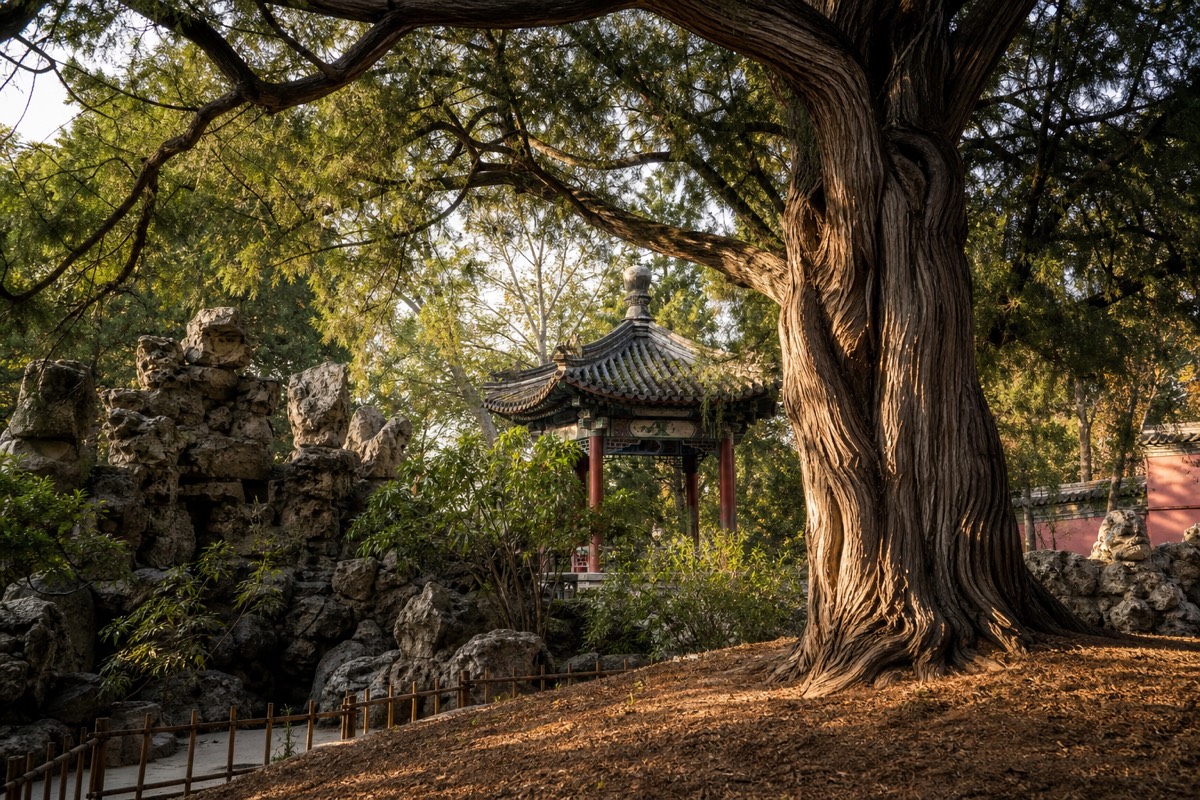
The central axis does not end at the Hall of Supreme Harmony. Past the outer court's three ceremonial halls, the axis continues into the inner court, past the Palace of Heavenly Purity and the Palace of Earthly Tranquility, a shift in scale and atmosphere that many first-time visitors notice without quite placing why. At the very back of the site, before the exit near Shenwumen, the Gate of Divine Might, sits the Imperial Garden, a compact, rock-and-pine landscaped space that functions as a natural release after the long procession of formal halls. It is small compared to the courtyards further south, but the change of pace, from stone plazas to garden paths, is part of why it works as a closing stretch to the walk.
None of this needs to be rushed through in one direction. Readers still confirming that independent visitors are even allowed inside can check our guide on whether you can actually visit the Forbidden City before planning the rest of the route. A visitor who has already read up on the Forbidden City's central axis and walking route can plan which side detours are worth the extra steps, and anyone still deciding how much time to leave for the whole site should check how long a Forbidden City visit actually takes before locking in a schedule.
What are the photography and visiting rules at these stops?
The rules that apply across the site matter most at exactly the three landmarks above, since they draw the heaviest attention. Flash photography is not allowed inside any of the halls, including the Hall of Supreme Harmony, because it risks damaging fragile painted surfaces and artifacts, so the best interior shots are taken without flash from the doorway. Tripods are generally not permitted, though selfie sticks under 1.3m are fine, which covers most of what visitors actually bring. Drones are strictly forbidden anywhere on site, a rule that applies as much over the Meridian Gate's rooftops as anywhere else. Dress respectfully, wear proper footwear for the amount of stone paving involved, and don't expect to bring large wheeled luggage or scooters through any of the gates. Unauthorized commercial photography or filming isn't permitted either, which is part of why so few productions have ever shot inside the real complex.
How do these three landmarks fit into a typical visit?
In practice, the order is fixed by the building itself: Meridian Gate first, because it is the only entrance most visitors use; the Hall of Supreme Harmony next, because it sits directly on the central axis everyone follows; and the Treasure Gallery last, or skipped, because it requires a deliberate turn off that axis. A four-hour guided visit typically covers the gate and the main halls comfortably but may need to trim the Treasure Gallery detour; a longer private walking tour has room for all three plus the Imperial Garden at the end.
| Stop | Time on the main axis | Extra ticket needed? | Skippable on a short visit? |
|---|---|---|---|
| Meridian Gate | Entrance point | No, included in general admission | No, it's the only way in |
| Hall of Supreme Harmony | Center of outer court | No | No, it's the main attraction |
| Treasure Gallery | Detour, northeastern corner | Yes, around 10 RMB | Yes, on a rushed visit |
| Imperial Garden | Near the northern exit | No | Rarely, most visitors pass through anyway |
For travelers who want the ticketing and gate logistics sorted before arrival, our guide to Forbidden City tickets and booking covers the real-name reservation system in full, and the current Forbidden City tour options bundle entrance tickets with a guide who can point out details like the dragon pillar count or the Treasure Gallery entrance that are easy to walk past unguided. If you're still choosing between the six available tours, our comparison of which Forbidden City tour to book lays out the differences side by side.
What if you only have time for one of the three?
If a tight schedule forces a choice, the Hall of Supreme Harmony is the one to prioritize. It sits directly on the central axis, so reaching it costs no extra time or planning beyond simply walking straight ahead from the Meridian Gate, and it is the single building most visitors picture when they think of the Forbidden City in the first place. The Meridian Gate itself doesn't really need a separate decision, since every visitor passes through it just to get inside. That leaves the Treasure Gallery as the one genuinely optional stop of the three, worth adding back in only once the main axis is covered and there's still time on the clock.
The distinction matters most on the shortest visits. A four-hour small-group tour moves at a pace built around the outer court and the main halls, which covers the Meridian Gate and the Hall of Supreme Harmony comfortably without rushing. Fitting the Treasure Gallery into that same window usually means trading it against something else, whether that's the Imperial Garden at the far end or simply extra time to take in the courtyard in front of the throne hall without being hurried along.
Is it easy to find all three without a guide?
The Meridian Gate and the Hall of Supreme Harmony are impossible to miss, since they sit directly on the path every visitor follows from the entrance. The Treasure Gallery is the one that catches people out. It is not signposted as aggressively as the main halls, its entrance is a side turn rather than a straight continuation of the central path, and its separate ticket line is easy to walk past without noticing. Visitors relying only on a paper map from the gate sometimes discover only afterward that they walked within a hundred meters of it. A guide, or at minimum a downloaded map checked before entering, solves this in under a minute; without one, it is a genuine miss for a first-time visitor moving quickly through the site. Travelers combining the Forbidden City with a trip to Tiananmen Square the same day can find the full logistics, including the separate reservation the square requires, in our guide to visiting both together.
What do these three spaces have in common, architecturally?
Put side by side, the Meridian Gate, the Hall of Supreme Harmony and the Treasure Gallery trace the same structural logic that shapes the entire Forbidden City: scale and position on the central axis track directly with status. The Meridian Gate, at roughly 38m, is the tallest single threshold on the site because everyone, regardless of rank, had to pass under it to get anywhere else. The Hall of Supreme Harmony, at roughly 64m by 37m, is the largest footprint on the site because it held the throne itself, raised higher again on its own 2m platform inside the building. The Treasure Gallery breaks that pattern deliberately: it sits off the main axis entirely, inside the separate Palace of Tranquil Longevity complex in the northeastern corner, which is exactly why it needs its own add-on ticket and why so many visitors walk the length of the site without ever reaching it.
That contrast is a useful way to read the whole visit. The closer a building sits to the central north-south line and the ground floor of the plaza, the more its scale was built to be seen by a crowd from a distance, the Meridian Gate and the Hall of Supreme Harmony both fit that description. The Treasure Gallery, tucked into its own quieter complex with roughly 400 Qing-dynasty relics on display, works on the opposite scale: a small, close-up collection meant to be examined one case at a time rather than taken in from across a courtyard.