Best Time to Visit the Forbidden City: Weather, Crowds, Hours & Closed Days (2026)
Hours change twice a year, the palace is shut one day a week, and only 80,000 people get in on any given day. None of that is a detail you want to discover at the gate.
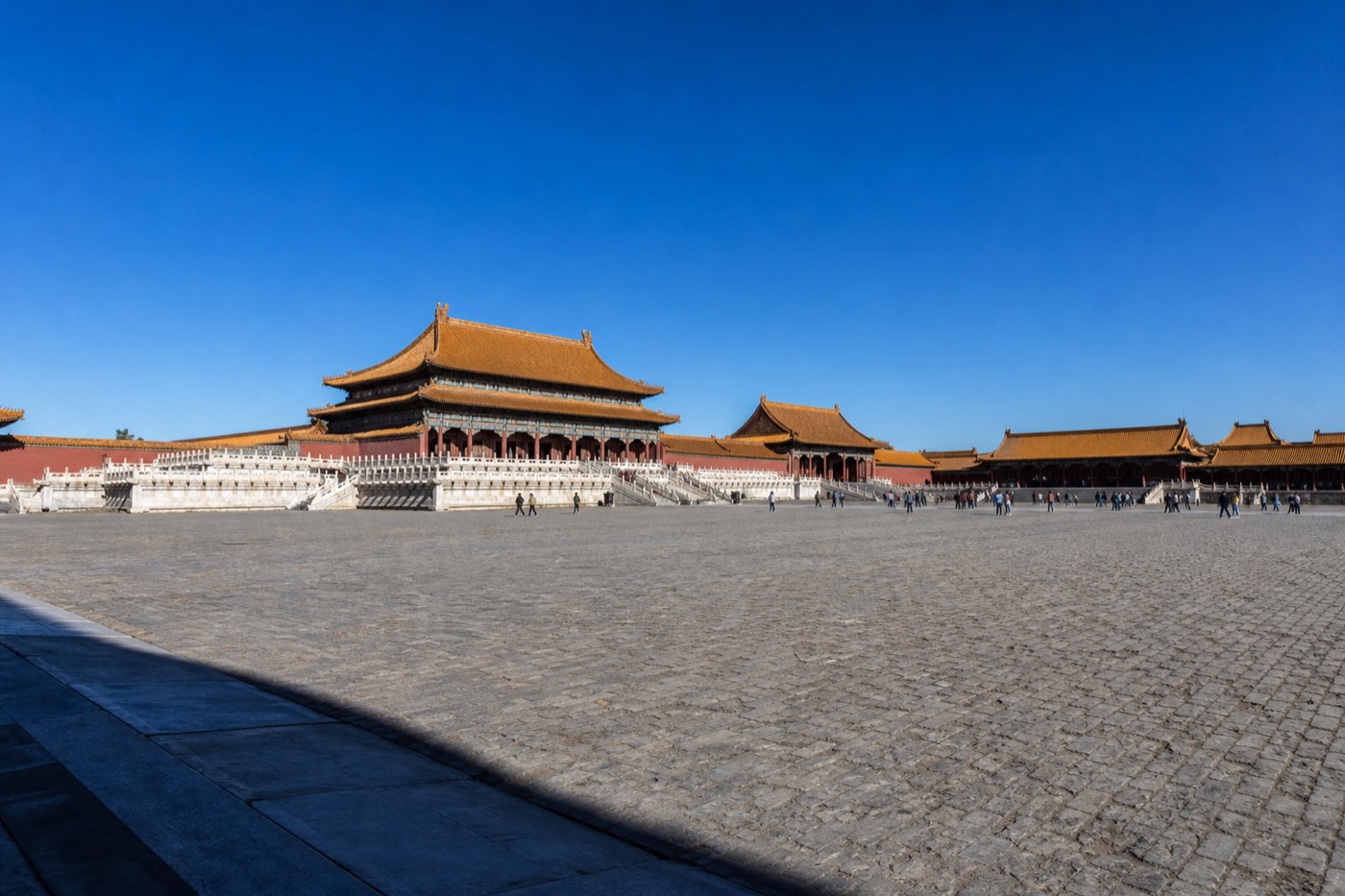
Two numbers decide more about your visit than anything else: which day of the week it is, and which side of April 1st the calendar falls on. Get either wrong and the day looks very different.
If you plan to see this in person, two-hour palace walk is a starting point. Compare its actual route with the time you have.
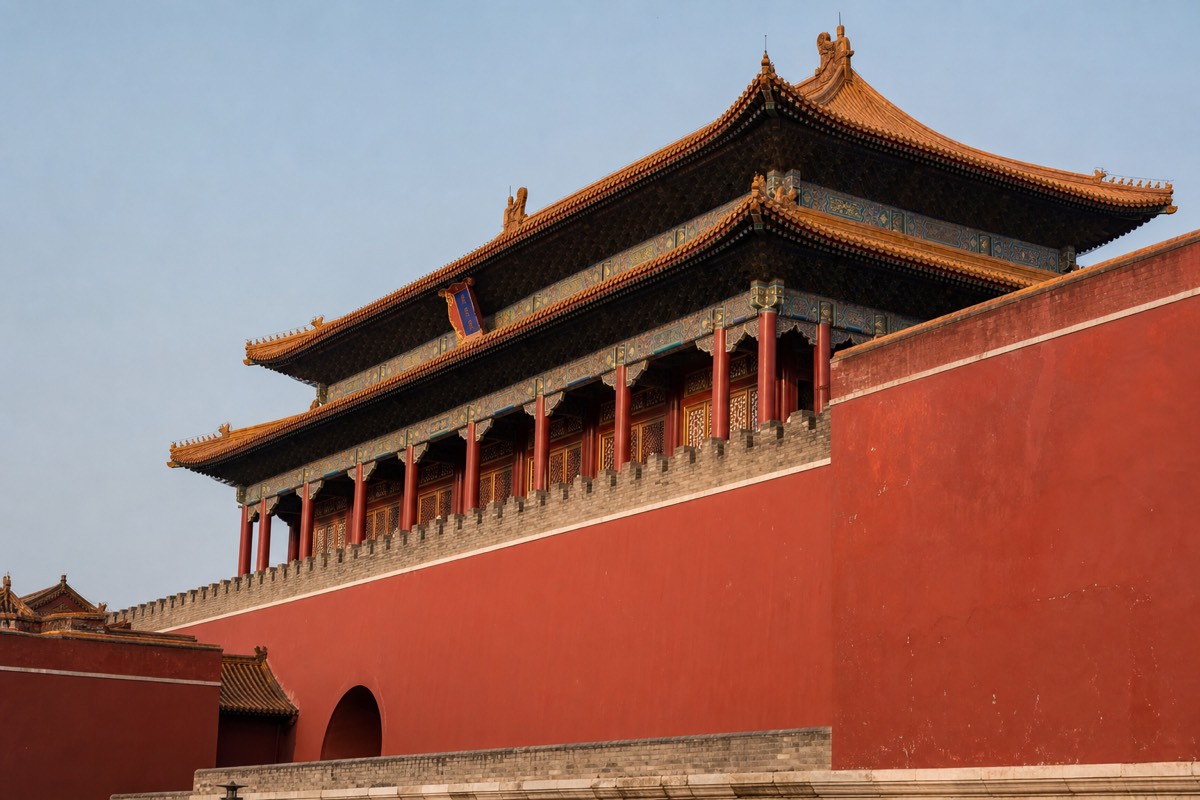
Booking choice: Choose TG18: English-guided Forbidden City walk and entry ticket. Meet at Meridian Gate; finish at the north gate. No square visit or hotel transfer. Explore Two-Hour Palace Walk
Season by season: crowds and weather at a glance
Crowd levels are typical seasonal patterns, not holiday peaks; weather is described qualitatively since no site-specific temperature data is verified for this guide. The 80,000/day cap and Monday closure apply year-round.
What are the Forbidden City's actual opening hours?
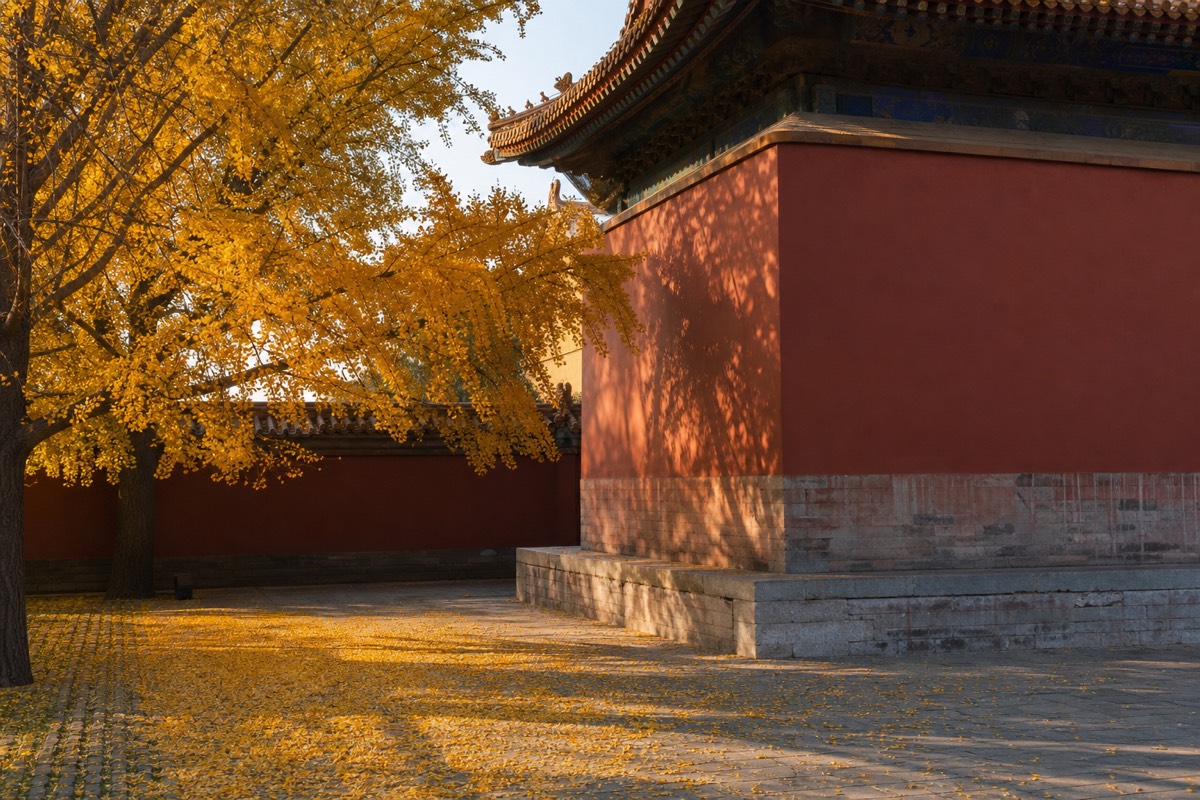
The Forbidden City runs on two seasonal schedules: April 1 through October 31, it's open 8:30am to 5:00pm with last admission at 4:00pm; November 1 through March 31, it's open 8:30am to 4:30pm with last admission at 3:30pm. It's closed every Monday except statutory public holidays. Both the hours and the last-admission cutoff matter, since the ticket gates stop accepting new entries well before the palace actually closes for the day.
| Season | Open | Last admission |
|---|---|---|
| April 1 - October 31 (peak season) | 8:30am - 5:00pm | 4:00pm |
| November 1 - March 31 (off season) | 8:30am - 4:30pm | 3:30pm |
The Monday closure is the single most common scheduling mistake first-time visitors make, particularly anyone building a short Beijing itinerary around a specific day and only checking it against the palace's hours, not its weekly closure. The one exception is a statutory public holiday that falls on a Monday, when the palace opens as normal; outside of that exception, treat Monday as fully off-limits and plan the rest of the week's itinerary around it rather than the other way round. Confirm the current schedule directly with the Palace Museum's own official English site before finalizing travel dates, since museum hours and holiday exceptions do shift.
Which day is the Forbidden City closed?
Monday, with the statutory-holiday exception noted above. This is a fixed weekly closure rather than a seasonal one, so it applies year-round regardless of which of the two hours schedules is in effect. Because tickets are e-ticket only, released through the museum's own reservation system seven days ahead, there's no possibility of turning up on a closed Monday and simply buying a ticket at the gate; the booking system itself won't offer that date.
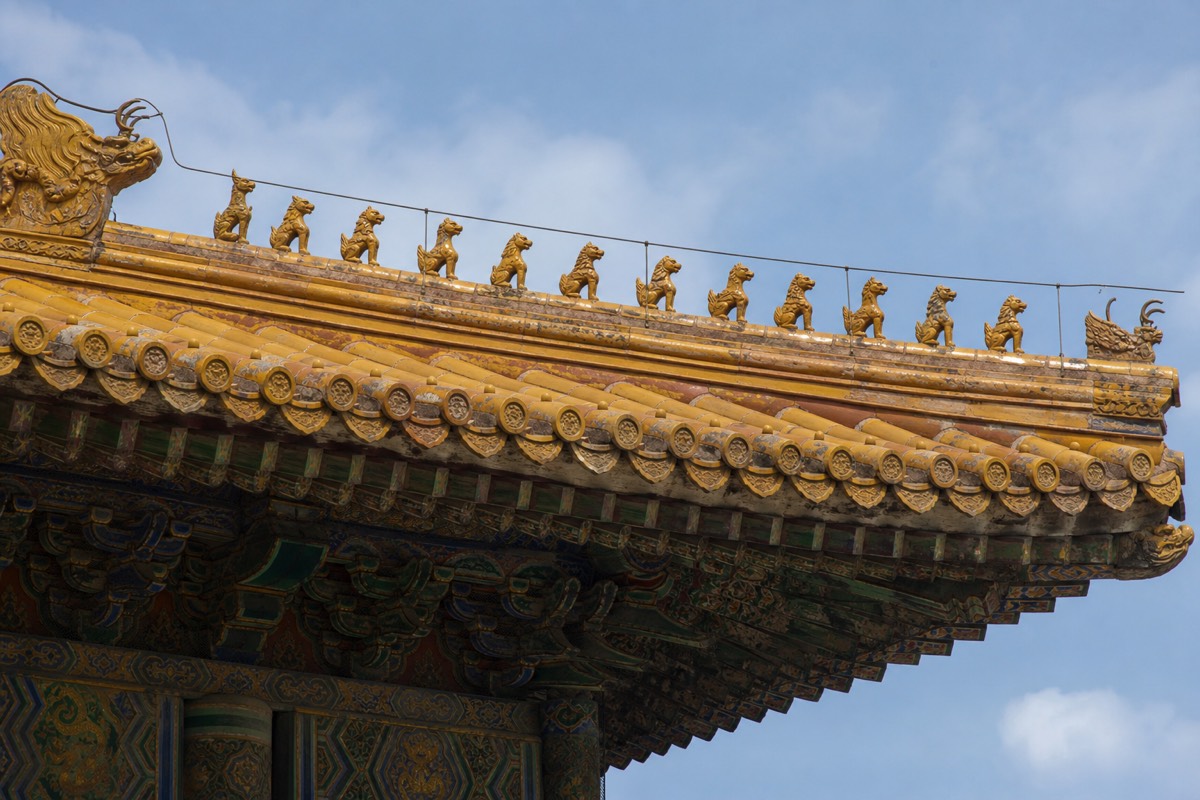
The Forbidden City is closed every Monday, except when a statutory Chinese public holiday falls on that Monday, in which case it opens as normal. There is no walk-up ticket option, so this closure is enforced at the booking stage, not just at the gate.
What's the daily visitor cap, and how does it affect getting in?
The Palace Museum caps daily admissions at 80,000 visitors, a figure most consistently cited across independent travel-research sources covering the site. Because tickets are tied to a real-name reservation system linked to a single passport or ID, and official tickets release at 8:00pm Beijing time exactly seven days ahead of the visit date, popular dates, weekends, school holidays and the days around major Chinese public holidays, can sell through the cap well before the visit date arrives. This is one of the more concrete, practical reasons the season and day of the week you choose actually shapes whether you get in at all, not just how comfortable the visit feels once you're inside. A fuller breakdown of the booking mechanics themselves, rather than the seasonal timing covered here, is in the guide to Forbidden City tickets, prices and how to book.
How do the four seasons compare for weather?
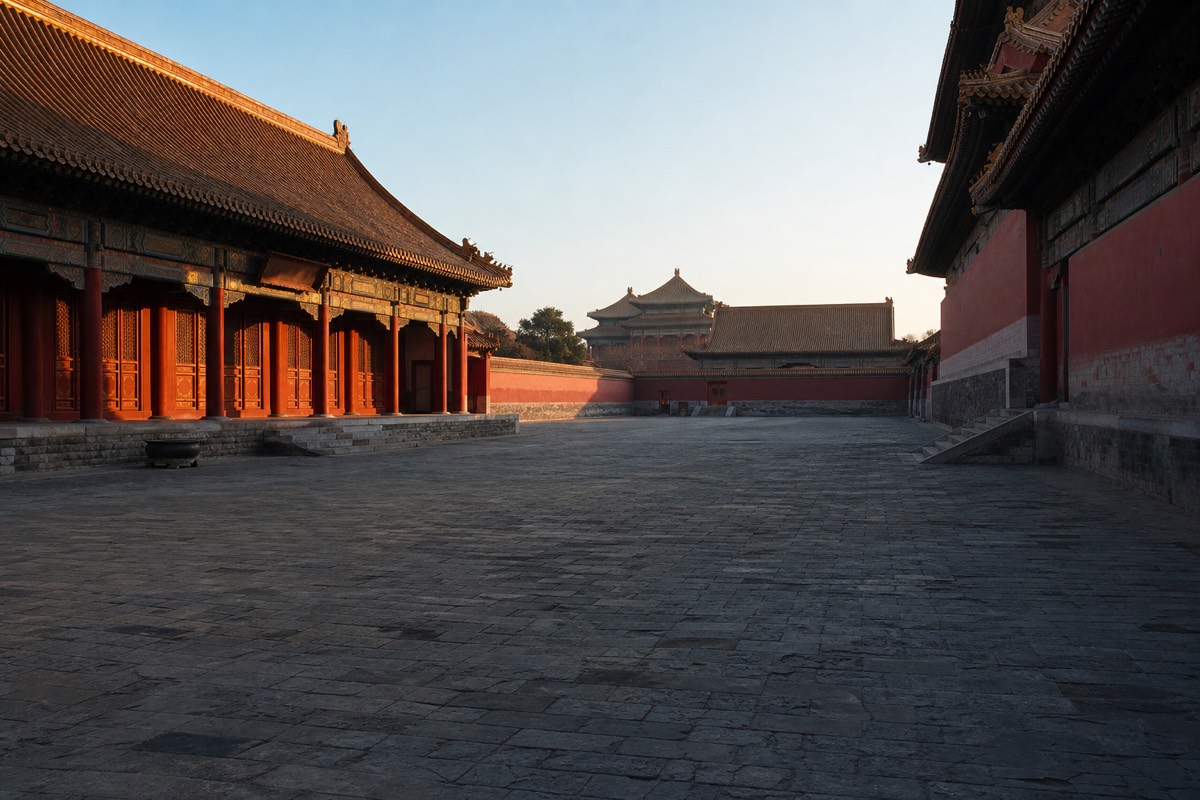
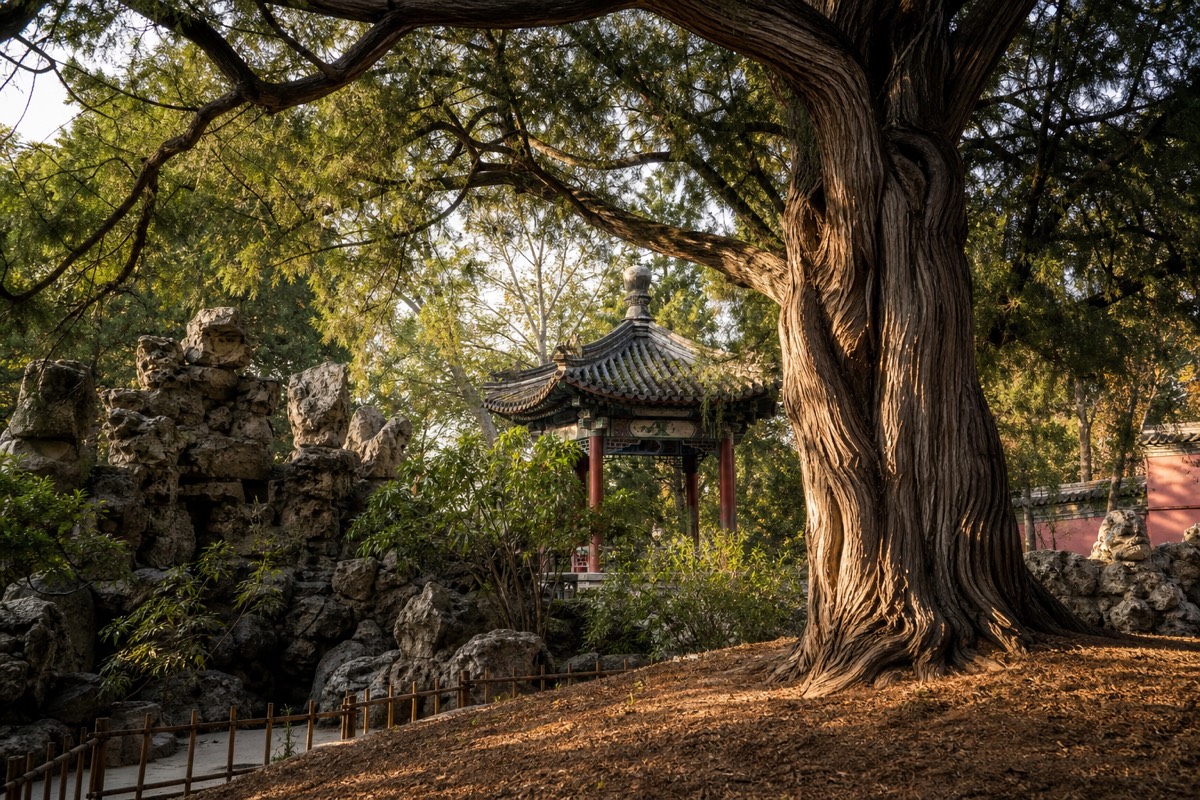
Beijing's seasons are distinct and each shapes the visit differently, though exact temperatures vary year to year and are best checked against a current forecast rather than a fixed guide figure. Spring brings mild temperatures and the Imperial Garden's old trees coming into leaf, generally regarded as one of the more comfortable stretches of the year to be walking the open courtyards for hours. Summer in Beijing runs hot and humid, with little shade across the Outer Court's wide stone courtyards, which makes early-morning visits noticeably more comfortable than midday ones in this season specifically. Autumn is widely considered the most pleasant season for outdoor sightseeing in Beijing, with crisper, clearer air than summer and good light for photography across the golden rooflines. Winter is cold, and the palace's open courtyards offer little shelter from wind, but it is also the quietest season by a wide margin, and a light dusting of snow across the tiled roofs is, by most accounts, one of the most photogenic conditions the site sees all year.
| Season | Weather character | What it means for the visit |
|---|---|---|
| Spring | Mild, flowering trees in the Imperial Garden | Comfortable walking conditions, moderate crowds building toward summer |
| Summer | Hot and humid, little shade in open courtyards | Early morning is noticeably more comfortable; peak season for crowds |
| Autumn | Crisp, clear, generally regarded as the most pleasant season | Strong light for photography, still within peak season for hours |
| Winter | Cold, little shelter from wind in open courtyards | By far the quietest season, off-season hours apply |
How does the weather actually affect the walk itself?
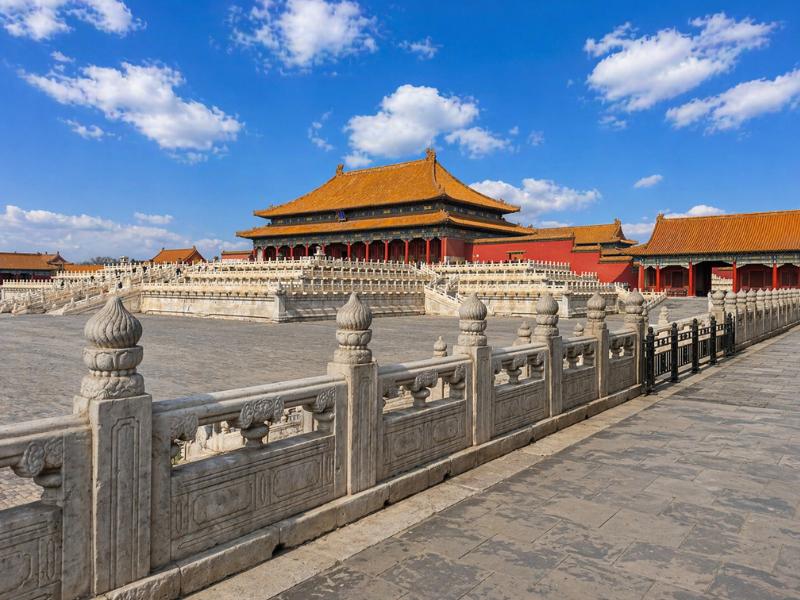
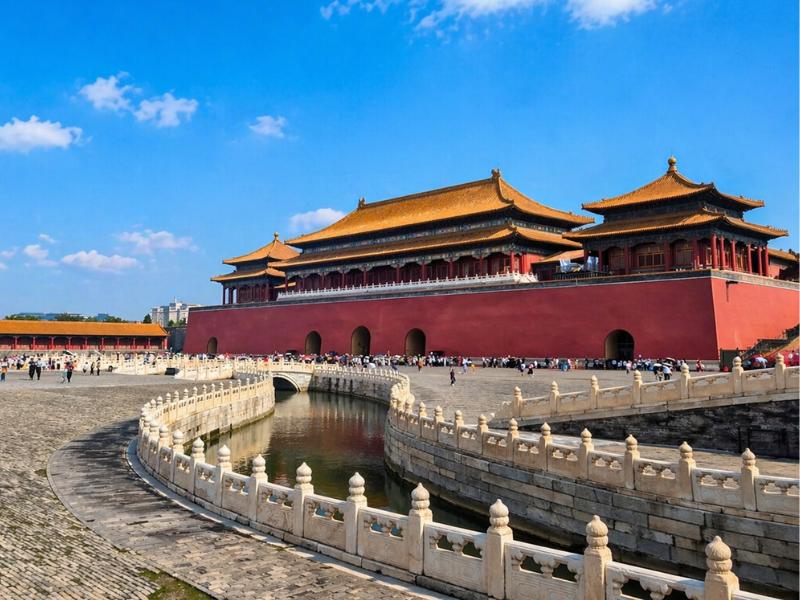
The Forbidden City is almost entirely outdoors, and that matters more here than at most museums, since the Outer Court's great courtyards offer essentially no shade and the walking route described in the guide to the palace's central-axis layout covers real ground between gates. In summer, the exposed stone paving between the Meridian Gate and the Hall of Supreme Harmony can turn a short walk into an uncomfortable one by midday, which is part of why an early start matters more in that season than in any other. In winter, the same open ground offers little protection from wind, and the halls themselves are unheated, so layers matter more than any single heavy coat.
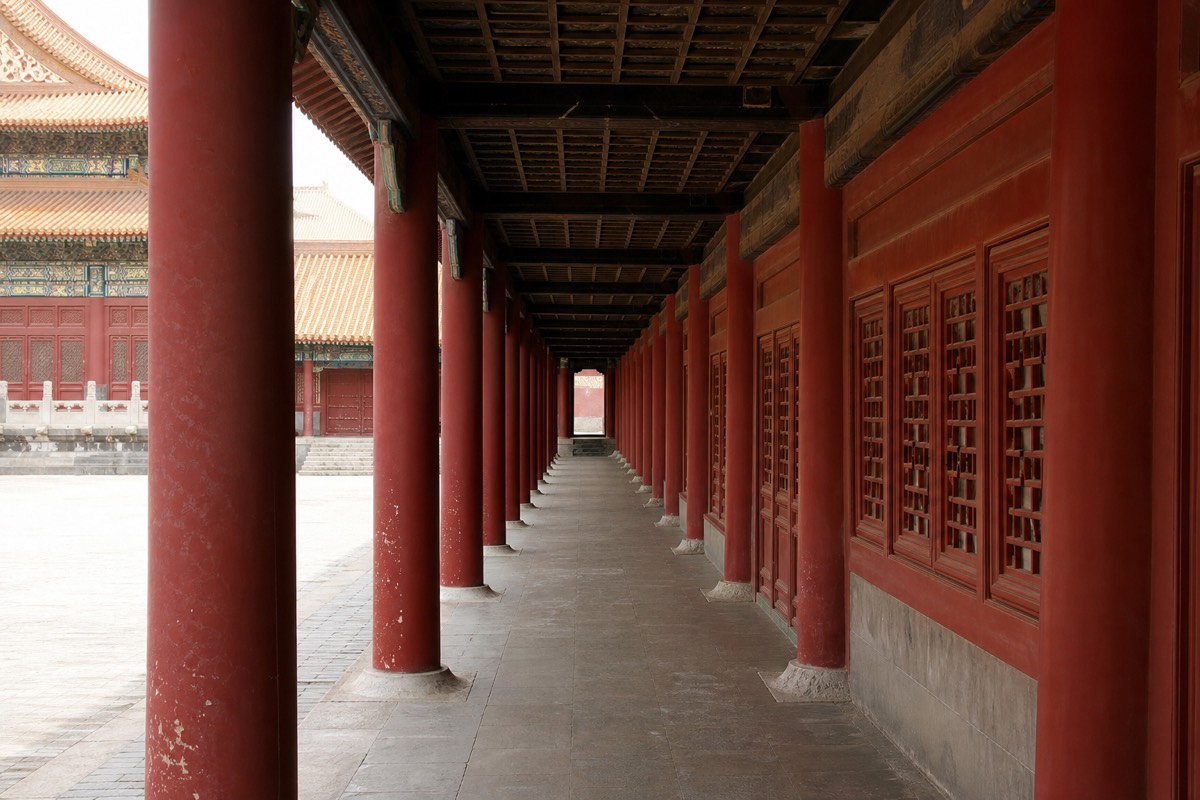
Spring and autumn are the two seasons where the walk itself is least likely to work against you: temperatures are milder, the courtyards are more tolerable to cross at a leisurely pace, and the Imperial Garden at the north end of the route rewards lingering rather than rushing through it toward shelter. None of this changes the route or the distances involved, only how comfortable covering them feels, so the seasonal choice is really a comfort decision layered on top of the crowd and hours decisions covered elsewhere in this guide.
Which season has the smallest crowds?
Winter, from November through March, is consistently the quietest season at the Forbidden City, both because it falls under the shorter off-season hours and because cold weather keeps casual and domestic tourism down. Spring and autumn sit in between, busy but rarely overwhelming outside of specific holiday weeks, and summer is the peak season for both heat and crowd volume together.
Two windows deserve specific avoidance regardless of season: the "Golden Week" national holiday in early October and the multi-day Chinese New Year period in late January or February, both of which draw enormous domestic travel volume across the whole country, not just Beijing, and can push the palace toward its daily cap well before most visitors would otherwise plan to arrive. Travelers weighing broader trip-safety questions alongside the calendar can read our guide on whether it's safe for Americans to visit Beijing right now. Outside of those specific weeks, a winter weekday visit is, by a wide margin, the calmest way to experience the axis walking route described in the Forbidden City map and layout guide without competing for space at the Hall of Supreme Harmony's viewing platform.
| Time of year | Relative crowd level | Notes |
|---|---|---|
| Winter weekday (Nov-Mar, excl. Chinese New Year) | Low | Quietest realistic window; off-season hours apply |
| Spring (Apr-May) | Moderate | Comfortable weather draws steadily rising crowds |
| Autumn (Sep-Oct, excl. Golden Week) | Moderate to high | Popular for weather and photography |
| Summer (Jun-Aug) | High | Peak heat and peak crowd volume together |
| Golden Week (early Oct) | Very high | National holiday; daily cap can fill fast |
| Chinese New Year period (Jan/Feb) | Very high | Major domestic travel holiday, dates shift yearly |
Is there a best time of day to arrive, regardless of season?
Arriving close to the 8:30am opening consistently beats arriving mid-morning or in the afternoon, in every season. Tour groups and independently booked visitors both tend to cluster arrivals from mid-morning onward, so the first hour or so after opening is reliably the calmest window the palace sees on any given day, ticket cap and season aside. This holds even in the quieter off-season months, since the same clustering pattern repeats regardless of overall visitor volume. A more detailed look at time-of-day patterns specifically, rather than the seasonal patterns covered in this guide, is in the separate piece on the best time of day to visit the Forbidden City.
The same logic applies at the other end of the day, though less powerfully. In peak season, the hour or so before last admission at 4:00pm tends to thin out again, since day-trippers and tour groups have generally moved on by then, though this window is shorter and less reliable than the opening-hour calm, and it doesn't leave much time to see everything before closing. In off-season months, with last admission at 3:30pm, that late window barely exists at all, which is one more reason winter visits favor an early start over a late one.
Does the season affect which tour makes sense?
A ten-hour English tour pairs the Forbidden City with Mutianyu, pickup, entrances, lunch and a wall cable-car ride. Tiananmen is a drive-by, not a square visit. Confirm pickup area, group option and Monday route before booking.
Weekday or weekend: does the day of the week matter as much as the season?
Yes, often more than people expect. A winter weekday can be quieter than a spring or autumn weekend, since domestic weekend and holiday travel moves the needle on crowd size at least as much as the calendar month does. Weekends draw a heavier mix of domestic family visitors and school groups on top of whatever international tourism the season already brings, and that combination compounds fastest in spring and autumn, when the weather itself is also drawing people out.
The clearest pattern shows up in how fast the daily reservation cap fills. On an ordinary winter weekday, the palace rarely approaches its 80,000-visitor ceiling at all. On a spring or autumn weekend outside of any national holiday, it can come close, and during Golden Week or the Chinese New Year period, weekday and weekend distinctions mostly disappear because every day in the window behaves like a peak day. For anyone with real flexibility on travel dates, choosing a weekday over a weekend is one of the simplest, most reliable levers available, regardless of which season the trip ultimately falls in.
| Day type | Typical pattern |
|---|---|
| Winter weekday | Rarely approaches the daily cap; the calmest combination on the calendar |
| Winter weekend | Busier than a winter weekday but still well below peak-season crowding |
| Spring/autumn weekday | Moderate; comfortable weather draws steady but manageable numbers |
| Spring/autumn weekend | Can approach the daily cap, especially in good weather |
| Summer weekday or weekend | Consistently busy either way; season matters more than day of week here |
| Golden Week / Chinese New Year, any day | Weekday/weekend distinction largely disappears; every day runs near capacity |
How does the 80,000-visitor cap actually play out over the course of a day?
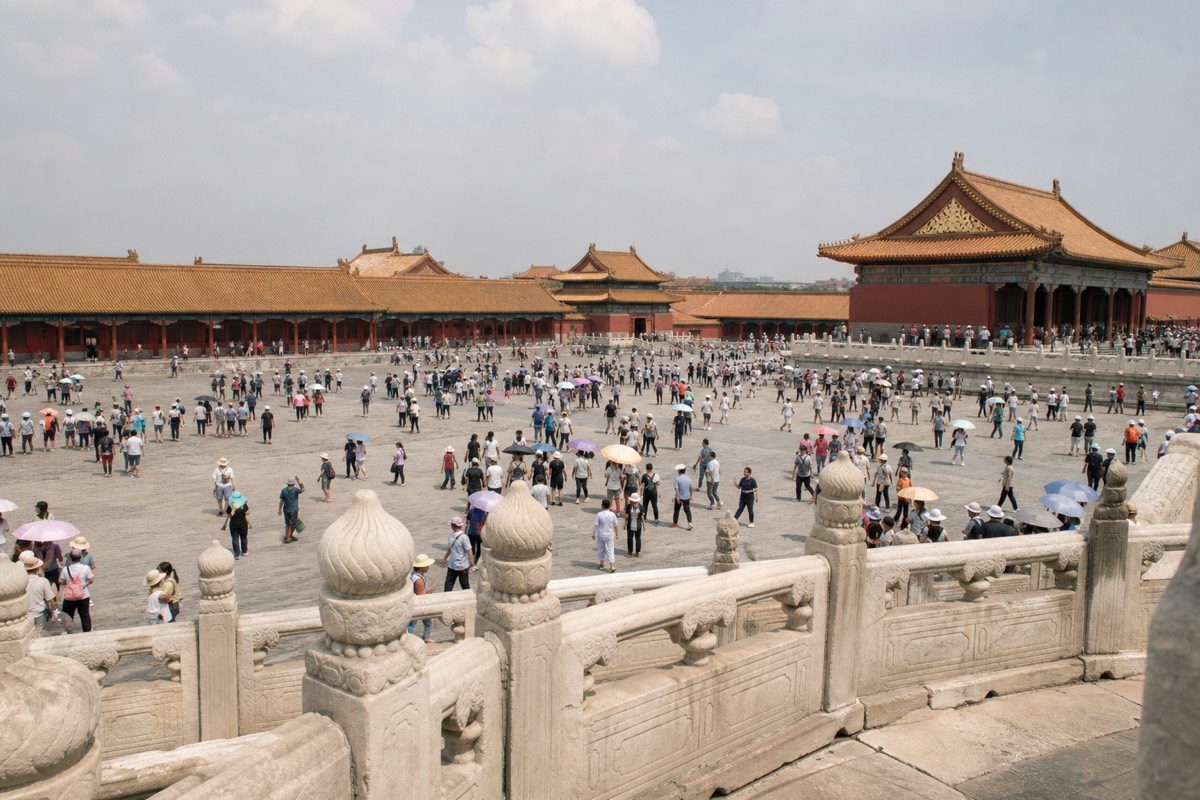
The cap is a running total for the whole day, not a queue that simply cuts off once a certain number of people are physically inside at one moment, and it is enforced at the booking stage through the real-name reservation system rather than by turning people away at the gate. In practice, that means the busiest single moment inside the palace on a near-capacity day tends to fall in the late morning, once both the early-arrival visitors and the mid-morning tour-group wave are inside at the same time, well before the ticket cap for the day has actually been reached in booking terms. The gates open at 8:30am regardless of season, and reservations are checked against a passport or ID at entry, so the flow through the Meridian Gate is steady rather than a single rush, but the cumulative crowd inside the Outer Court still builds through the morning and only really thins out in the final hour or two before last admission.
What this means practically is that arriving at or near opening does more than just beat the crowd that has already booked for the day; it also means visiting before the cumulative in-palace crowd has built to its daily peak, which typically happens by late morning on any date close to capacity. Visitors who can only arrive in the afternoon on a near-capacity day should expect the calmest conditions to already have passed, though the palace never becomes genuinely empty during open hours on a day that has sold near its cap.
How far ahead should you actually book?
As early as the reservation system allows, which is exactly seven days ahead of the visit date, with tickets releasing at 8:00pm Beijing time. For any date during Golden Week, Chinese New Year, or a summer weekend, book the moment that seven-day window opens; for an ordinary winter weekday, a same-week booking is usually fine.
Because the system is real-name and tied to a single passport or ID per ticket, tickets can't be bought speculatively far in advance and held for later, which means the booking strategy is less about planning months ahead and more about being organized in the final week before travel. The practical difference between seasons is how much margin that creates: in the quiet winter months, tickets for a given date rarely sell out even close to the visit itself, while in the weeks around Golden Week or Chinese New Year, popular dates can fill within the seven-day window well before it closes. The guide to tickets, prices and how to book covers the reservation mechanics themselves in full; this guide's focus is simply on how the season and the calendar change how much booking margin you actually have.
| Travel window | Booking guidance |
|---|---|
| Ordinary winter weekday (Nov-Mar) | Booking within the 7-day window is usually enough; low risk of selling out |
| Spring or autumn weekday | Book as soon as the 7-day window opens for extra safety margin |
| Any weekend, spring through autumn | Book the moment the window opens; popular dates can fill |
| Golden Week (early October) | Book immediately at the 8:00pm release; expect dates to fill fast |
| Chinese New Year period (Jan/Feb) | Book immediately at the 8:00pm release; dates shift yearly, check the calendar |
How does the closed-Monday rule interact with a short Beijing trip?
For visitors with only two or three days in Beijing, the Monday closure is worth mapping against the whole itinerary before anything else gets booked, not just the Forbidden City visit itself. A common mistake is to schedule the palace for the trip's only free weekday, which happens to land on a Monday, discover the closure only once trying to book tickets, and then have to rearrange the rest of the trip around a different day. Checking the calendar for statutory holidays is also worth doing specifically, since a Monday that falls on one of China's public holidays is the single exception where the palace stays open, a detail easy to miss on a quick calendar check. The Beijing municipal government's official tourism portal lists the current year's public holiday dates, which is the most reliable place to confirm whether a specific Monday falls on an exception.
| Situation | What to do |
|---|---|
| Planning around a fixed Monday | Check whether it's a statutory holiday; if not, choose a different day |
| Booking during Golden Week or Chinese New Year | Book as early as the 7-day release window allows; expect the daily cap to bind |
| Visiting in winter | Confirm off-season hours (8:30am-4:30pm, last admission 3:30pm) |
| Visiting in peak season | Confirm peak hours (8:30am-5:00pm, last admission 4:00pm) |
Which month should you pick if you have a specific priority?
Different travelers optimize for different things, and the honest answer to "when should I go" depends heavily on what matters most for a given trip. Someone chasing the smallest possible crowd should lean hard into winter. Someone who wants comfortable walking weather without winter's cold should look to spring or autumn, accepting the moderate crowds that come with better weather. Someone building a trip around fixed work or school dates simply needs to know which windows to avoid outright, regardless of preference, which is really the Golden Week and Chinese New Year periods above everything else.
| Priority | Best window | Trade-off |
|---|---|---|
| Smallest possible crowds | Winter weekday (Nov-Mar, outside Chinese New Year) | Cold weather, shorter off-season hours |
| Comfortable weather with manageable crowds | Spring or autumn weekday | Moderate crowds, still requires booking ahead |
| Best light for photography | Autumn, or a quiet winter morning after light snow | Autumn carries moderate-to-high crowds |
| Longest opening hours to plan around | Peak season, April-October | Heaviest crowds and, in summer, the most heat |
| Fixed travel dates, no flexibility | Any date outside Golden Week and Chinese New Year | Book the moment the 7-day window opens regardless of season |
So when should you actually go?
For the calmest overall experience, a weekday in spring or autumn outside of any national holiday period offers the best balance of comfortable weather and manageable crowds, with winter weekdays beating every other option purely on crowd size for anyone unbothered by cold. Summer offers the longest opening hours of the year but the heaviest combination of heat and visitor volume. Whatever the season, arriving near opening, confirming the day isn't a non-holiday Monday, and booking within the museum's 7-day release window are the three things that matter most, all independent of which season you eventually choose. For the general mechanics of what a visit actually involves once you're through the gate, from layout to how long to budget, the overview guide to the Forbidden City's history and the guide to how long you need there cover the ground this article leaves out.