What Is the Forbidden City? History & Overview
Not a single palace but a walled city within a city: 72 hectares, 800-plus buildings, and roughly five centuries of Ming and Qing emperors who never had to leave. Here is what the Forbidden City physically is, when it was built, why it carries that name, and how it became the Palace Museum you can visit today.
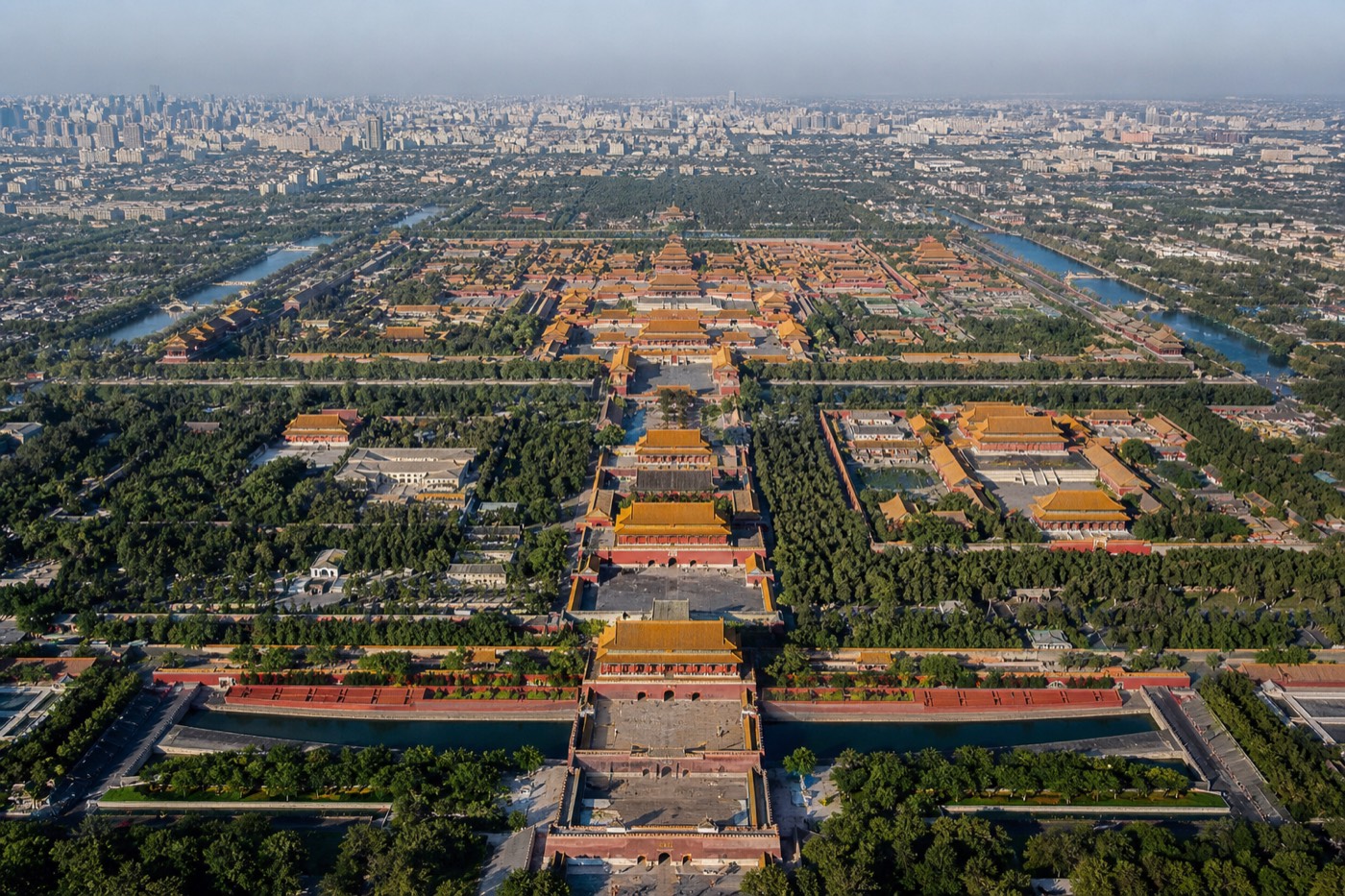
The Forbidden City is the former imperial palace of China's Ming and Qing dynasties, a walled complex of more than 800 surviving buildings covering roughly 72 hectares in the center of Beijing, built in the early 15th century and home to 24 emperors until the last one was expelled in 1924. It has been open to the public as the Palace Museum since 1925 and inscribed as a UNESCO World Heritage Site since 1987. Twenty more specific, individually fact-checked details are in our guide to Forbidden City facts.
If you plan to see this in person, two-hour palace walk is a starting point. Compare its actual route with the time you have.
Booking choice: Choose TG18: English-guided Forbidden City walk and entry ticket. Meet at Meridian Gate; finish at the north gate. No square visit or hotel transfer. Explore Two-Hour Palace Walk
The Forbidden City in numbers
Figures combine the Palace Museum's 2012 room survey, UNESCO's listing data and the site's published area, and are the most commonly cited counts across official and reference sources.
Key dates at a glance
| Date | What happened |
|---|---|
| Early 15th century | Built under the Ming dynasty's Yongle Emperor, who moved the capital to Beijing |
| February 12, 1912 | Puyi forced to abdicate at age six, ending China's imperial era |
| 1924 | Feng Yuxiang's Beijing Coup expels Puyi from the inner court for good |
| October 10, 1925 | Reopens to the public as the Palace Museum, on Double Ten Day |
| 1987 | Inscribed as a UNESCO World Heritage Site |
| 2024 | The wider Beijing Central Axis, which the site sits on, receives its own separate UNESCO listing |
Laid out this way, the timeline shows something easy to miss when you only visit once: the Forbidden City spent roughly five centuries as a working, occupied seat of government before it spent a single day as a museum. That survival itself is notable; our explainer on why the Forbidden City wasn't destroyed like the Summer Palace covers a moment in the 1860s when that history could have gone very differently. Everything a visitor walks through today, the gates, the halls, the courtyards, was built for governance and ceremony first, and only later repurposed for public viewing. Travelers weighing practical safety questions alongside the history can read our guide on whether it's safe for Americans to visit Beijing right now.
What is the Forbidden City, physically?
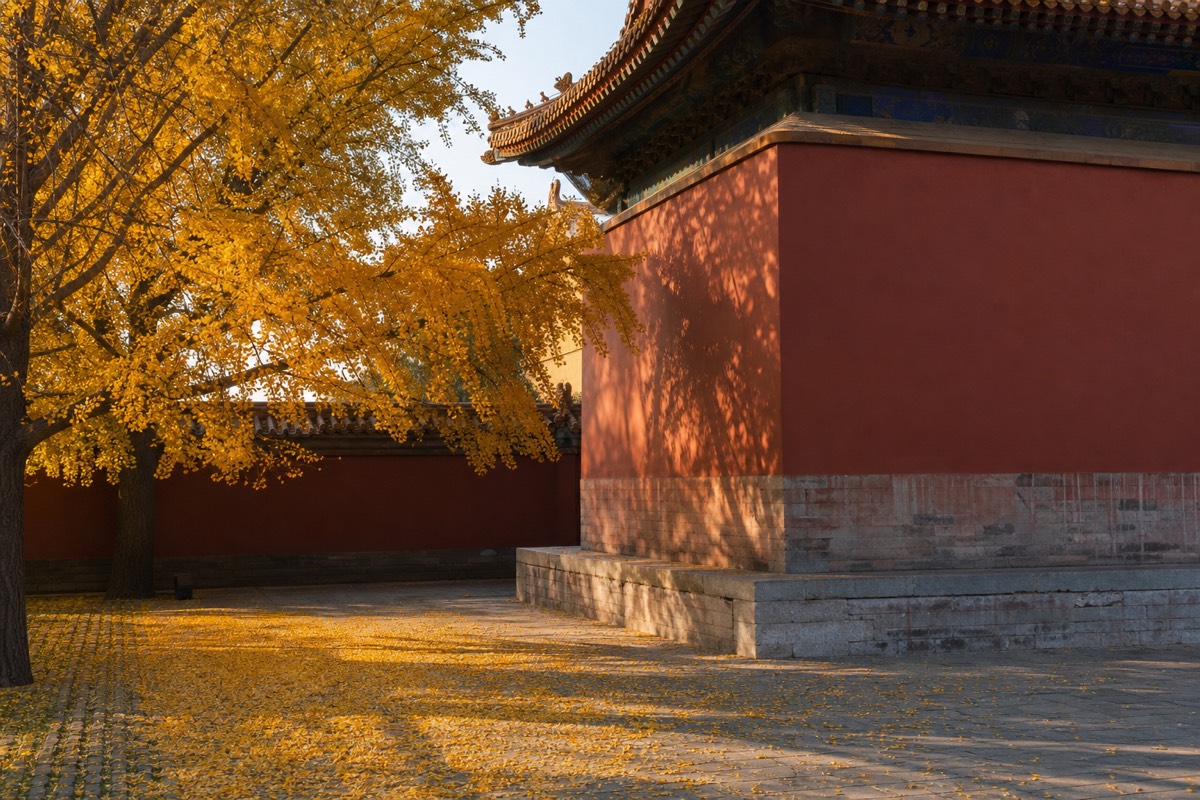
Picture a walled rectangle roughly the size of a small town, entirely enclosed by high red walls and a moat, holding not one building but a sequence of courtyards, gates and halls arranged along a straight north-south line. That line is the central axis, and nearly everything of ceremonial importance in the complex sits directly on it or just to either side. Our map and layout guide walks through that axis gate by gate for anyone planning the actual walking route.
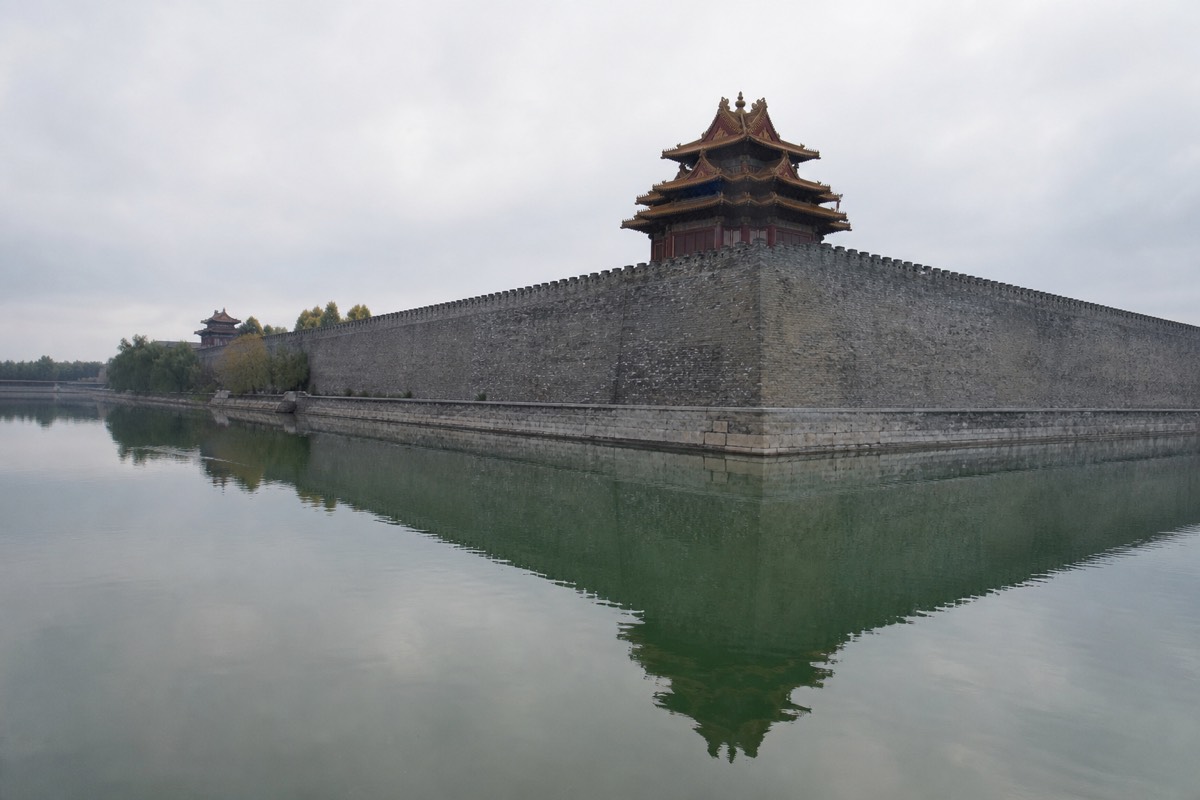
Room counts are not a reliable single measure of palace size. Istana Nurul Iman is commonly cited with 1,788 rooms, fewer than the Forbidden City’s reported 9,371 across its complex; its large residential floor area is a different comparison. Related reading: comparison of the Forbidden City against other royal palaces of the world
| Site | How it compares |
|---|---|
| Forbidden City | ~72 hectares, 800+ buildings, largest by footprint of the group |
| Palace of Versailles | Château itself is smaller by footprint; the surrounding park is far larger overall |
| Vatican Apostolic Palace | Much smaller by area than the Forbidden City |
| Istana Nurul Iman (Brunei) | Sometimes cited with more individual rooms (~1,788), but a modern residence, not a historic dynastic seat |
Reading a table like this, the temptation is to crown one site "the biggest," but the honest answer depends entirely on what you measure, floor area, park land, or room count, and against what kind of building. The Forbidden City's real distinction is not a single superlative; it is the combination of scale, age and continuous historical use that none of these comparisons fully capture on its own.
When was the Forbidden City built, and who built it?
Construction dates to the early 15th century, during the reign of the Yongle Emperor of the Ming dynasty, who moved the capital from Nanjing to Beijing and built the palace as the new imperial seat. It went on to house the imperial court through the rest of the Ming dynasty and then the following Qing dynasty, a continuous span of roughly five centuries, right up until the end of China's imperial era in the early 20th century.
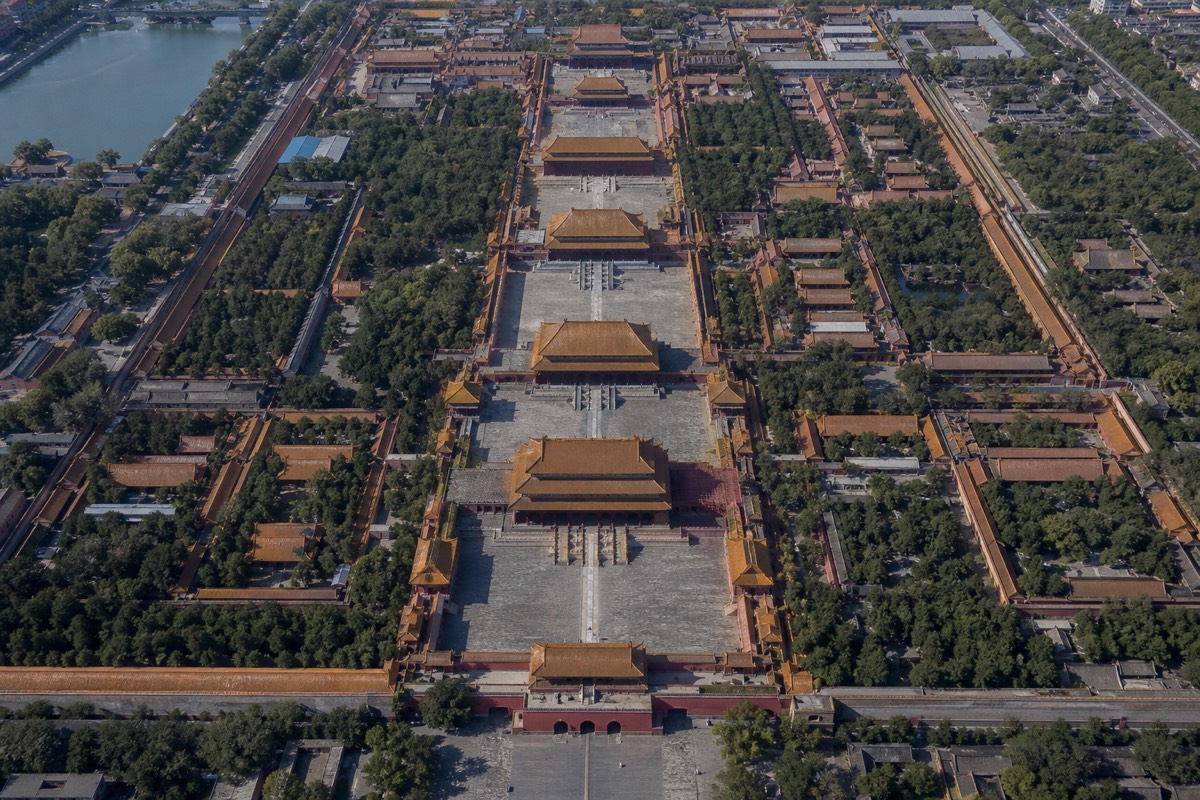
Twenty-four emperors across two dynasties, Ming and Qing, lived and ruled from inside these walls before the last one, Puyi, was expelled in 1924. Our explainer on Puyi, China's last emperor covers what happened to him after that, including his later role as the Japanese puppet ruler of Manchukuo.
Almost every major hall standing today reflects centuries of rebuilding after fire, since large sections burned and were reconstructed multiple times across the Ming and Qing periods, using timber-frame construction on the same layout and often the same foundations. What visitors walk through now is genuinely old in plan and position even where individual roof beams are more recent restorations.
What is easy to lose sight of, standing in one of the courtyards today, is that this was never designed to be looked at the way a museum exhibit is looked at. Every gate, platform height and roofline followed strict rules about who was permitted to pass, tied directly to rank within the imperial court. The concentric layout, outer court for state ceremony, inner court for the imperial family's private life, was a deliberate expression of hierarchy built in stone and timber, not simply an aesthetic choice. Understanding that structure is most of what separates a walk through "some old buildings" from a walk through a genuinely coherent piece of political architecture, which is exactly the gap our central axis walking route guide and the landmarks guide are built to close.
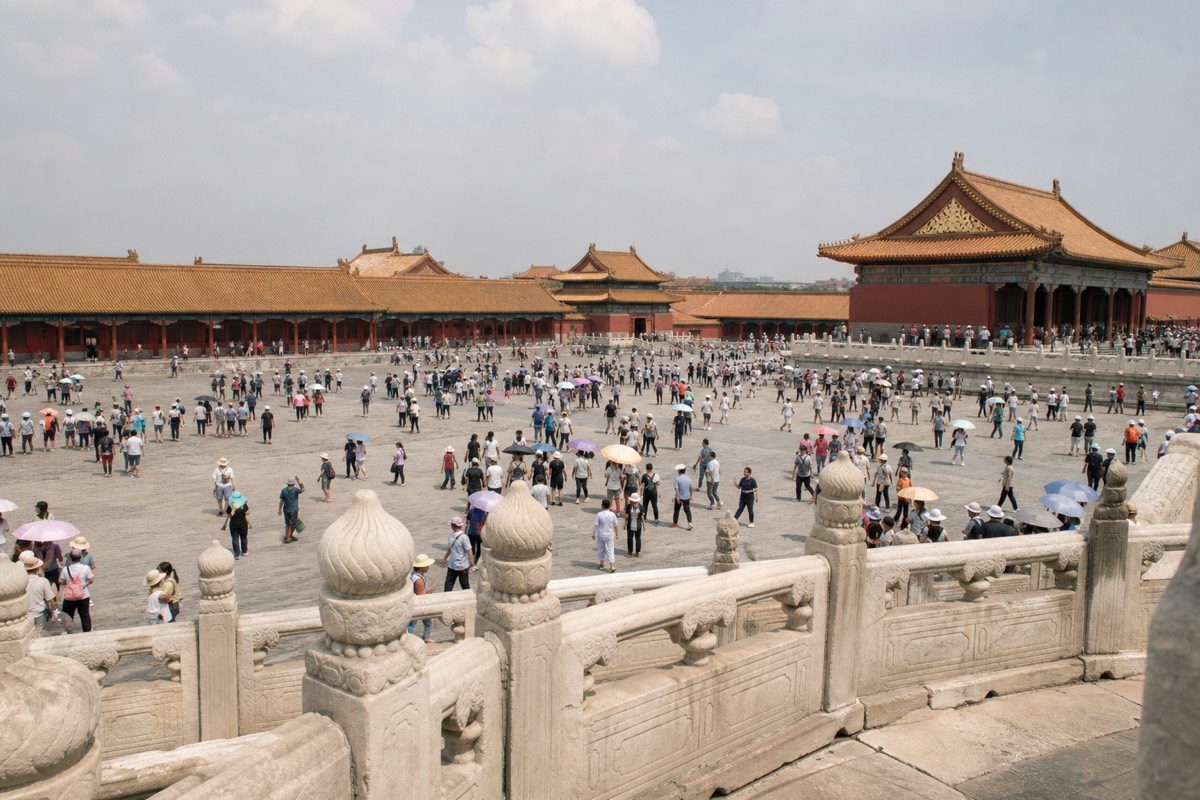
That hierarchy is also why the site reads so differently depending on where you stand within it. The outer court, built at a genuinely monumental scale for mass ceremony, feels almost civic in its openness. The inner court, by contrast, tightens into smaller courtyards and more intimate halls, reflecting its role as living quarters for the emperor's household rather than a stage for public ritual. Walking from one zone into the other is, in effect, walking from the empire's public face into its private one, a contrast that a rushed visit tends to miss entirely.
Why is it called the "Forbidden City"?
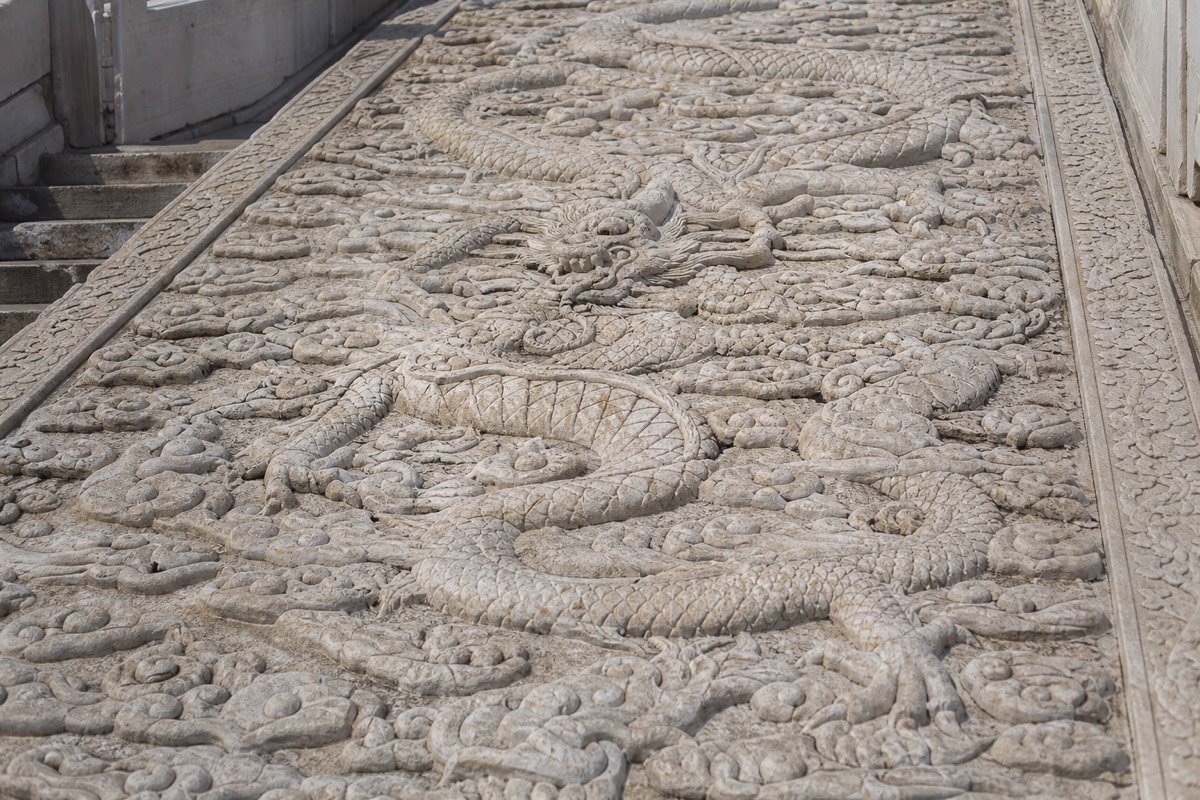
The Chinese name, Zǐjìnchéng, translates roughly to "Purple Forbidden City." The "purple" references the Purple Star Enclosure surrounding the North Star in traditional Chinese astronomy, the fixed point the rest of the sky appears to rotate around. The emperor, understood as the Son of Heaven, had his earthly residence named for that same celestial seat of the sky's ruler. "Forbidden" is the more literal half: entry was barred to ordinary subjects, and only the imperial family, consorts, eunuchs and the highest officials were permitted inside. Our full guide to the name's origin goes deeper into both halves of that translation.
How did it become the "Palace Museum"?
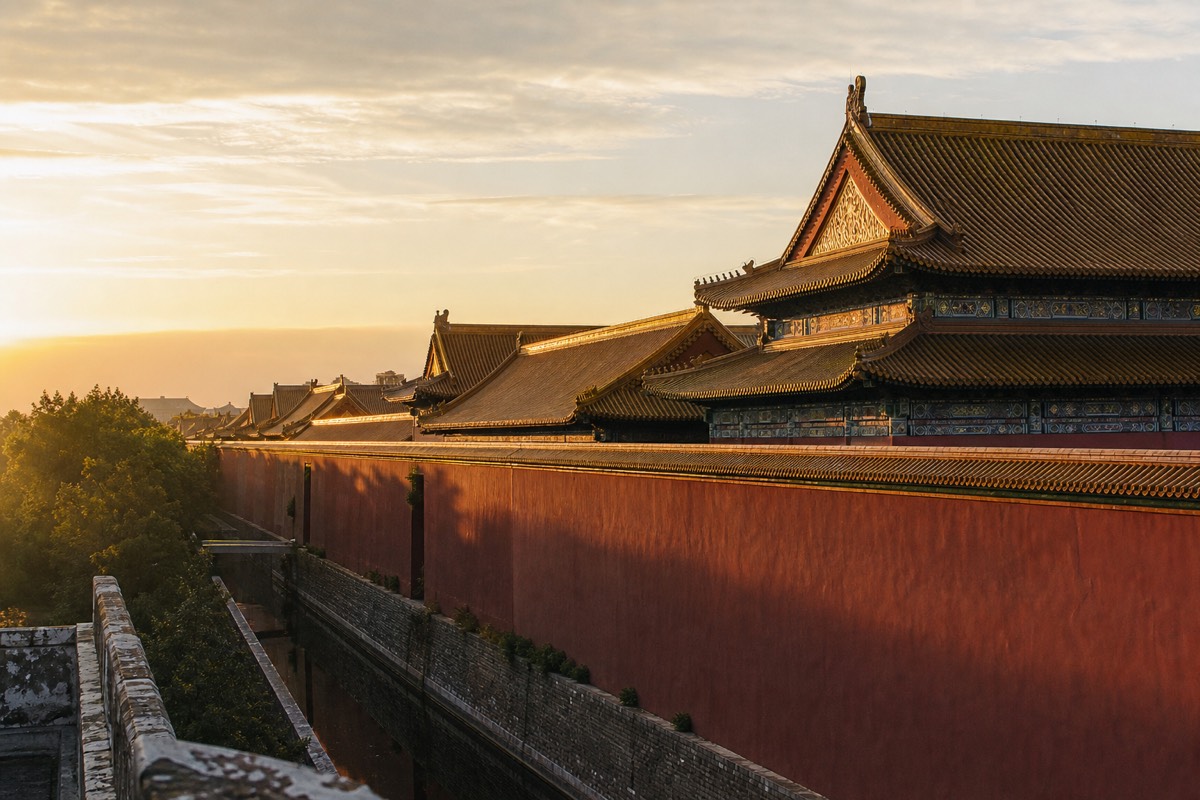
The site's official institutional name today is actually the Palace Museum, not the Forbidden City. It opened to the public under that name on October 10, 1925, Double Ten Day, not long after Puyi's 1924 expulsion from the inner court ended the last vestige of imperial residency. "Forbidden City" and "Palace Museum" describe the identical physical place and are used interchangeably in everyday conversation, but Palace Museum is the formal, official name of the institution that now runs and preserves it. Our guide comparing the two names untangles the confusion this causes for a lot of first-time visitors searching for the site online.
Is the Forbidden City the same place people call the Palace Museum, Zijincheng or Gùgōng?
Yes to all of them. These are different labels for the same walled complex: Forbidden City is the common English name, Palace Museum is the formal institutional name used since 1925, Zǐjìnchéng is the original Chinese name, and Gùgōng is the modern, more casual Chinese term meaning roughly "former palace." None of these refer to a different building or a different location; they are layers of naming that accumulated as the site's role changed from sealed imperial residence to public museum.
| Name | What it means / where it's used |
|---|---|
| Forbidden City | Common English name, used worldwide by visitors and media |
| Zǐjìnchéng (紫禁城) | Original Chinese name, literally "Purple Forbidden City" |
| Palace Museum | Formal institutional name since the 1925 public opening |
| Gùgōng (故宫) | Modern, casual Chinese term meaning roughly "former palace" |
What's actually inside the walls?
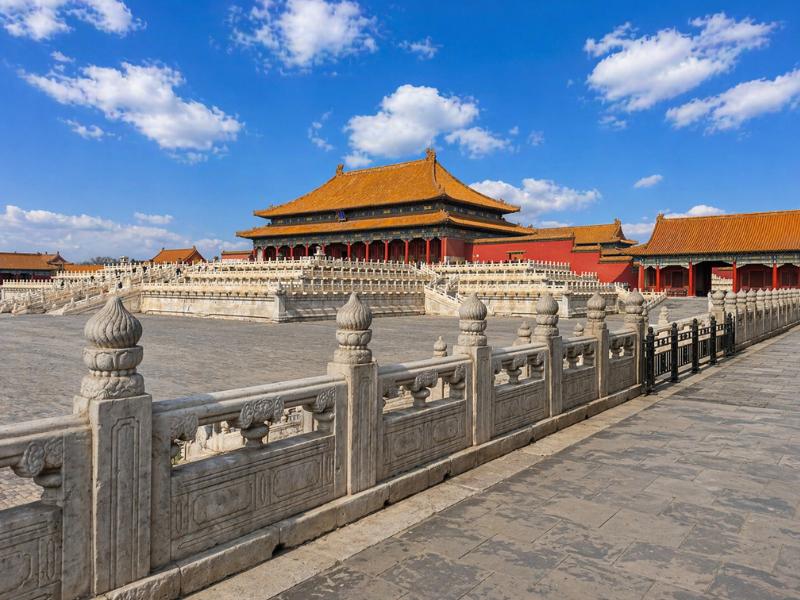
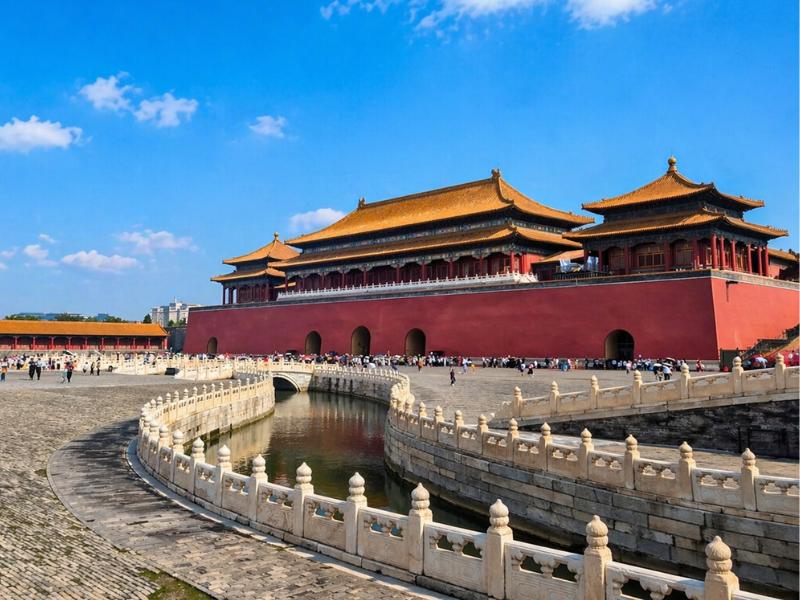
The complex is organized around a small number of landmark buildings that most tours and most maps orient around. The Meridian Gate, the main southern entrance, rises roughly 38 meters at its roof ridge and is arranged in a concave "Five Phoenix" layout of five gate-towers, the point most visitors actually enter through. Beyond it, the Hall of Supreme Harmony is the largest single building in the complex, roughly 64 by 37 meters, where the throne sits on a two-meter platform ringed by six gold-lacquered dragon pillars. Further in, the Treasure Gallery, tucked inside the Palace of Tranquil Longevity complex in the northeastern part of the site, displays around 400 Qing-dynasty relics behind a separate add-on ticket.
| Landmark | Where it sits | Why it matters |
|---|---|---|
| Meridian Gate | Main southern entrance | ~38m roof ridge, concave "Five Phoenix" five-tower layout |
| Hall of Supreme Harmony | Center of the axis, beyond the Meridian Gate | Largest single building (~64m x 37m); throne on a 2m platform, six dragon pillars |
| Treasure Gallery | Palace of Tranquil Longevity, northeast complex | ~400 Qing-dynasty relics; separate ~10 RMB ticket |
| Imperial Garden | North end of the central axis | Final stop before the north exit; a change of pace from the halls |
Our guide to the Meridian Gate, Treasure Gallery and Hall of Supreme Harmony covers all three in more depth, and the facts guide rounds up twenty more details most visitors never learn.
How many rooms does the Forbidden City actually have?
The popular legend claims 9,999.5 rooms, the idea being that the emperor's earthly palace could not equal the mythical 10,000 rooms said to belong to the Heavenly Emperor. It is a good story, and it is not the counted fact. The Palace Museum's own 2012 survey, a five-month count led by the museum's director, found 9,371 actual rooms across 1,200 buildings. An older, narrower count from earlier records puts the figure at 8,886 rooms across 980 buildings. Our explainer on the 9,999-room myth goes through both numbers and where the legend actually comes from.
| Source | Room count | Buildings | Status |
|---|---|---|---|
| Popular legend | 9,999.5 | - | Folklore, not a literal count |
| Older historical record | 8,886 | 980 | Narrower earlier count |
| Palace Museum 2012 survey | 9,371 | 1,200 | Official, most current count |
Is the Forbidden City a UNESCO World Heritage Site?
Yes. It was inscribed in 1987 under the listing "Imperial Palaces of the Ming and Qing Dynasties in Beijing and Shenyang," recognizing it alongside the smaller Mukden Palace in Shenyang as a shared piece of imperial architectural history. See the listing directly on UNESCO's World Heritage page for the site. More recently, the wider Beijing Central Axis, the north-south planning line that the Forbidden City itself sits on, received its own separate UNESCO inscription in 2024, viewable at UNESCO's Beijing Central Axis listing. These are two different, related recognitions rather than one badge covering everything.
What happened to the last emperor who lived there?
Puyi became emperor in 1908 at just two years old and was forced to abdicate in February 1912, at age six, when the Xinhai Revolution ended imperial rule in China. Unusually, he was allowed to keep living inside the Forbidden City's inner court under a set of negotiated "Articles of Favorable Treatment," a strange in-between period where a former emperor still occupied part of his old palace with no real power left. That arrangement ended in 1924, when the warlord Feng Yuxiang's Beijing Coup revoked those privileges and expelled him for good, clearing the way for the site's 1925 reopening as a public museum. Puyi later became the Japanese puppet "Emperor" of Manchukuo from 1934 to 1945, and died in 1967. The full arc of his story is in our Puyi blog post.
How does it connect to Tiananmen Square?
Tiananmen Square sits directly south of the Forbidden City's main gate, close enough that the two feel like one continuous site on foot, roughly a 10-minute walk from the square's center to the palace gate. They are not, however, one combined ticket: each requires its own separate real-name reservation and its own passport security check. Our guide to visiting both together covers the logistics, and if tickets themselves are your main question right now, the tickets, prices and booking guide has the full breakdown of costs and the real-name system.
Why does the Forbidden City still stand when the Summer Palace was destroyed?
In October 1860, during the Second Opium War, British commissioner Lord Elgin ordered the burning of the Old Summer Palace and the Summer Palace in retaliation after Qing officials tortured and killed captured British and French envoys sent under a truce flag. The Forbidden City itself was considered as a target, and the French reportedly favored striking it directly, but Elgin ultimately spared it and targeted the imperial pleasure gardens instead. Historians point to this choice as one that let the Qing court keep a functioning seat of government to negotiate and administer the treaty ending the war, though sources do not fully agree on Elgin's exact reasoning. Our full explainer on why the Forbidden City survived covers that history in more depth.
Has it appeared in film?
Once, notably. "The Last Emperor" (1987, directed by Bernardo Bertolucci) remains the only Western feature film ever granted permission to shoot inside the actual Forbidden City, with eight weeks of on-location photography. Since then, the Palace Museum has not allowed film or television crews to shoot inside, citing preservation risk to the buildings and relics, so later productions set inside the palace use built replica sets elsewhere rather than the real site. Our roundup of movies filmed in the Forbidden City covers that history and what replaced it.
How does it compare to the Great Wall, and can you see both in one day?
They are separate sites with separate histories, roughly an hour or more apart by road, and combining both in a single day is a genuinely long but common day-trip pattern for visitors on a tight Beijing schedule. Our guide to combining the Forbidden City and the Great Wall in one day lays out what that itinerary actually looks like and which tours are built around it.
What does it cost, and how long do you need?
Base admission runs around 60 RMB in peak season and around 40 RMB off-season, booked through a real-name reservation system rather than bought at the gate; the full mechanics are in our tickets and booking guide. For time, the honest range spans from a focused 2-hour highlights walk through to a full day exploring every courtyard, and our guide to how long you actually need breaks that down by what you can realistically see in each window. If you're weighing whether the whole thing is worth the effort at all, our honest review of whether it's worth visiting covers the real upsides and the real caveats. And for timing your trip around crowds and weather, see our guide to the best time to visit.
| Essentials | What to know |
|---|---|
| Admission (peak / off-season) | around 60 RMB / around 40 RMB |
| Booking method | Real-name e-ticket, no walk-up sales, released 7 days ahead at 20:00 Beijing time |
| Hours (peak / off-season) | 8:30am-5:00pm / 8:30am-4:30pm, last admission an hour before close |
| Closed | Mondays, except statutory holidays |
| Daily visitor cap | Around 80,000 |
How do you actually visit today?
Choose a two-hour palace-only or three-hour square-and-palace English tour. The six-hour gallery visit is a separate option. The provider excludes under-5s, over-70s and wheelchair users. Meeting point depends on the option; transport is not included in every option.
| Tour Option | Time To Allow | What It Includes |
|---|---|---|
| Two-Hour Palace Walk | 2 hours | Choose TG18: English-guided Forbidden City walk and entry ticket. Meet at Meridian Gate; finish at the north gate. No square visit or hotel transfer. |
| Palace Tour Options On GetYourGuide | 3 hours | Choose a two-hour palace-only or three-hour square-and-palace English tour. The six-hour gallery visit is a separate option. |
| Palace And Mutianyu Full Day | 11 hours | Choose TG1 private: palace, Tiananmen Square and Mutianyu, with transport, entrances, lunch and the listed wall ride option. Allow a full 9–11-hour day. |
You can compare all six directly on the homepage, or see the full side-by-side breakdown across price, platform and rating in our guide to which tour to book.
What are the most common misconceptions about it?
A handful of assumptions trip up first-time visitors and researchers alike. The 9,999.5-room figure is the biggest one, treated online as a hard fact when it is genuinely a legend, with the Palace Museum's own counted figure sitting at 9,371. Another common mix-up is assuming "Forbidden City" and "Palace Museum" refer to two different places rather than one site under two names, formal and informal, which our dedicated guide on the two names untangles in more depth. A third: some visitors searching online land on results about Lhasa's Potala Palace, sometimes informally nicknamed in ways that echo "forbidden city," when the actual Forbidden City of imperial China is unambiguously the walled Beijing complex covered throughout this page; our explainer on which city is actually called the Forbidden City covers that specific confusion.
A fourth misconception worth flagging: assuming the site's massive size means a visit has to consume an entire day. It can, if you want it to, but it does not have to. The duration genuinely scales, from a tightly focused few hours to a full day, depending on what a traveler wants out of the visit, which is the entire subject of our dedicated duration guide.
Is it safe to visit Beijing to see it?
The U.S. State Department currently rates China, including Beijing, at Level 2, "Exercise Increased Caution," the same tier as France, Germany and Japan, with concerns centered on arbitrary enforcement of local law and enhanced surveillance rather than a specific threat to tourist sites. Ordinary leisure travelers on standard routes see low rates of violent crime. Advisories change, so always check the current rating directly on the State Department's China travel advisory page before you travel rather than relying on a fixed number here. Our dedicated safety explainer covers this in more detail.
None of that changes the day-to-day experience of visiting the site itself, which remains, by design, one of the most tightly managed and closely monitored heritage sites anywhere in the world. Security screening at entry is thorough, staff presence throughout the complex is constant, and the same preservation rules that limit flash photography and prohibit drones also mean the buildings and grounds are kept in careful order rather than left to wear from unmanaged foot traffic.