Why Is It Called the "Forbidden" City?
The name sounds dramatic until you learn it is doing two jobs at once: naming a place in the sky and describing a very real rule on the ground. Here is where "Forbidden City" actually comes from.
The Forbidden City gets its name from two things at once: its Chinese name Zijin Cheng, "Purple Forbidden City," references the Purple Star Enclosure around the North Star in Chinese astronomy, casting the emperor as the earthly "Son of Heaven" living at the sky's symbolic center, while "forbidden" describes the literal rule that ordinary subjects could not enter, entry limited to the imperial family, consorts, eunuchs and top officials. Both halves are real, and neither one alone explains the name.
If you plan to see this in person, two-hour palace walk is a starting point. Compare its actual route with the time you have.
Booking choice: Choose TG18: English-guided Forbidden City walk and entry ticket. Meet at Meridian Gate; finish at the north gate. No square visit or hotel transfer. Explore Two-Hour Palace Walk
Who could enter the Forbidden City under the Ming and Qing
Access categories are drawn from the historical record of Ming and Qing court structure; bar length is illustrative of relative access, not a precise headcount. That boundary ended for the general public in 1925.
Where does the "Purple" part come from?
The Chinese name for the palace, Zijin Cheng, breaks into three parts: zi, purple; jin, forbidden; cheng, city or walled enclosure. The purple is not a color the buildings were painted, and it is not a poetic flourish added later. It is a direct reference to the Purple Star Enclosure, or Ziwei Yuan, the region of the night sky centered on the North Star in traditional Chinese astronomy. The North Star appeared to stay fixed while every other star seemed to circle it, and Chinese cosmology read that stillness as the fixed seat of the celestial emperor, the ruler of heaven itself.
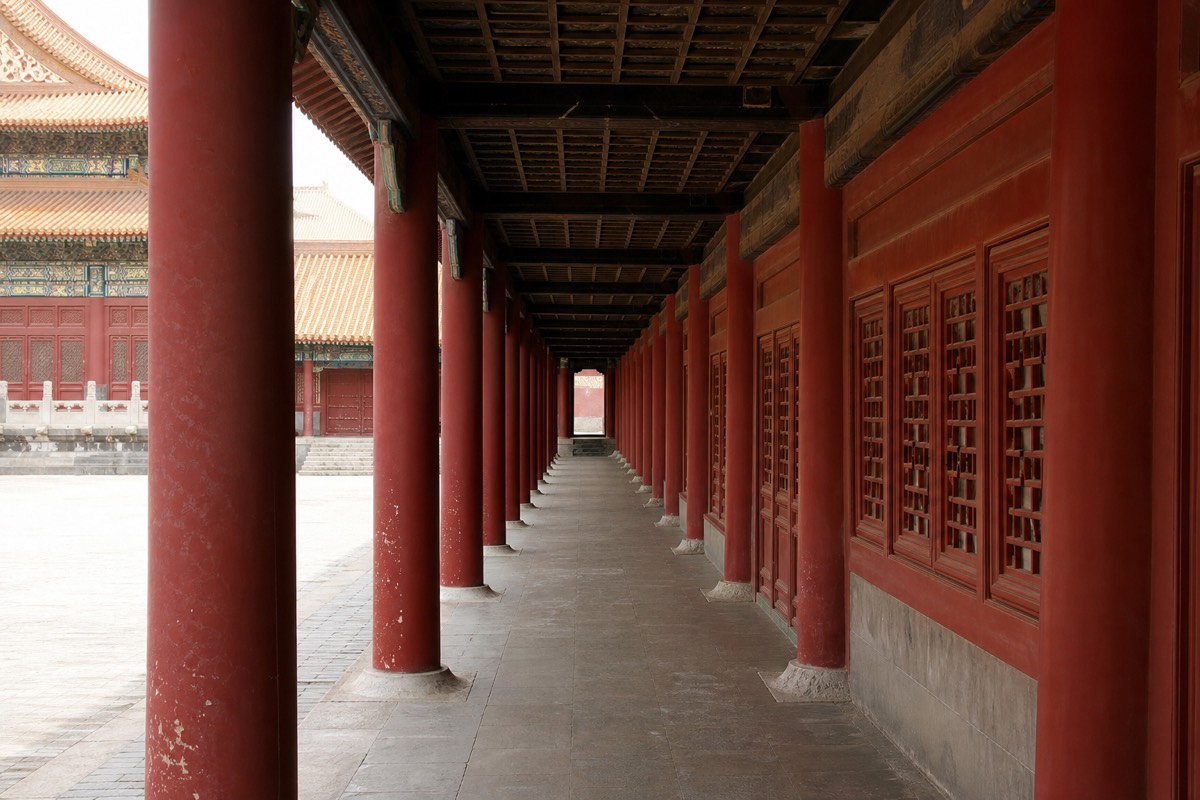
The earthly emperor's formal title, "Son of Heaven," was built on exactly this logic. If heaven had its unmoving center around the North Star, the emperor's own residence on earth was named to echo it: a palace named for the celestial seat of the sky's ruler. Naming the palace after the Purple Star Enclosure was a way of stating, in the name itself, that the person who lived there ruled by a mandate that reached beyond the human world.
This wasn't a one-off flourish invented for the palace's name and then forgotten. The idea that the North Star's fixed position marked the seat of the celestial ruler runs through a much older tradition in Chinese astronomy and political thought, where the visible order of the night sky was read as a working model for how earthly government ought to be organized: one still point, with everything else in motion around it. Calling the emperor the "Son of Heaven" and naming his residence after the Purple Star Enclosure were two expressions of that same idea rather than two separate claims, which is why the palace's own layout, discussed further down, keeps returning to the same theme of a single fixed center.
| Part of the name | Pinyin | Meaning |
|---|---|---|
| 紫 | Zi | Purple, referencing the Purple Star Enclosure around the North Star |
| 禁 | Jin | Forbidden, barred to ordinary subjects |
| 城 | Cheng | City, or walled enclosure |
How does the palace's layout reinforce the "Purple" half of the name?
The astronomy behind the name is not just a label bolted onto the outside of the palace. It shows up in the way the whole complex is arranged. The Forbidden City is built along a single, unbroken north-south line, the central axis, and every major building that matters, the Meridian Gate at the southern entrance, the Hall of Supreme Harmony at the heart of the outer court, the Palace of Heavenly Purity further in, sits precisely on that line rather than off to one side. A palace arranged around one fixed central line is a direct architectural echo of a sky arranged around one fixed central star.
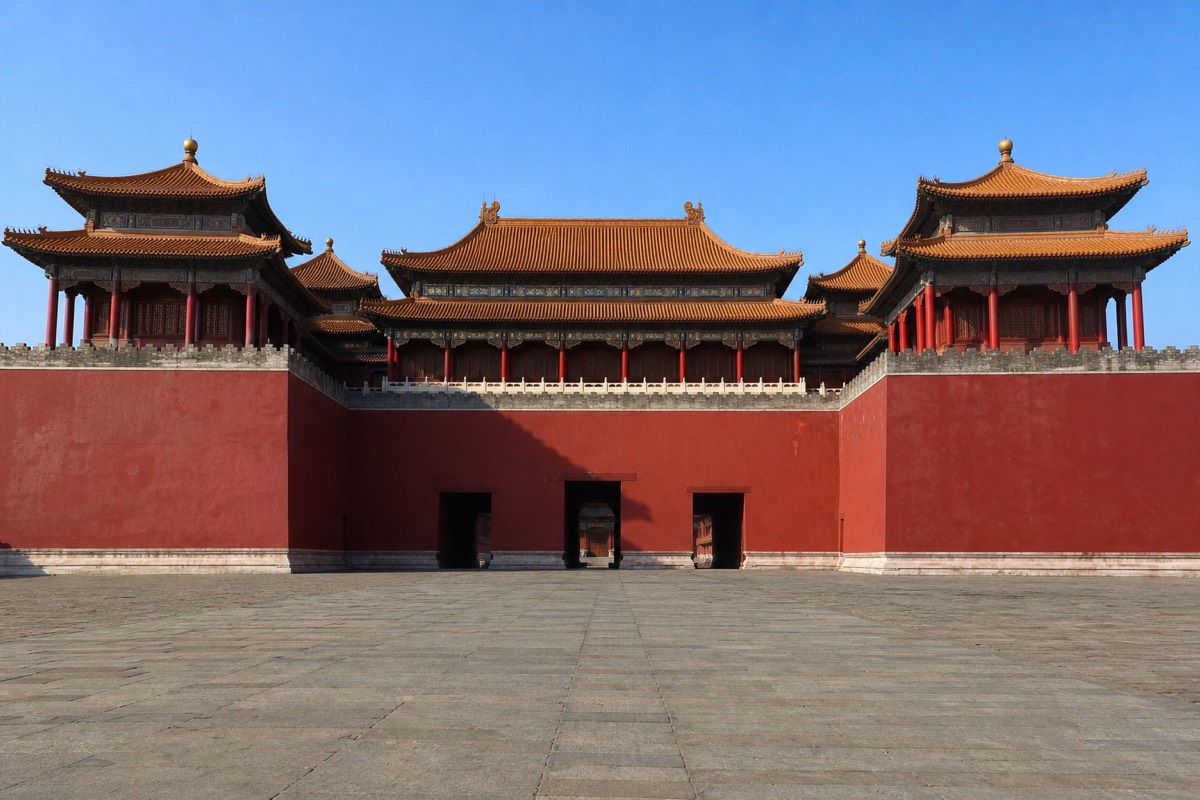
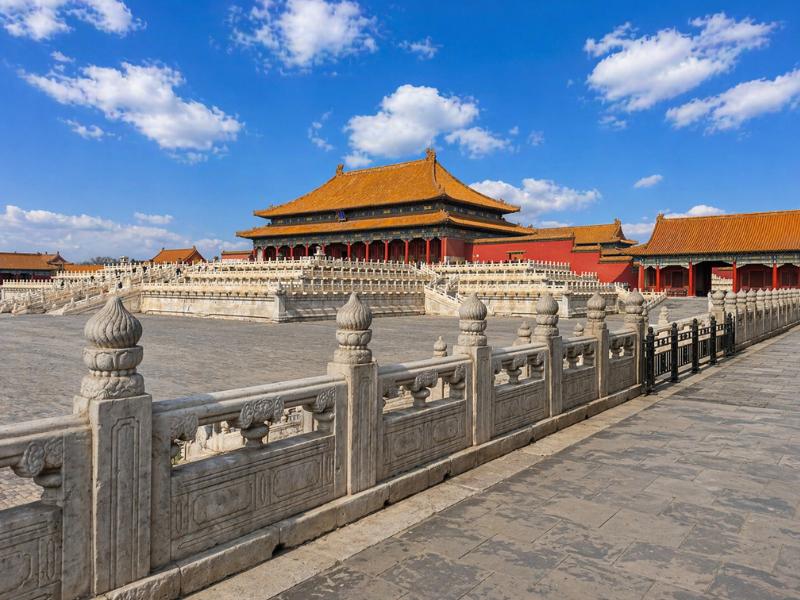
The Hall of Supreme Harmony makes the point most clearly. At roughly 64m by 37m it is the largest single building in the complex, and the throne inside sits on a platform about 2m high, ringed by six gold-lacquered dragon pillars, at the exact midpoint of that central axis. Everything about the placement, the biggest building, the highest platform, dead center on the line, is consistent with the idea the name states outright: that the person who sits there occupies the fixed point everything else in the empire is meant to arrange itself around, in the same way every other star in the sky appeared to arrange itself around the motionless North Star.
| Element | How it reflects the "Purple" symbolism |
|---|---|
| Central axis | A single fixed north-south line, echoing the fixed position of the North Star |
| Hall of Supreme Harmony | Largest building on site, placed at the axis's midpoint |
| Throne platform | Raised about 2m, the highest point inside the hall |
| Meridian Gate | The single entrance point on the axis, about 38m tall, funneling all approach through one line |
Where does the "Forbidden" part come from?
The second half of the name is far less abstract. "Forbidden" meant exactly what it says: ordinary subjects could not enter the palace grounds under either the Ming or the Qing dynasty. Entry was restricted to a narrow set of people who had a legitimate reason and the standing to be there: the imperial family, the emperor's consorts, the eunuchs who ran the household, and a limited circle of top officials admitted for specific court business.
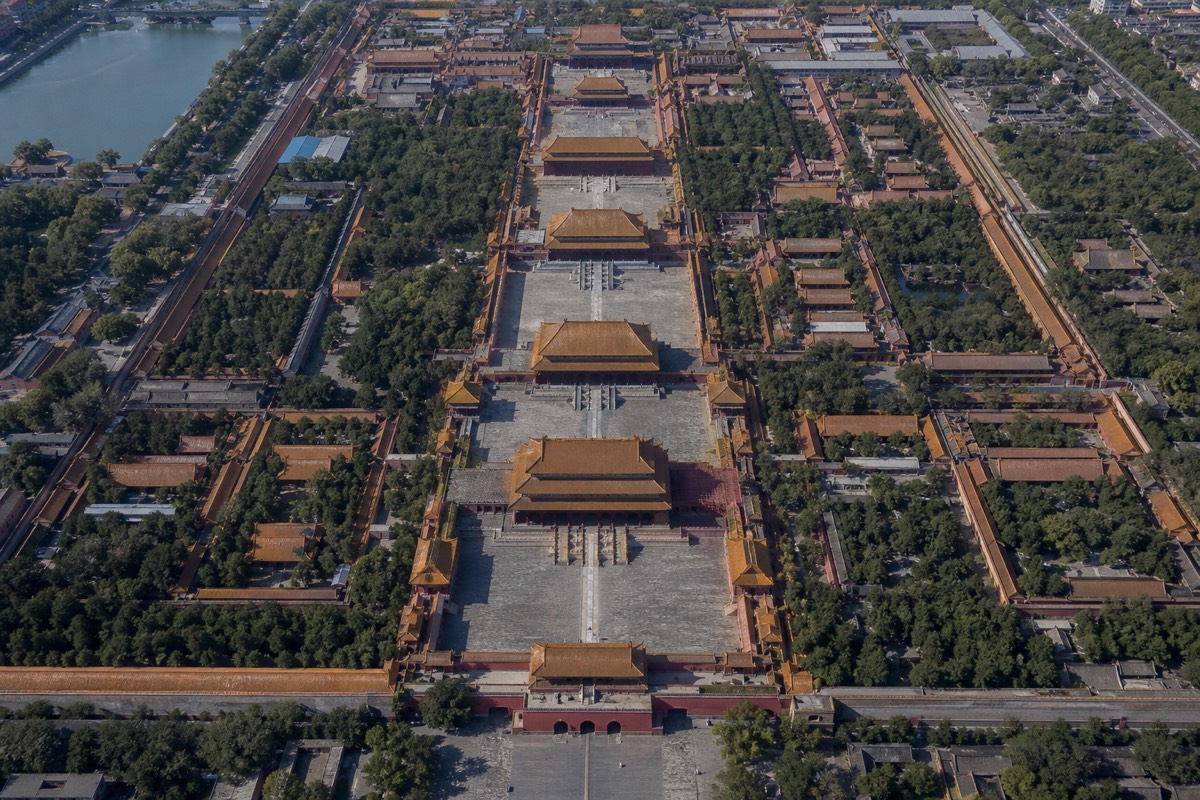
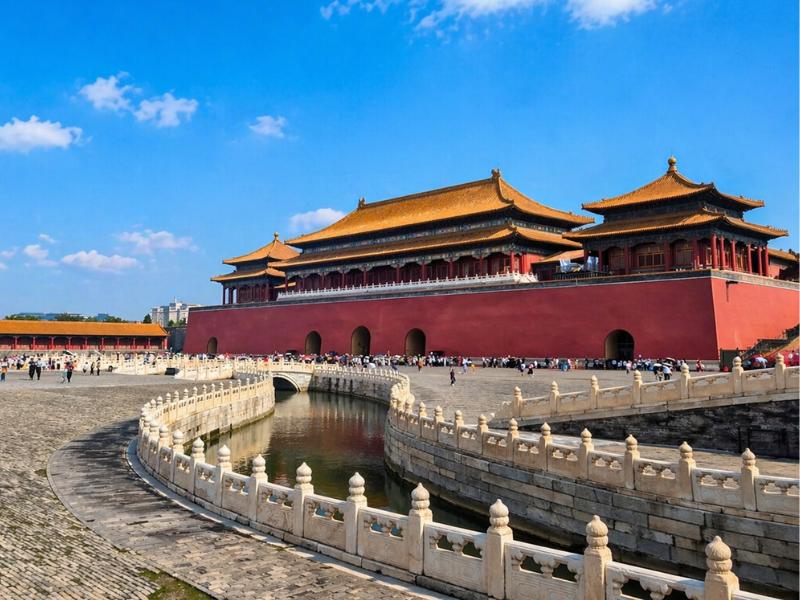
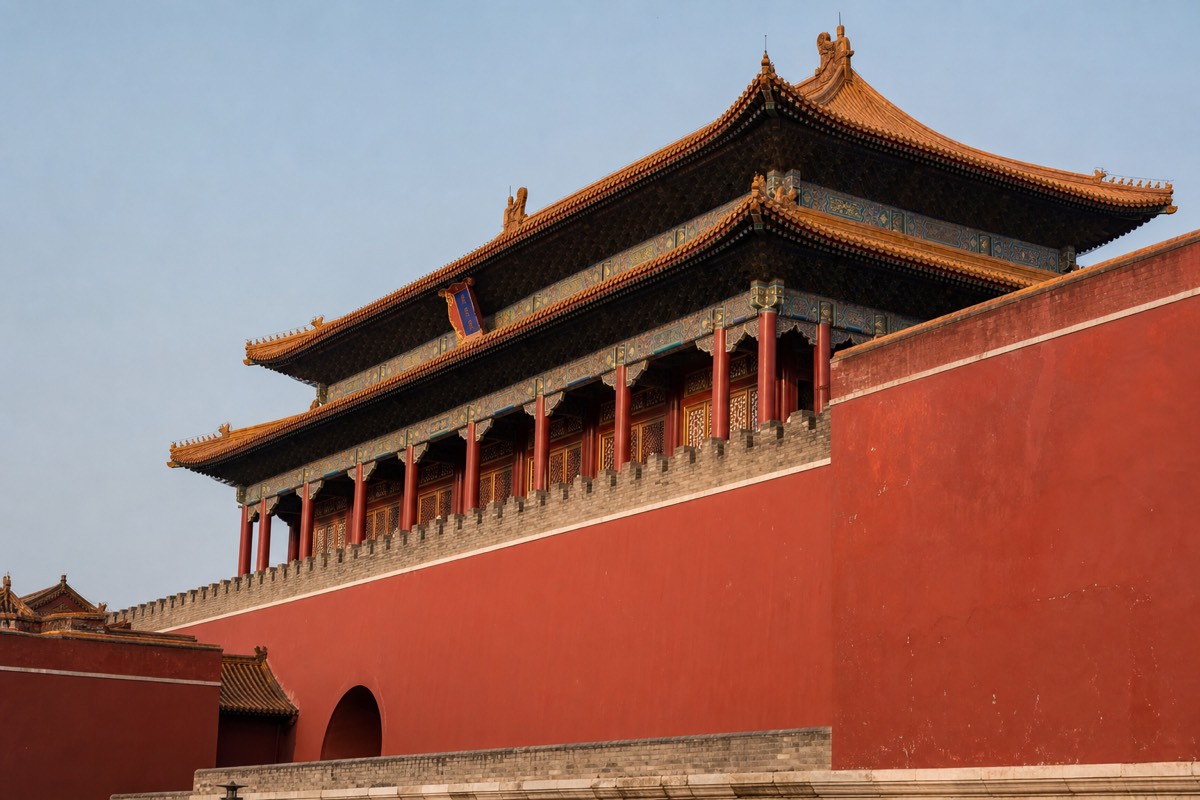
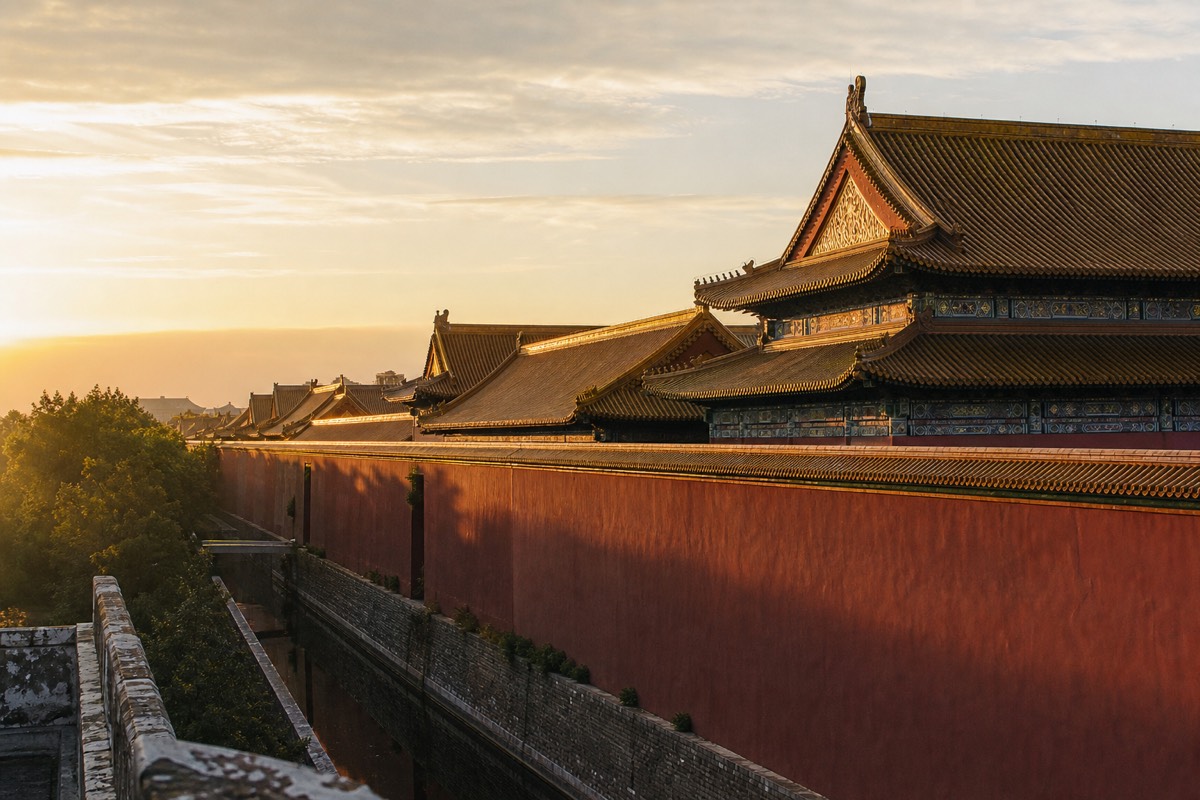
This was not a loosely enforced custom. The high red walls that still ring the complex today functioned as a real security perimeter, not decoration, and the Meridian Gate at the southern entrance worked as a controlled checkpoint where movement in and out was limited to the groups named above. An ordinary merchant, farmer or city resident of Ming or Qing China had no legal path to walk through those gates for any reason. Even officials admitted on business were confined to specific zones, mostly the outer-court ceremonial halls, rather than free to move through the inner residential quarters.
| Group | Access level |
|---|---|
| Emperor and immediate imperial family | Unrestricted, throughout the complex |
| Consorts | Inner court, residential areas |
| Eunuchs | Inner court, in service roles |
| Top officials, on specific business | Limited, mostly outer-court ceremonial halls |
| Ordinary subjects | None, no legal path to enter |
The two halves of the name work together rather than separately. "Purple" makes the claim that this place is the earthly center of the cosmos, and "Forbidden" is the practical rule that enforced who was allowed to stand at that center. One is the idea, the other is the fence around it.
What did "forbidden" look like in daily practice?
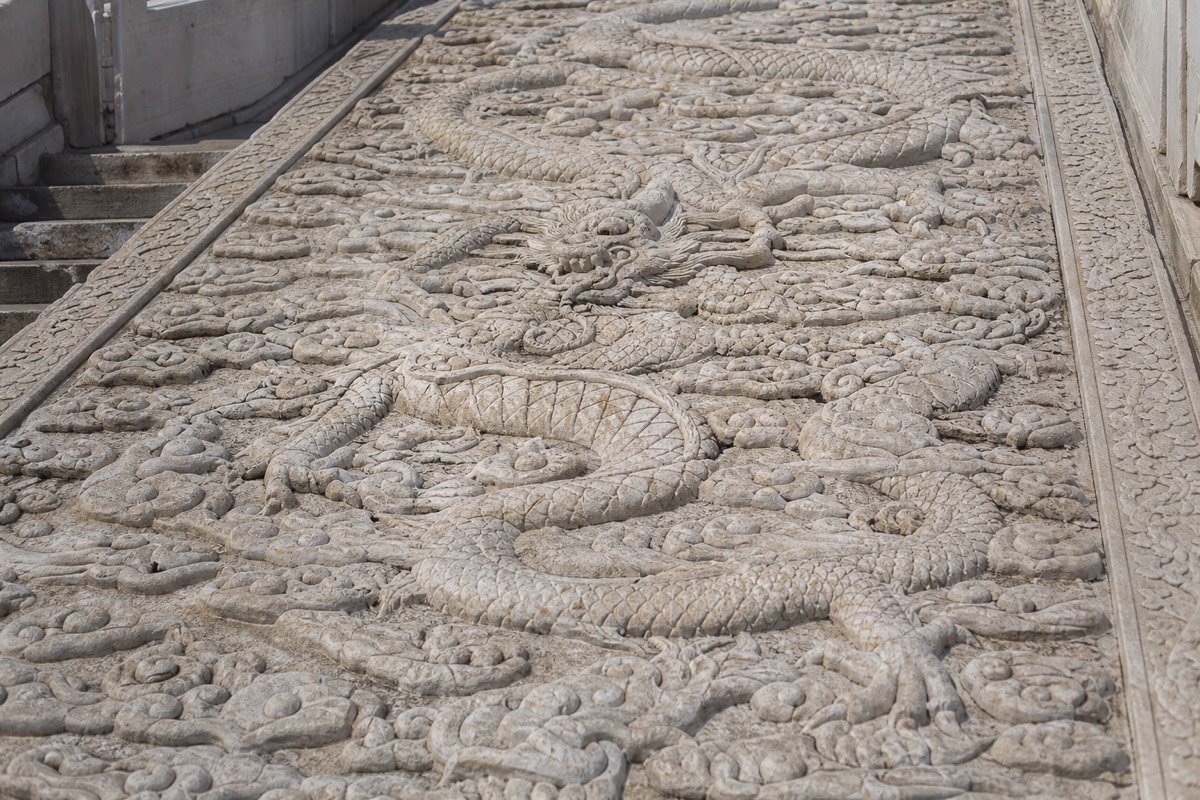
The complex was built with a clear split between an outer court, where ceremonies and state business took place, and an inner court, where the imperial household actually lived. Access tightened the deeper into the site you went: officials with legitimate business could reach the outer-court halls, but the residential inner court, home to the emperor, his consorts and the household staff, was reserved for the narrower list of people set out above, the imperial family, consorts and eunuchs. Moving from one zone to the other without the standing to be there simply wasn't an option, which is the practical, everyday version of what the name "forbidden" was describing.
| Zone | Character | Who could be there |
|---|---|---|
| Outer court | Ceremonial, public-facing halls | Imperial family, top officials on business, eunuchs |
| Inner court | Residential quarters | Imperial family, consorts, eunuchs |
| Beyond the walls | The rest of the city | Ordinary subjects, no legal entry |
Ceremonies staged in halls like the Hall of Supreme Harmony, sitting exactly on the central axis at the heart of the outer court, reinforced the same idea the name carries: the emperor as the fixed point everything else in the empire arranged itself around, the same relationship the Purple Star Enclosure held to the rest of the night sky.
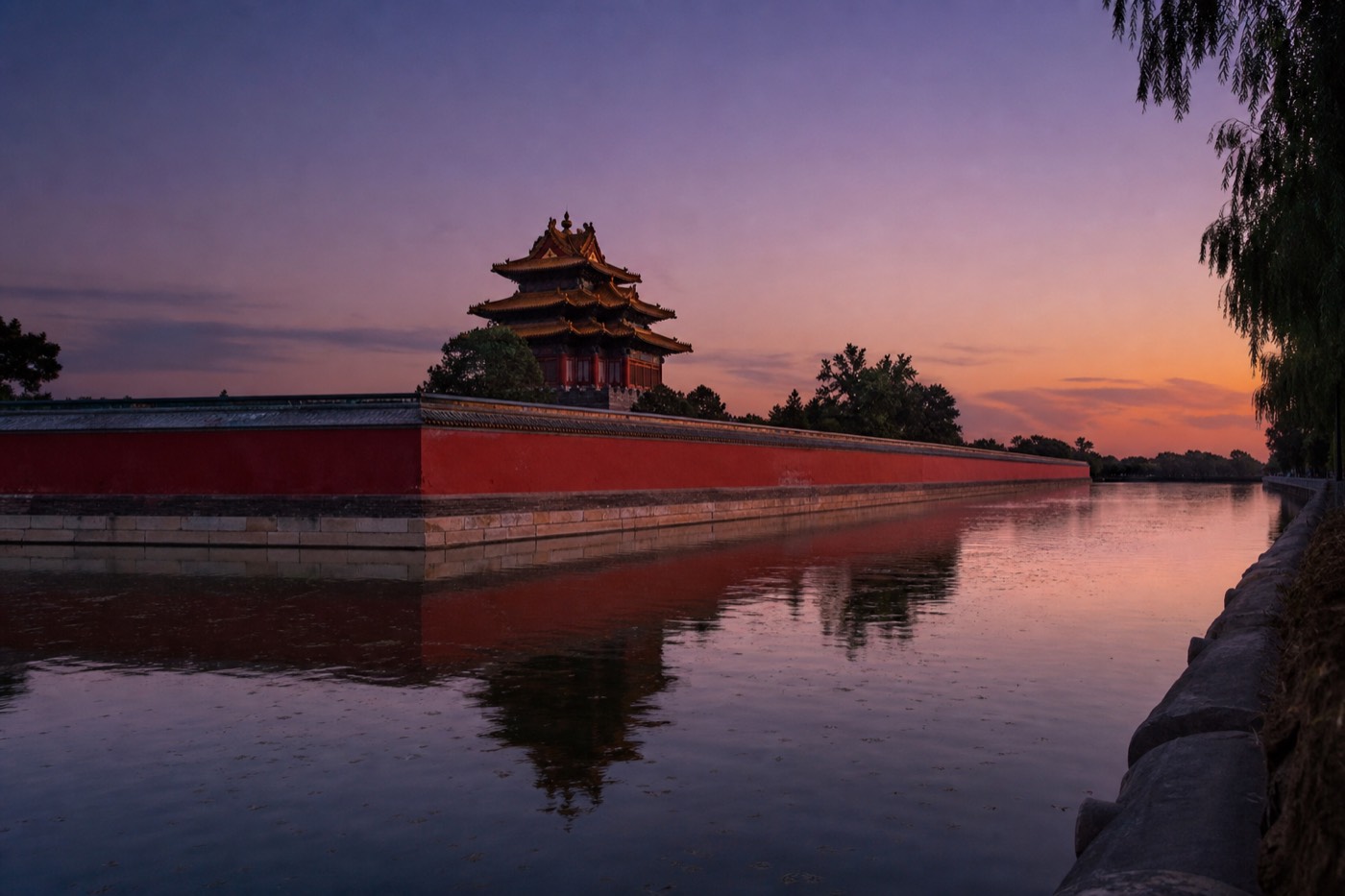
The physical evidence of that old boundary is still standing and still walkable today, even though the rule behind it is gone. The moat that once sealed the perimeter still rings the walls, and the tall corner watchtowers built to keep watch over that boundary still mark all four corners of the site. Walking the outer wall or crossing the moat bridge before entering through the Meridian Gate is, in a small way, retracing the exact line that separated "forbidden" from everywhere else for centuries. What has changed is only who is allowed to cross it.
When did the Forbidden City stop being forbidden?
The barrier held until the early 20th century unwound the imperial system that built it. Puyi, born February 7, 1906, became emperor in 1908 at age two and was forced to abdicate on February 12, 1912, at age six, during the Xinhai Revolution. He was still allowed to keep living inside the palace's inner court afterward, under a formal arrangement called the Articles of Favorable Treatment, so the "forbidden" boundary technically survived his abdication by more than a decade. That ended in 1924, when warlord Feng Yuxiang's Beijing Coup revoked those privileges and forced Puyi out for good, a story covered in full in our piece on who Puyi was and what happened after his expulsion. He later became the Japanese puppet "Emperor" of Manchukuo from 1934 to 1945, and he died in 1967.
Less than a year after his 1924 expulsion, on October 10, 1925, the complex reopened to the public as the Palace Museum, the formal institutional name it still carries today. The full relationship between the two names, and whether they describe the same physical place, is covered separately in our Forbidden City versus Palace Museum guide.
| Date | Event |
|---|---|
| February 7, 1906 | Puyi born |
| 1908 | Becomes emperor at age 2 |
| February 12, 1912 | Forced to abdicate at age 6, Xinhai Revolution |
| 1912-1924 | Retains inner-court residence under the Articles of Favorable Treatment |
| 1924 | Expelled following the Beijing Coup |
| October 10, 1925 | Palace reopens publicly as the Palace Museum |
| 1934-1945 | Puyi serves as Japanese puppet ruler of Manchukuo |
| 1967 | Puyi dies |
Since 1925, "forbidden" has been a historical label rather than a working rule. The Palace Museum now welcomes an official cap of around 80,000 visitors a day, and admission runs through a real-name e-ticket system tied to a passport or ID, a modern echo of the old checkpoint at the Meridian Gate, but one that lets almost anyone through rather than almost no one.
Is "Forbidden City" a mistranslation, or just half the name?
Zijin Cheng is genuinely a compound of three ideas, purple, forbidden and city, and the English translation kept only the middle one. That is not really a mistranslation so much as a simplification: "forbidden" is the half of the name that describes something visitors can immediately grasp, a rule about who could and couldn't enter, while "purple" requires knowing a piece of Chinese astronomy that most English speakers never encounter. The practical result is that most people who have heard of the Forbidden City know its second meaning well and its first meaning barely at all, even though the Chinese name has always carried both in equal weight.
| Aspect | "Purple" (Zi) | "Forbidden" (Jin) |
|---|---|---|
| Domain | Cosmology, the emperor's symbolic status | Law and physical security |
| What it claims | The palace mirrors the sky's fixed center | Ordinary subjects cannot enter |
| Still true today? | Symbolically, in how the site is described | No, not since the 1925 public opening |
| Carried into English name? | No, dropped in translation | Yes, this is the half English kept |
What do official sources say about this name and the site behind it?
The naming and the symbolism behind it are not just a well-worn travel-writer story. According to the UNESCO World Heritage inscription for the Imperial Palaces of the Ming and Qing Dynasties, the Forbidden City was recognized in 1987 specifically for how completely its architecture and planning embody imperial power and cosmological order, the same idea the "Purple" half of the name is built on. The complex also forms part of a separate UNESCO listing added in 2024 for the Beijing Central Axis, the very north-south planning line that the palace's central buildings sit on and that this article keeps coming back to. For the current official framing of the site, including how the institution refers to itself today, the Palace Museum's own official English site is the primary source, and Britannica's overview of the Forbidden City is a good general reference for the history around it.
What are the most common misconceptions about the name?
A few misreadings come up often enough to be worth correcting directly. None of them are unreasonable guesses, they just don't match the actual history.
| Misconception | What's actually true |
|---|---|
| It's called "forbidden" because it felt mysterious or scary to outsiders | The name describes a specific legal restriction on entry, not a general sense of mystery |
| "Purple" refers to purple-painted walls or roofs | The walls are red and the roofs are golden yellow; "purple" references the Purple Star Enclosure in Chinese astronomy, not a paint color |
| The name stopped applying the moment Puyi abdicated in 1912 | Puyi kept living in the inner court under a formal arrangement until his 1924 expulsion; public access only began in 1925 |
| "Forbidden City" is the palace's official name | "Palace Museum," Gugong, has been the formal institutional name since 1925; "Forbidden City" is the older name that stuck internationally |
How does this compare to other historic palace names?
The Forbidden City is not the only royal residence whose name carries more meaning than it first appears to. If you're curious how palace naming works elsewhere in the world, our guide to the six royal palaces of the world puts Beijing's palace in that wider context rather than treating it as a one-off case. It's also not the only place casually associated with "forbidden" framing in English conversation, which is exactly the mix-up our Beijing-versus-Lhasa guide above exists to untangle rather than leave ambiguous.
What sets the Forbidden City's naming apart from a lot of comparable palace names is that both halves of it are still legible today, even though only one of them describes anything still in force. Beijing's palace also is not the only site casually associated with "forbidden" framing in English conversation; our guide to which city is really called the Forbidden City untangles that mix-up directly. A visitor can stand in the courtyard in front of the Hall of Supreme Harmony, read a sign explaining the astronomy behind "purple," and then walk out through gates that no longer forbid anyone from doing so. Few historic residences carry a name that so directly narrates its own history in two words.
How is the name used today?
"Forbidden City" and "Palace Museum" now describe the same physical site and are used more or less interchangeably in English, though "Palace Museum," Gugong in Chinese, remains the institution's formal name on official signage and its own website. Tour operators, travel writers and most visitors default to "Forbidden City" because it is the name that traveled furthest internationally, helped along by decades of Western media coverage, including Bernardo Bertolucci's 1987 film "The Last Emperor," the only Western production ever permitted to film inside the actual complex.
The astronomical half of the name has quietly outlasted the political one. Nobody today treats the palace as forbidden in the old sense, but the "purple" reference and the North Star symbolism still show up in how the site is described in official materials and scholarship, a reminder that the name was never only about a fence. Beijing's palace is not the only place that gets tangled up in "forbidden" naming confusion online; if that mix-up is what brought you here, our guide on which city is really called the Forbidden City sorts it out. For current visiting hours, ticket rules and the reservation system that replaced the old checkpoint, see our Forbidden City tickets and booking guide, and for the practical route the old restrictions were built around, our map and central axis walking guide covers it in order. Anyone ready to see the halls this name describes in person can compare the current Forbidden City tour options before booking.
Do Chinese and English speakers actually mean the same thing by the name?
Not quite, and the gap is worth spelling out plainly. In modern Chinese, Gugong, "the former palace," is the everyday name people actually use, while Zijin Cheng shows up more in historical and formal contexts, still carrying its full "purple, forbidden, city" meaning even though it's less common in casual conversation. In English, "Forbidden City" is effectively the only name most people know, and it carries just the one idea, restricted entry, without the astronomical half attached. A Chinese speaker encountering "Zijin Cheng" hears both the cosmology and the security rule in a single word. An English speaker encountering "Forbidden City" hears only the second.
That gap isn't a translation failure so much as a natural result of how names travel between languages. English adopted the half of the meaning that needed no extra explanation, a plain statement about restricted access, and left behind the half that required knowing something about Chinese astronomy first. It's part of why an article like this one exists at all: the short, punchy English name hides a longer, two-part Chinese original that most visitors never hear explained before they walk through the Meridian Gate.
So which meaning is "more correct," purple or forbidden?
Neither cancels the other out, and treating the name as a single word rather than two ideas is where most short explanations go wrong. Zijin Cheng is genuinely a compound of "purple" and "forbidden," and both halves were doing real work in Ming and Qing China: one placed the emperor at the symbolic center of the cosmos, the other enforced who could physically stand near him. The English translation kept only "forbidden" and dropped "purple" entirely, which is why English speakers usually hear the practical half of the story and rarely hear the celestial one, even though the Chinese name has always carried both.
For a visitor standing in the plaza today, both halves are worth carrying in mind at the same time rather than picking a favorite. The "forbidden" half explains the checkpoints, the walls and the whole architecture of restricted approach that still shapes how the site is laid out and ticketed. The "purple" half explains why the buildings are arranged the way they are, oriented and centered as a deliberate echo of a fixed point in the night sky rather than simply built for convenience. Reading the name as a compound of both ideas, rather than settling for the shorter English half, is a small piece of context that changes how the whole walk through the complex reads, from the moment you cross the moat to the moment you stand in front of the throne itself.