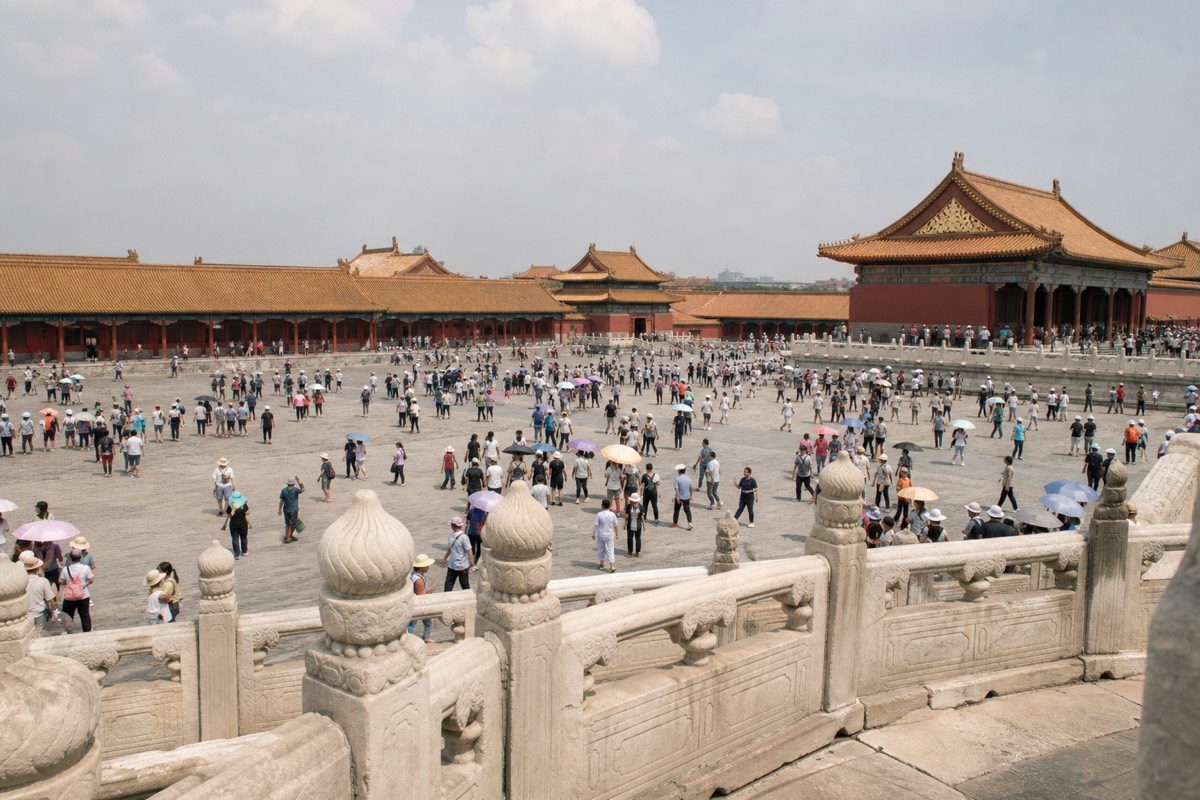
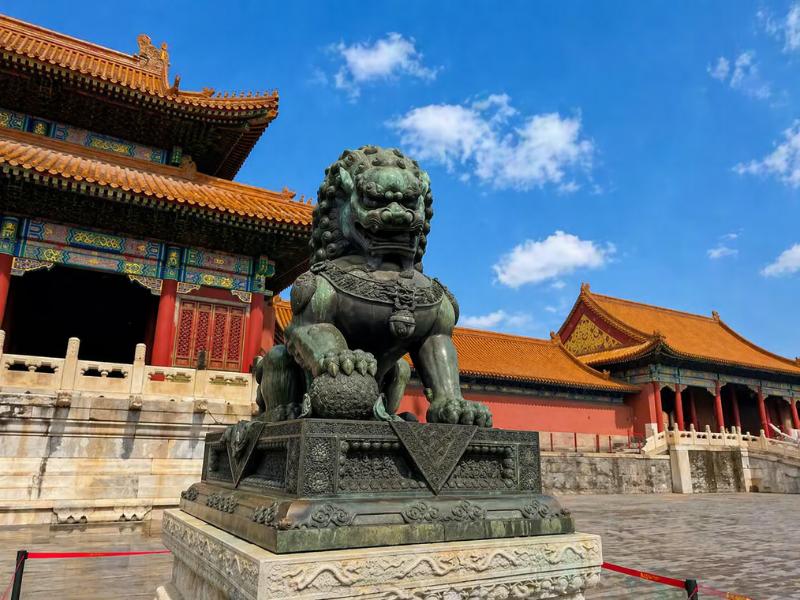
Forbidden City Facts: 20 Things Most Visitors Don't Know
Twenty real, individually checked details about the Forbidden City, organized by size, history, architecture and what it's actually like to visit today.
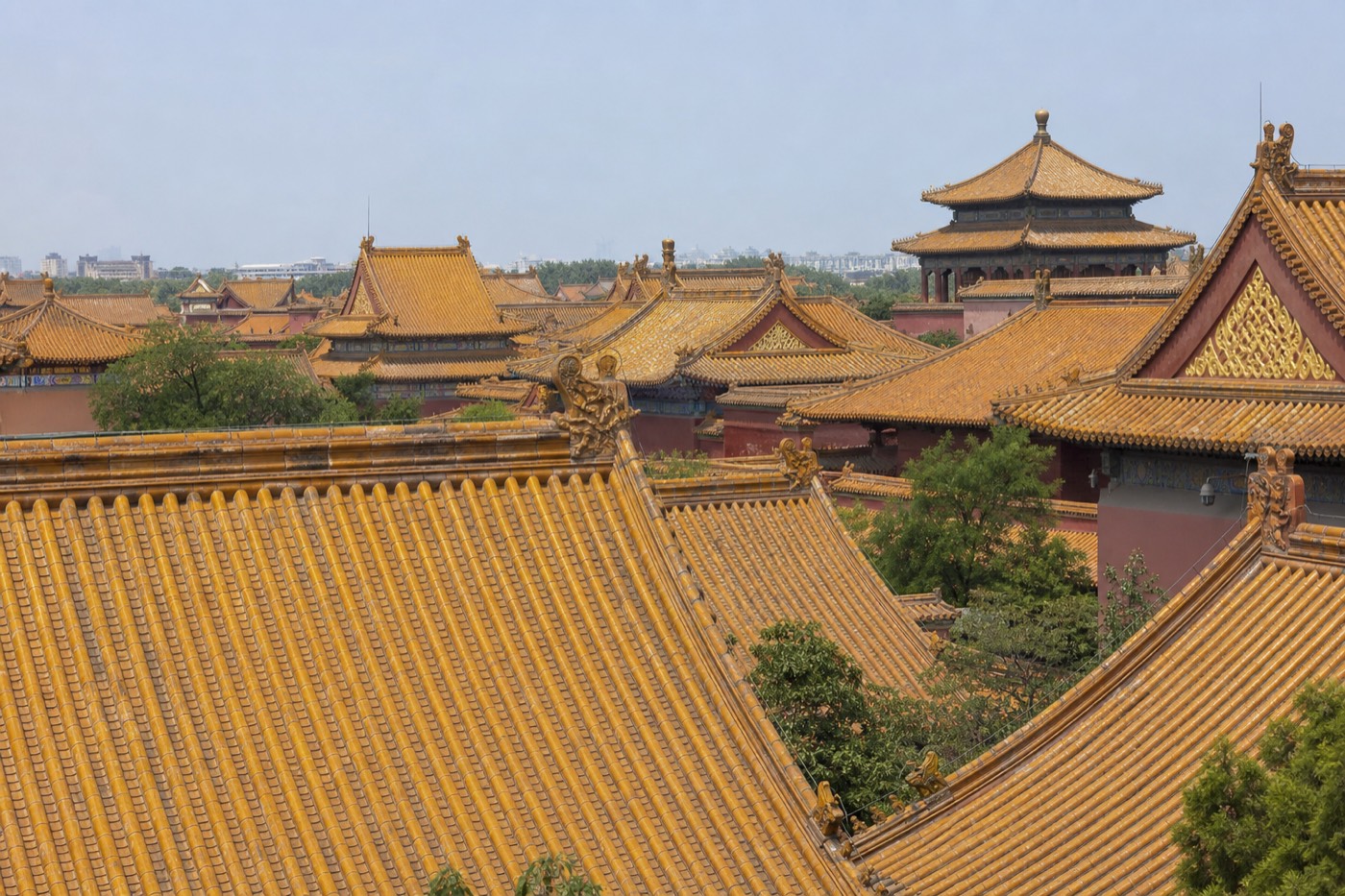
According to Britannica's overview of the Forbidden City, it stands as one of the best-preserved and largest ancient architectural complexes in the world, and most of what makes it that way isn't the headline number everyone repeats. Here are 20 checked facts about the Forbidden City that go beyond the standard summary: the real room count from a 2012 survey, why the daily visitor cap sits at 80,000, why the last emperor was expelled in 1924 rather than 1912, and why only one Western film crew was ever allowed to shoot inside. They're grouped below by size and scale, history, architecture and symbolism, and what a visit looks like today.
If you plan to see this in person, two-hour palace walk is a starting point. Compare its actual route with the time you have.
Booking choice: Choose TG18: English-guided Forbidden City walk and entry ticket. Meet at Meridian Gate; finish at the north gate. No square visit or hotel transfer. Explore Two-Hour Palace Walk
The 9,999.5-room legend versus the Palace Museum's own 2012 count
Figures come directly from the Palace Museum's 2012 five-month physical survey led by the museum director, compared against the popular legend and an older, narrower historical count.
Size and scale
Numbers alone don't explain why the Forbidden City feels the way it does on the ground, but they're the fastest way to understand why a walk through it takes real time rather than an hour. Start with the raw dimensions, because everything else on this list, the crowds, the ticket cap, the sheer amount of walking, follows from them.
1. The palace covers about 72 hectares
The Forbidden City's footprint runs to roughly 72 hectares, walled and moated as a single continuous complex rather than a scattered set of buildings. That makes it one of the largest palace complexes anywhere by floor area, a comparison worth making carefully: it's larger by footprint than the château at the Palace of Versailles itself, though Versailles' surrounding park dwarfs it in total grounds. The Vatican's Apostolic Palace complex is far smaller by area by comparison.
2. It holds more than 800 surviving buildings
Across those 72 hectares stand more than 800 individual buildings, halls, gates and pavilions, ranging from the vast ceremonial halls of the outer court to small residential courtyards in the inner quarters. The number reflects centuries of construction, renovation and rebuilding, rather than a single original blueprint frozen in time.
3. The real room count is 9,371, not 9,999.5
The popular legend claims the palace has 9,999.5 rooms, a number chosen because the emperor's earthly residence was said to fall deliberately short of the mythical 10,000 rooms belonging to the Heavenly Emperor's palace. It's a good story and a persistent one, but it isn't the counted reality. The Palace Museum ran its own five-month physical survey in 2012, led by the museum's director, and counted 9,371 actual rooms across 1,200 buildings. An older, narrower historical count puts the figure at 8,886 rooms across 980 buildings. The honest version is legend versus counted fact, not a single settled number, and it's covered in far more depth in our piece on why the 9,999-room legend exists.
4. Some individual residences elsewhere claim more rooms
Brunei's Istana Nurul Iman, a modern royal residence, is sometimes cited as having around 1,788 rooms, more than any single building inside the Forbidden City. The comparison isn't really apples to apples, though: Istana Nurul Iman is one modern palace built as a single residence, while the Forbidden City is a historic complex of 1,200 separate buildings that functioned as an entire seat of government, not just a home.
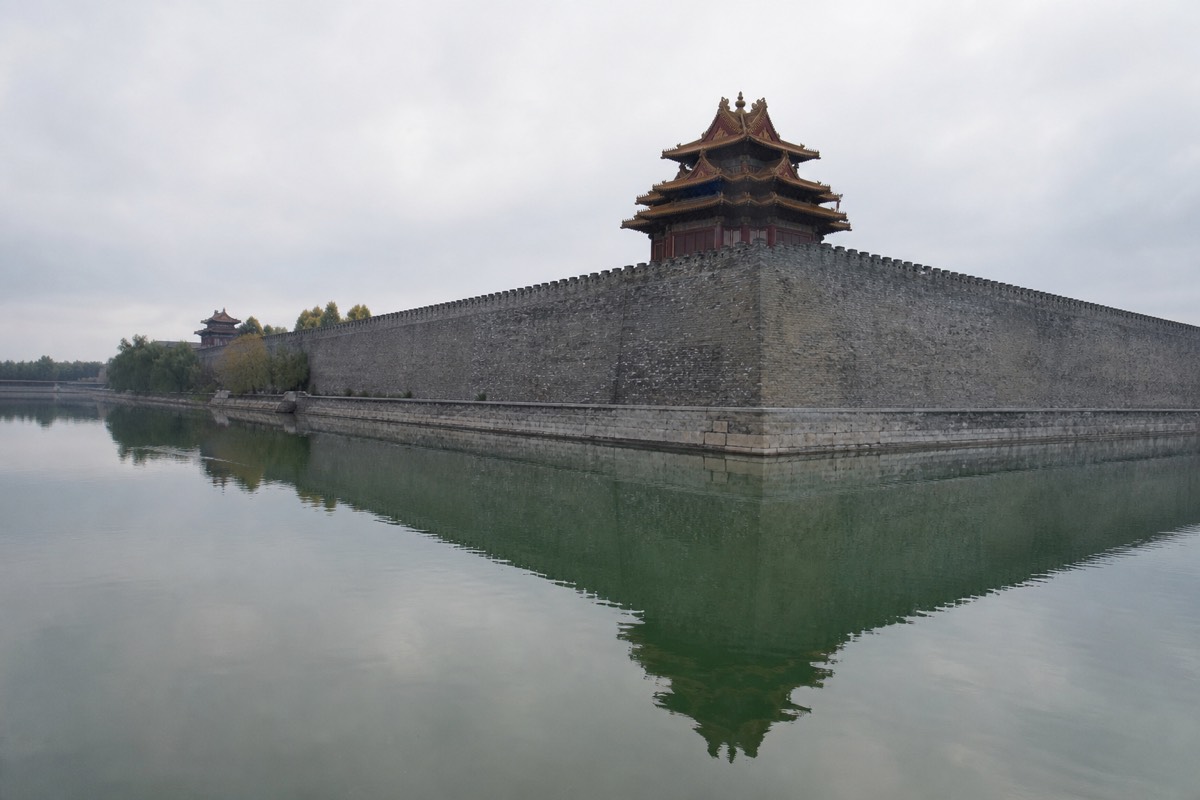
5. It's surrounded by a moat and corner watchtowers
A moat rings the entire perimeter, paired with tall corner watchtowers at each of the four corners of the walls. These weren't ornamental. The moat and walls formed a real security boundary, part of what made the practical half of the name work: entry really was restricted for centuries, a story our guide to why it's called the Forbidden City covers in full.
| Metric | Figure |
|---|---|
| Total area | About 72 hectares |
| Surviving buildings | 800+ |
| Rooms, popular legend | 9,999.5 |
| Rooms, older historical count | 8,886 across 980 buildings |
| Rooms, 2012 Palace Museum survey | 9,371 across 1,200 buildings |
| Comparison, Brunei's Istana Nurul Iman | ~1,788 rooms, a single modern residence, not a historic seat of government |
History
The building itself is only half the story. The history that played out inside it, especially in its final decades as an imperial residence, explains why the site looks and functions the way it does today, right down to the museum name on the ticket you buy.
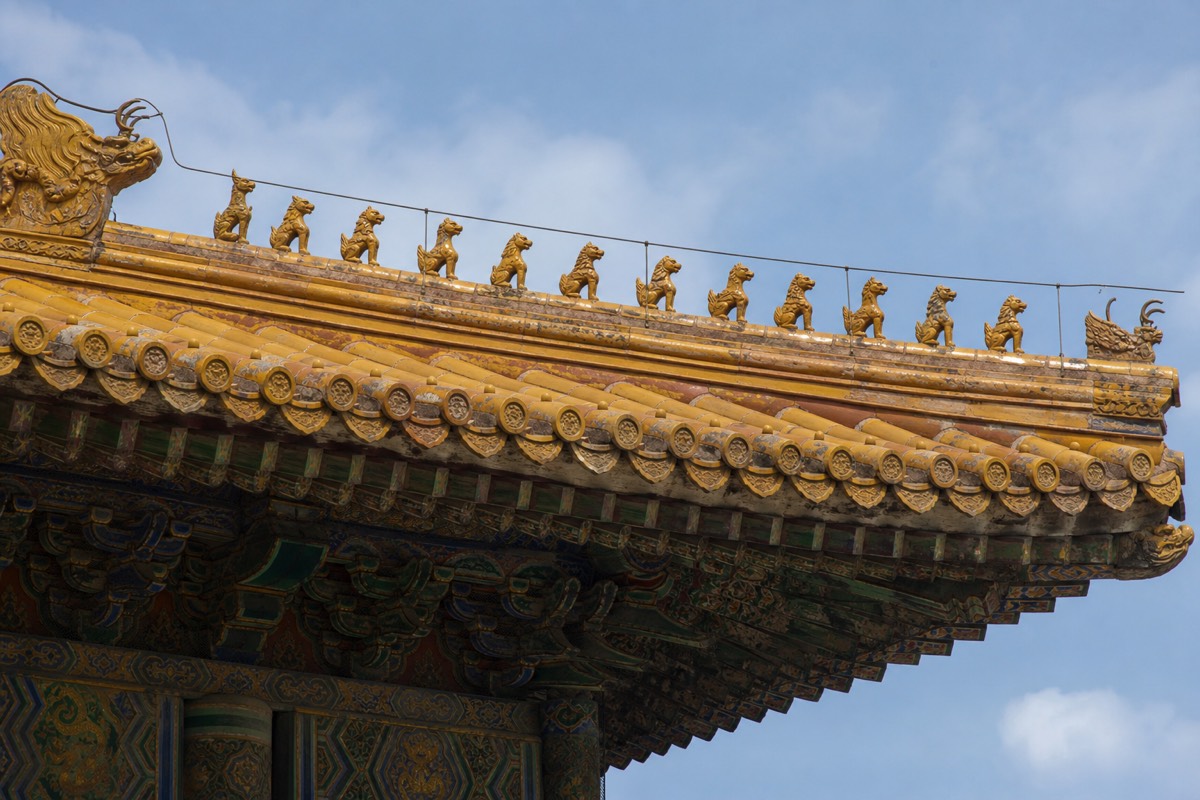
6. Puyi kept living there for over a decade after abdicating
China's last emperor, Puyi, abdicated in 1912 at age six, but under the "Articles of Favorable Treatment" negotiated with the new republic, he was allowed to keep living inside the Forbidden City's inner court. That arrangement held until 1924, when warlord Feng Yuxiang's Beijing Coup revoked those privileges and expelled him for good. He went on to become the Japanese puppet "Emperor" of Manchukuo between 1934 and 1945, and he died in 1967, a path from child monarch to expelled resident to wartime puppet ruler that's covered start to finish in our guide to Puyi's full story.
7. It became the Palace Museum in 1925
Less than a year after Puyi's expulsion, on October 10, 1925, Double Ten Day, the complex reopened to the public under a new name: the Palace Museum. That's still the institution's formal name today, even though "Forbidden City" remains the name most visitors and travel writers use. The relationship between the two names is unpacked fully in our Forbidden City versus Palace Museum guide.
8. The Summer Palace was burned; the Forbidden City wasn't
In October 1860, during the Second Opium War, British commissioner Lord Elgin ordered the burning of the Old Summer Palace and the Summer Palace in retaliation after Qing officials tortured and killed captured British and French envoys who had been sent under a truce flag. The Forbidden City was considered as a target too, and the French reportedly favored striking it, but Elgin chose to spare it and hit the imperial pleasure gardens instead. Historians point to this decision as one that let the Qing court keep a functioning seat of government to negotiate and administer the treaty ending the war, though sources don't fully agree on Elgin's exact reasoning. It's a large part of why the palace you can walk through today survived largely intact while the Old Summer Palace's ruins, still standing on Beijing's western edge, tell the opposite story. Our separate guide on why the Forbidden City wasn't destroyed like the Summer Palace goes deeper into that decision.
9. It's inscribed on two separate UNESCO listings
The Forbidden City was inscribed as a UNESCO World Heritage Site in 1987, under the listing "Imperial Palaces of the Ming and Qing Dynasties in Beijing and Shenyang." It also forms part of a completely separate UNESCO listing added in 2024, the Beijing Central Axis, which recognizes the north-south planning line running through the historic city that the palace itself sits on.
| Year | Event |
|---|---|
| 1860 | Second Opium War; Summer Palace and Old Summer Palace burned, Forbidden City spared |
| 1912 | Puyi abdicates but keeps living in the inner court |
| 1924 | Puyi expelled following the Beijing Coup |
| 1925 | Reopens publicly as the Palace Museum |
| 1987 | UNESCO World Heritage listing (Imperial Palaces of the Ming and Qing Dynasties) |
| 2024 | Separate UNESCO listing, the Beijing Central Axis |
Architecture and symbolism
The Forbidden City was never just a functional government building. Its scale, its central axis and its named halls were all built to make a political and cosmological argument, and a handful of the details below are the ones that make that argument most visible to a visitor walking through today.
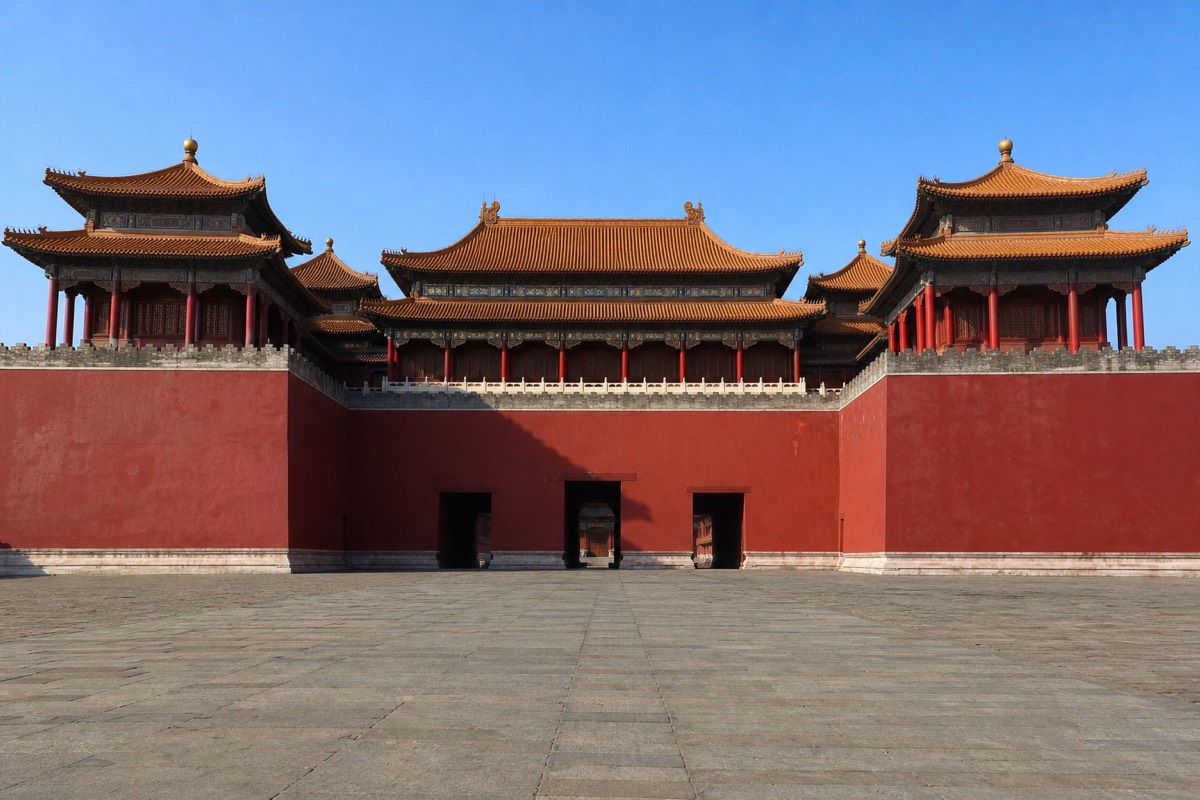
10. The Meridian Gate stands about 38m tall
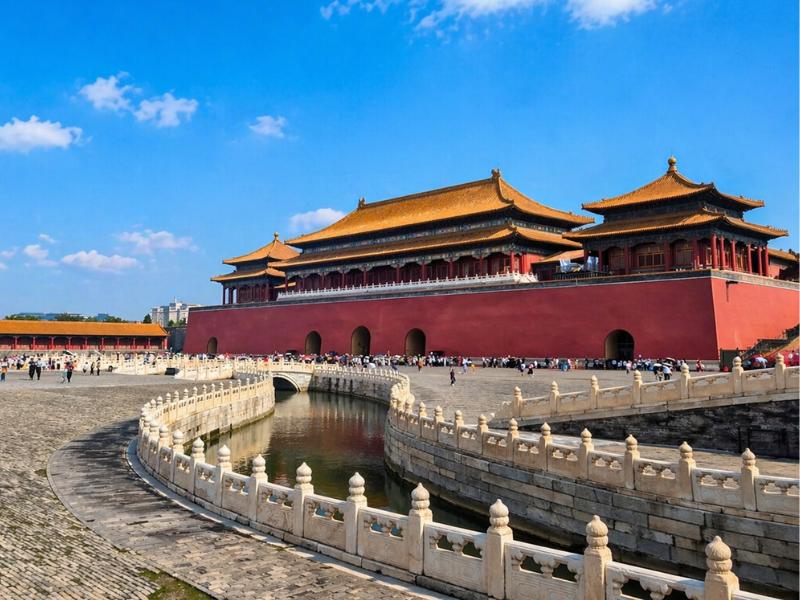
The main southern entrance, the Meridian Gate, rises to roughly 38m at the roof ridge and is built as five separate towers in a concave "Five Phoenix" formation. It's the checkpoint every visitor passes through today, and the only entrance most tours actually use. Full detail is in our guide to the Meridian Gate, Hall of Supreme Harmony and Treasure Gallery.
11. The Hall of Supreme Harmony is the largest single building
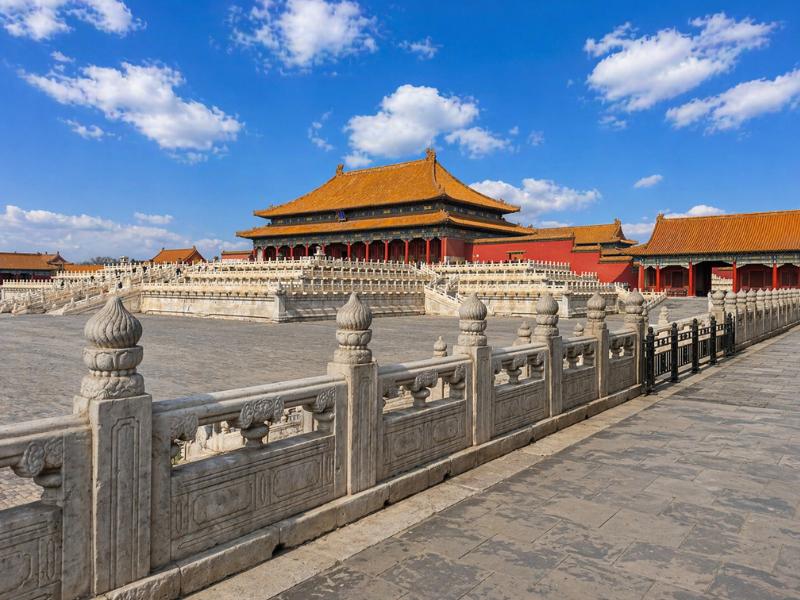
At roughly 64m by 37m, the Hall of Supreme Harmony is the largest single structure in the complex, holding the imperial throne on a platform about 2m high, ringed by six gold-lacquered dragon pillars. It sits at the head of the largest courtyard on the site, raised above the plaza so that anyone approaching does so from below and at a distance.
12. The Treasure Gallery is a separate, ticketed add-on
Tucked inside the Palace of Tranquil Longevity in the northeastern part of the site, the Treasure Gallery requires its own add-on ticket, priced around 10 RMB, on top of general admission. It holds roughly 400 Qing-dynasty relics and draws a fraction of the foot traffic the main central axis does.
13. The name means "Purple Forbidden City"
The Chinese name Zijin Cheng combines "purple," a reference to the Purple Star Enclosure around the North Star in Chinese astronomy, with "forbidden," describing the very real restriction on who could enter. The emperor's title, "Son of Heaven," ties directly to this celestial framing: just as the North Star appeared fixed while the rest of the sky turned around it, the emperor's palace was named to place him at the equivalent fixed point on earth. The full breakdown of both halves of the name, and why English speakers usually only hear the "forbidden" half, gets its own dedicated treatment elsewhere on this site.
14. "The Last Emperor" is the only Western film ever shot inside
Bernardo Bertolucci's 1987 film "The Last Emperor" is the only Western feature film ever granted permission to shoot inside the actual Forbidden City, with eight weeks of on-location photography. Since then, the Palace Museum has not allowed film or TV crews to shoot inside, citing preservation risk to the buildings and relics, which is why later productions set inside the palace use built replica sets elsewhere instead of the real site. More on this in our guide to movies filmed in the Forbidden City.
| Landmark | Key figure |
|---|---|
| Meridian Gate | ~38m tall, five towers, Five Phoenix layout |
| Hall of Supreme Harmony | ~64m x 37m, throne on a 2m platform, six dragon pillars |
| Treasure Gallery | ~400 Qing relics, ~10 RMB add-on ticket |
| Name, Zijin Cheng | "Purple Forbidden City," North Star cosmology plus restricted entry |
Visiting today
The last group of facts is the most immediately useful, because these are the rules that decide whether a trip actually works on the day you show up. None of them are obscure. All of them trip up first-time visitors who didn't check before they arrived.
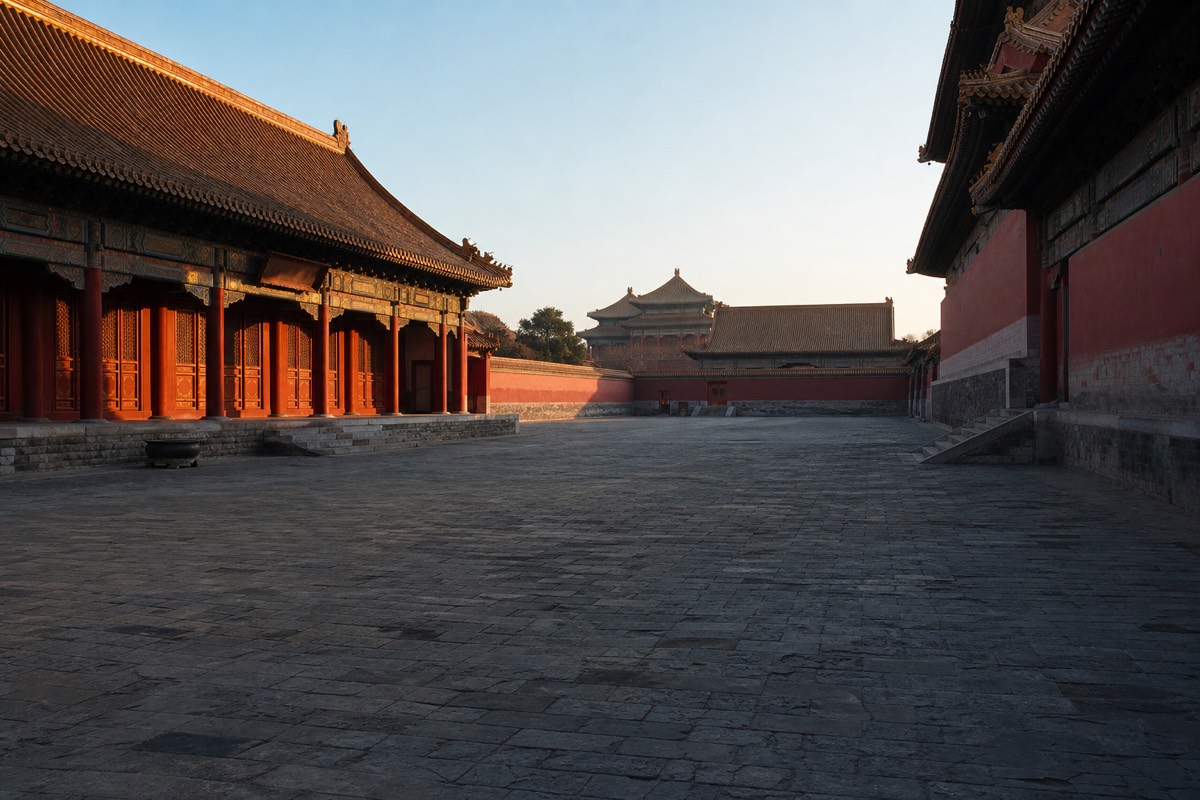
15. It's closed on Mondays
The Forbidden City closes on Mondays, with an exception for statutory holidays. It's a rule worth building a Beijing itinerary around, since arriving on the wrong day with tickets already booked elsewhere in your schedule can derail an otherwise tight trip.
16. The daily visitor cap sits around 80,000
To manage crowding and protect the site, the Palace Museum caps daily admission at around 80,000 visitors, a figure widely cited across travel and research sources on the site. On peak days that cap can be reached, which is part of why the ticketing system below exists.
17. Tickets require a real-name reservation, no walk-ups
There's no paper ticket booth at the gate. Admission runs entirely through an e-ticket system tied to a specific passport or ID under a real-name reservation policy, with official tickets releasing at 20:00 Beijing time, seven days ahead of the visit date, through the Palace Museum's own official English site or WeChat mini-program. Our tickets and booking guide covers the process step by step.
18. General admission is a two-tier seasonal price
Adult admission runs around 60 RMB in peak season, April 1 through October 31, and around 40 RMB in the off-season, November 1 through March 31. The Treasure Gallery and the separate Clock Gallery are each a further add-on of around 10 RMB, and all of these figures should be checked against the live listing before you book, since operators and the official site adjust them.
19. Drones and tripods are banned, and there's no flash indoors
Photography rules are enforced fairly strictly: no flash photography inside the halls, since it risks damaging fragile artifacts and painted surfaces, tripods generally aren't allowed, though selfie sticks under 1.3m are fine, and drones are strictly forbidden anywhere on site. Dress respectfully, wear proper footwear for a genuinely large amount of stone paving, and don't expect to bring large wheeled luggage or scooters through the gates. Unauthorized commercial photography or filming shoots aren't permitted either, a rule that connects directly back to why "The Last Emperor" remains such an outlier: film crews simply don't get the access it did.
20. Visiting Tiananmen Square requires a second, separate reservation
Tiananmen Square sits just south of the Forbidden City's main gate, close enough that most visitors treat the two as one outing, but they require two entirely separate real-name reservations and two separate passport checks, one for the square and one for the palace. A physical passport is required at both; a photo or copy isn't accepted. The square itself runs roughly 880m north-south, and walking from its center to the palace gate takes about 10 minutes, so the two stops fit naturally into one morning once both reservations are sorted. Our guide to visiting both together covers the logistics in full.
| Rule | Detail |
|---|---|
| Closed day | Mondays, except statutory holidays |
| Daily visitor cap | Around 80,000 |
| Ticket system | Real-name e-ticket only, no walk-up sales |
| Flash photography | Not allowed inside halls |
| Tripods | Generally not allowed; selfie sticks under 1.3m fine |
| Drones | Strictly forbidden |
| Large luggage / scooters | Not permitted through the gates |
| Commercial photography | Not permitted without authorization |
| Ticket item | Price |
|---|---|
| Adult admission, peak season (Apr 1-Oct 31) | Around 60 RMB |
| Adult admission, off-season (Nov 1-Mar 31) | Around 40 RMB |
| Treasure Gallery add-on | Around 10 RMB |
| Clock Gallery add-on | Around 10 RMB |
Prices above are the currently published figures and should always be checked against the live listing before you book, since both the official site and tour operators adjust them from time to time.
How do these facts fit into planning an actual visit?
| Category | Key numbers |
|---|---|
| Size | ~72 hectares, 800+ buildings, 9,371 counted rooms (2012 survey) |
| UNESCO status | 1987 (Ming/Qing Imperial Palaces) and 2024 (Beijing Central Axis), separate listings |
| Landmarks | Meridian Gate (~38m), Hall of Supreme Harmony (~64m x 37m), Treasure Gallery (~400 relics) |
| Visiting rules | Closed Mondays, ~80,000/day cap, real-name e-ticket only |
| Hours | 8:30am-5:00pm (Apr-Oct), 8:30am-4:30pm (Nov-Mar) |
Put together, these twenty facts sort into two different kinds of usefulness. Some, like the real room count or the 1987 and 2024 UNESCO listings, change how you talk about the place rather than how you walk through it. A related fact worth knowing: the palace survived a turbulent 19th century largely intact, unlike the nearby Summer Palace, a history covered in our explainer on why the Forbidden City wasn't destroyed like the Summer Palace. Others, the closed-Monday rule, the seasonal hours, the real-name ticket system, the daily cap, decide whether the trip you planned actually happens on the day you show up. The room-count legend gets its own full treatment, folklore and all, in our explainer on why the palace is said to have 9,999 rooms. Mixing the two up is an easy mistake: it's possible to know the palace has 9,371 real rooms and still turn up on a Monday to a locked gate. Treat the size and history facts as context worth knowing before you go, and treat the visiting-today facts as the checklist that actually gets you through the door.
None of these facts are trivia for its own sake. The room-count legend and the UNESCO listings shape how the site is talked about; the closed-Monday rule and the visitor cap shape whether a trip actually works on the day you picked; and the ticketing system shapes whether you get in at all. Anyone weighing whether the whole detour is worth it in the first place should read our honest review of whether the Forbidden City is worth visiting, and travelers ready to book can compare the current Forbidden City tour options, all of which include entrance tickets handled for you rather than navigating the real-name reservation system solo.
Do guided tours already handle these facts for you?
A fair amount of the list above, the real-name reservation deadline, the seasonal ticket price, the Treasure Gallery add-on, is exactly the kind of detail that trips up an independent visitor and that a booked tour simply absorbs. A small-group tour with tickets already secured, for example, removes the seven-day reservation window entirely, since the operator books inside that window on your behalf rather than leaving it to you to catch the 20:00 Beijing-time release. That's a meaningful difference for anyone planning a trip from outside China, where the exact release time can fall in the middle of the night at home.
It's worth being clear-eyed about what a tour changes and what it doesn't. No tour changes the closed-Monday rule or the seasonal hours, since those are set by the Palace Museum itself regardless of how you book. What a guided visit does change is the parts most first-time visitors get wrong on their own: missing the Treasure Gallery's side entrance entirely, arriving without realizing Tiananmen Square needs its own separate reservation, or discovering the ticket window has already closed for the week. Matching the right tour to your priorities, whether that's a four-hour overview or a longer private walk that has room for the Treasure Gallery, is exactly what our comparison of all six Forbidden City tour options is built to help with.
Which of these facts actually change your trip planning?
Not every fact on this list carries the same weight for a first-time visitor. The room-count legend, the two UNESCO listings and the "purple, forbidden" name origin are genuinely interesting but change nothing about how you book or move through the site on the day. The visiting-today facts are a different category entirely: the Monday closure, the seasonal hours, the 80,000 daily cap and the real-name ticket system are the handful of details that decide whether your planned visit actually happens as planned. A traveler who reads only the history half of this list and skips the visiting-today half risks the one mistake that actually ruins a trip: showing up on the wrong day, or discovering the ticket window closed a week before arrival. Treat the two halves of this list differently, and neither type of fact goes to waste.